
Welcome to Blogs
Discover actionable insights, in-depth research, and expert perspectives, all in one place.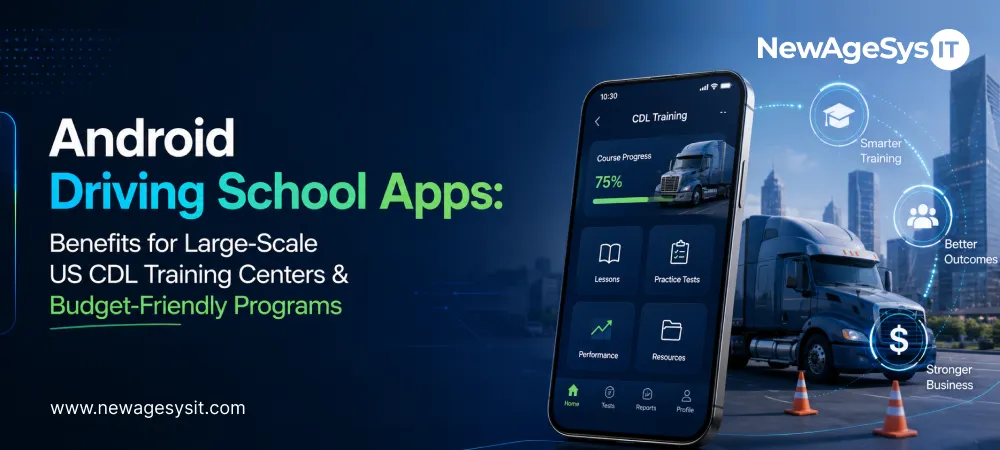
Driving School Software 8 min read
Android Driving School Apps: Benefits for Large-Scale US CDL Training Centers & Budget-Friendly Programs

| This article is part of our series on Android vs iOS for Driving School & CDL Apps in the USA: Choosing the Right Platform |
Building an Android driving school app USA CDL programs and driving schools can deploy is a strategic priority. Android’s mass-market reach covers the broadest student demographics. Its fleet device compatibility serves corporate CDL training operations. Its lower per-device cost fits budget-conscious programs that cannot justify premium hardware.
CDL training programs deploying to corporate fleet devices often choose Android for MDM flexibility and lower hardware cost. Large driving school chains serving broad income demographics cannot exclude Android from their technology strategy. The platform distribution of working-age adults pursuing licenses spans both iOS and Android.
Android’s offline architecture reliability is a genuine advantage for CDL programs. Range sessions and rural on-road training happen where the cellular signal is weak or absent. The app must capture BTW and ELDT data without connectivity gaps. Offline-first architecture is a non-negotiable requirement on any platform. Android handles it reliably when designed correctly.
Driving school mobile and web app development services built for Android serve these requirements from the first deployment. Custom CDL software and CRM development services that include Android fleet deployment reach the CDL candidate demographic that iOS-only apps consistently miss.
This article covers why Android reaches demographics iOS misses, the platform’s technical advantages for driving school apps, use case mapping by school type, BTW compliance logging on Android, and when to choose Android-first for US programs.
Why Android Reaches the US Driving School Market iOS Misses
Android serves four driving school user segments more fully than iOS. Each segment represents enrollment revenue that iOS-only apps leave on the table.
1. Adult learner demographics: Adults pursuing first-time licenses, license upgrades, or CDL training show more balanced platform distribution than teens. This segment includes immigrants, adults who delayed licensing, and those seeking reinstatement. Income distribution is broader across this group. Android representation is significantly higher than in teen demographics.
2. CDL candidate income demographics: The commercial driver workforce shows stronger Android representation than premium lifestyle segments. CDL candidates are working adults making practical purchasing decisions. An Android CDL training app captures this demographic fully. Programs that assume iOS-majority demographics lose enrollment from candidates who cannot access the app.
3. Corporate fleet device programs: Trucking companies pre-provisioning devices for CDL training choose Android for fleet deployment. Android Enterprise MDM provides standardized app installation and security policy enforcement. The per-device cost of $150-$300 for Android tablets versus $400-$600 for iPads makes the fleet economics clear.
4. Budget driving school programs: Programs offering affordable driver training to income-diverse populations must include Android. Excluding the platform from a budget program contradicts the program’s own accessibility positioning.
An Android custom software development driving school app that USA operators deploy must cover all four segments to maximize enrollment reach
Driving school tablet deployments at facility locations adds a fifth use case. Android tablets running web application development check-in kiosks and intake form stations provide a cost-effective infrastructure. A chain with 10 locations deploying 2 tablets each saves significantly on Android versus iPad hardware.
Android Technical Advantages for Driving School and CDL Apps
Android’s technical strengths for driving school apps go beyond market reach. Three capability areas matter for CDL compliance, fleet operations, and facility deployment.
Offline architecture for CDL training
CDL range training and rural on-road hours logging must work without connectivity. Android’s background process and sync architecture provide reliable offline operation for ELDT log capture. Range sessions and rural hours get logged without connectivity gaps.
Android Keystore provides hardware-backed encryption for compliance record security. BTW session logs and ELDT documentation stored with Keystore protection cannot be compromised by device-level attacks. This protects the compliance record from both accidental modification and deliberate tampering.
Android Enterprise for fleet deployment
Corporate CDL training device deployment benefits from Android Enterprise MDM. Standardized Android app installation, security policy enforcement, and device management happen through a single console. IT administrators configure once and deploy to hundreds of devices.
Kiosk mode secures driving school facility tablets to single-purpose functionality. Check-in stations, intake form terminals, and training resource access points run in locked-down mode. Students interact with the driving school app only. No personal browsing, no app switching, no configuration changes.
GPS route logging
Android Location Services provides reliable GPS route capture for BTW session documentation. Accuracy is sufficient for compliance requirements across all US state DMV standards.
Background GPS operation is critical for BTW sessions. Android background location access enables route logging without requiring the app to stay in the foreground. Instructors can use other device features during a session without interrupting GPS capture. Battery optimization must be addressed explicitly. Android’s Doze mode and battery restrictions can interrupt background GPS if not handled in the app architecture.
Screen overlay compatibility adds a CDL-specific advantage. Some programs use dash-mounted tablets for real-time route display during on-road training. Android’s wider hardware compatibility provides more mounting and display options than iOS.
Android Driving School App Use Cases
Different driving school types use Android differently. Three use cases define the primary Android deployment scenarios for US driving school and CDL programs.
Large CDL training center apps
Multi-trainee CDL programs with corporate fleet device deployment represent the strongest Android use case. Android Enterprise MDM ensures consistent app configuration across all training devices. ELDT compliance logging for Class A and Class B training works with offline sync for rural and range environments.
These programs often deploy 50-100 devices simultaneously. Android fleet driving app architecture must handle device provisioning, app updates, and security policy enforcement at that scale. The MDM layer is not optional for fleet deployment. It is the operational foundation.
Android commercial driver training apps at this scale also integrate with telematics hardware. Commercial vehicles used in CDL training are more commonly equipped with Android-compatible telematics systems. BTW session telematics integration is often more straightforward on Android than iOS for this reason.
Budget driving school student apps
Consumer-facing student apps for broad-demographic driving schools need Android for maximum enrollment funnel coverage. Lower-cost programs serving income-diverse populations cannot exclude Android without losing a significant percentage of prospective students.
The custom mobile app built for budget programs prioritizes simplicity and reliability over premium features. Lesson booking, progress tracking, knowledge test prep, and push notification reminders must work flawlessly on mid-range Android devices. Not just flagship phones.
Driving school facility tablets
Android tablet kiosks for student check-in, intake form completion, and training resource access provide cost-effective facility technology. Multi-location driving school chains deploying facility tablets at every location benefit from Android’s lower hardware cost and kiosk lockdown capabilities.
A 15-location chain deploying 2 check-in tablets per location invests $4,500–$9,000 in Android hardware. The same deployment on iPads runs $12,000–$18,000. The functionality is identical. The cost difference is not.
For teams wanting both Android app development and iOS iPhone app development simultaneously, cross-platform is often the right approach.
BTW Compliance Logging on Android
BTW session logs are legal compliance documents on any Android driving school app USA programs build. On Android, five technical requirements ensure compliance integrity throughout the logging process.
1. Android background GPS reliability: Background location access requires explicit user permission and careful battery optimization implementation. Apps must handle Android’s Doze mode and battery restrictions to maintain GPS logging during extended BTW sessions. A CDL on-road session lasting 2-4 hours cannot afford a GPS interruption at the 90-minute mark. This is because the system throttles background processes.
2. Instructor sign-off on Android: Android biometric authentication (fingerprint or face recognition) supports instructor session sign-off. Device-level biometric verification provides the legally defensible authentication that BTW record integrity requires. The instructor confirms session completion with a biometric scan. The record locks.
3. Offline log sync: Android WorkManager handles reliable background sync when CDL training sessions complete in low-connectivity areas. ELDT records reach the central compliance database without manual intervention. WorkManager retries failed sync attempts automatically when connectivity returns.
4. Android Keystore immutability: Hardware-backed Keystore protects BTW session records against post-session modification. Once an instructor signs off, the record cannot be altered on the device. This is the immutability guarantee that makes the record legally defensible.
5. Battery optimization for long sessions: CDL on-road training sessions run 2–4 hours. Android battery management must be explicitly addressed in the app architecture. Foreground service notifications, battery optimization exemptions, and GPS sampling rate configuration ensure reliable logging throughout the full session duration.
Cost ranges are covered in Driving School & CDL App Cost by Platform in the USA (Android vs iOS vs Cross-Platform).
When to Choose Android-First for US Driving School Apps
Android-first is not always the right call. But four scenarios make it a clear starting point.
1. Choose Android-first when deploying corporate fleet devices: CDL programs provisioning devices for trainees should start with Android. Android Enterprise MDM makes fleet deployment more cost-effective. Hardware savings compound with every device added.
2. Choose Android simultaneously with iOS for consumer-facing apps: Any driving school app serving broad student demographics needs both platforms from launch. Neither platform can be excluded when the student base spans all income levels.
3. Consider Android-first for budget programs: Lower-income student demographics show stronger Android representation. Starting with Android aligns the app with the initial user base. iOS follows as enrollment grows and budget allows.
4. Plan iOS within 12-18 months, regardless of starting platform: Even Android-first programs need an iOS roadmap. The teen driving school market is predominantly iOS. A US CDL Android app that starts Android-first must plan for iOS expansion to capture the full market.
Android platform strategy is one dimension of the full platform decision. The framework is covered in Android vs iOS for Driving School & CDL Apps in the USA: Choosing the Right Platform.
Final Thoughts
US CDL training programs and driving schools that build Android-first reach the demographics iOS-only apps miss. Proper offline ELDT logging, fleet device management, and GPS route capture serve the CDL candidate and adult learner populations that drive enrollment volume.
Android-first does not mean Android-only. Both platforms are required for full market coverage. But starting with Android for fleet CDL programs and budget driving schools aligns the initial investment with the initial user base.If your CDL training program or driving school targets corporate fleet deployment, broad adult demographics, or budget-conscious student populations, Android-first delivers the coverage and compliance reliability your program requires. As an AI software company, NewAgeSysIT builds Android driving school apps with offline ELDT logging and fleet MDM from day one.
Core Development
Keep exploring the custom services.

AI Software Development
Custom AI Software Development
Build intelligent, production-ready software from machine-learning models to AI-driven automation designed around your business goals.
Learn more
Mobile App Development
Custom Mobile Application Development
Native and cross-platform mobile apps that are fast, secure, and built to scale across iOS and Android.
Learn more
Web App Development
Custom Web Application Development
Scalable, secure web applications, from customer portals to complex dashboards, tailored to how your business actually works.
Learn more



