Guaranteed Expert Consultation Within 1 Hour. Click Here!
Guaranteed Expert Consultation Within 1 Hour. Click Here!

Guaranteed Expert Consultation Within 1 Hour. Click Here!
Guaranteed Expert Consultation Within 1 Hour. Click Here!

Cloud-native builds, migrations, and modernization for US companies, with the cost and operations side planned from day one.
Recognized for delivering the best solutions for businesses of all sizes and across industries.

.svg)


Quick answer: Cloud application development means building software designed for cloud infrastructure from the start: managed services instead of servers you patch, scaling that follows demand, and deployment that does not need a maintenance window. A first production release typically takes 3 to 6 months and costs $30,000 to $147,000 at our rates, depending on how much of the platform you own versus rent.
A cloud application is not an application that happens to run on a cloud server. The difference shows up in the second year, when traffic triples, the bill triples with it, and nobody can say which feature caused it.
NewAgeSysIT builds cloud applications for US companies from Princeton, New Jersey, with more than 30 years of software behind the work. We build new products, modernize old ones, and move systems that have outgrown where they live.
Most engagements are a mix. A migration usually becomes a partial rebuild once someone looks at the batch jobs, and a new build usually inherits data from something older.

Built on managed services, designed to scale horizontally, deployed continuously
Typical triggerA new product, or a replacement for something that cannot be fixed
Moving an existing application to AWS, Azure, or Google Cloud
Typical triggerData center exit, hardware refresh, or an acquisition
Breaking a monolith into services, replacing batch jobs, moving to managed data stores
Typical triggerReleases take weeks, scaling means buying bigger servers
One codebase serving many customers, with isolation, billing, and onboarding
Typical triggerTurning internal software into a product
Pipelines, warehouses, and reporting layers
Typical triggerReports take days and nobody trusts the numbers
Retrieval, inference, and usage controls built into the application
Typical triggerAdding AI features to a product that already works
APIs and event pipelines connecting systems that were never designed to talk
Typical triggerEvery new partner needs custom work
Tell us what you are building or moving, what it runs on now, and what the deadline is. We will tell you what the architecture should be, what it costs to build, and roughly what it will cost to run.
Get a quick expert response within 1 hour.
The term gets used loosely, so here is what it means in the work:
Managed services over self-run infrastructure. Managed databases, queues, and runtimes unless there is a reason to run your own.
Stateless application tiers so scaling out is a setting rather than a project.
Infrastructure as code, so environments are reproducible and reviewable.
Automated deployment with rollback, because the ability to undo is what makes frequent releases safe.
Observability from the first sprint: logs, metrics, traces, and alerts that reach a person.
Designed-in cost control: autoscaling with ceilings, right-sized instances, and spend visible per environment and feature.
Idempotent operations, so a retried request never double-charges a customer or duplicates an order.
Those last two are the ones that separate an application that survives growth from one that gets rewritten.
| Decision | Options | How we choose |
|---|---|---|
| Compute model | Serverless functions, managed containers, or virtual machines | Serverless for spiky and event-driven work, containers for steady traffic, virtual machines when licensing or legacy constraints demand it |
| Data store | Managed relational, document, or a mix | Relational unless the data genuinely is document shaped. PostgreSQL covers most products and moves between providers |
| Service granularity | Monolith, modular monolith, or microservices | Start modular, split only where scaling or team boundaries demand it. Premature microservices is the most expensive architecture mistake we are asked to fix |
| Multi-tenancy | Shared schema, schema per tenant, or database per tenant | Driven by customer size, isolation requirements, and what your enterprise buyers will accept in a security review |
| Region and redundancy | Single region, multi-zone, multi-region | Multi-zone covers most availability needs. Multi-region is a cost and complexity decision tied to a real requirement |
| Portability | Provider-specific services or portable building blocks | Portable where leaving would be painful, provider-specific where the managed service saves real money |
On that last point, the commercial picture improved. Under the EU Data Act, cloud switching charges including the egress involved in moving providers are banned from January 12, 2027, and the major providers already waive egress for customers leaving entirely. Day-to-day egress for serving your users is still billed normally, so portability is still a design decision rather than a solved problem.

Application inventory, dependencies, data volumes, compliance constraints, and a move plan per system
Accounts, networking, identity, logging, and guardrails set up before anything moves
One low-risk system moved end to end to prove the pattern
Remaining systems in waves, with rehearsals and rollback plans
Right-sizing, reserved capacity, and architecture changes once real usage data exists
The pattern that fails: lifting everything as-is, then discovering the bill is higher than the data center.
The pattern that works: move with a plan to re-platform the three systems that cost the most, and leave the rest alone until there is a reason.
Cloud spend grows faster than traffic when nobody owns it. We design against that:
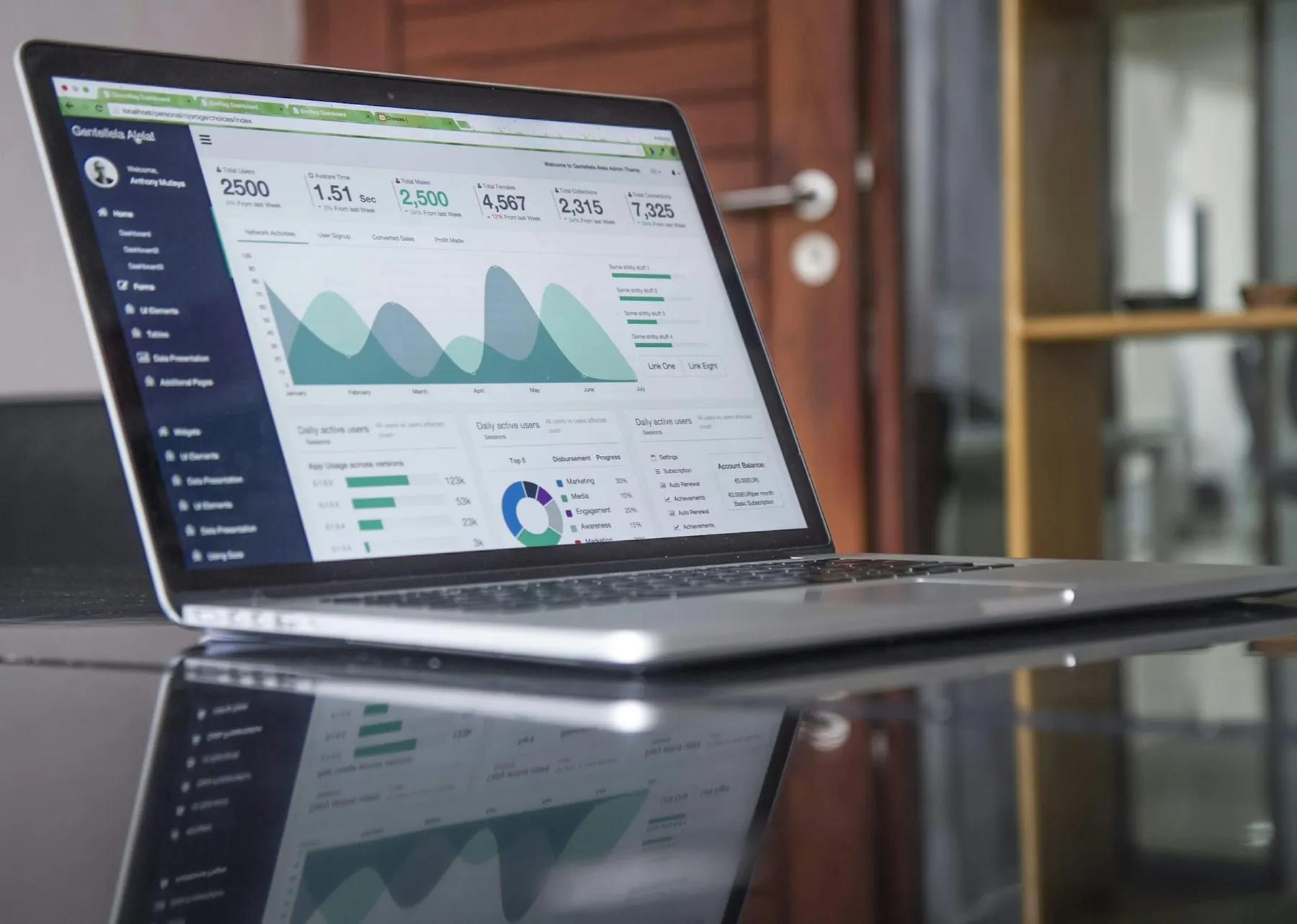
Budget alerts and autoscaling ceilings from the first environment, so a bug cannot produce a five-figure invoice.
Spend visibility per environment, service, and feature, so cost conversations are specific.
Right-sizing after real usage, not at launch when the numbers are guesses.
Committed capacity once demand is steady, which is where the large savings sit.
Storage lifecycle rules, because logs and backups quietly become the second largest line.
Cost per active user as a product metric, reviewed monthly alongside growth.
Teams without a platform group usually hand the running side to our cloud managed services team once the application is live, so this discipline continues after launch.
Cloud applications inherit the provider's physical security and none of your application security. The work that matters sits in your layer: identity and access, secrets management, encryption in transit and at rest, network boundaries, audit logging, dependency scanning, and backup with tested restores.
Industry rules then decide the detail: HIPAA for health data, PCI DSS for card payments, SOC 2 for enterprise buyers, GLBA for financial services, and state privacy laws for consumer products. We design for the strictest requirement that applies rather than retrofitting it after a customer security review.
Security testing before launch and on a schedule afterwards runs through our IT security and cybersecurity services team.
AWS, Microsoft Azure, Google Cloud, and hybrid combinations
Lambda and Cloud Functions, ECS, EKS, AKS, GKE, Cloud Run, App Service
PostgreSQL, MySQL, Aurora, Cloud SQL, DynamoDB, MongoDB, Redis, S3 and equivalents
Node.js, Python, Java, .NET, Go on the server; React and Next.js on the web; React Native and Flutter on mobile
REST and GraphQL APIs, managed queues, event buses, webhooks
Managed model APIs, vector search, retrieval pipelines, and usage controls
Terraform, GitHub Actions, GitLab CI, Azure DevOps, containerized builds
CloudWatch, Datadog, Grafana, Prometheus, OpenTelemetry
| Stage | What it covers | Approximate effort | NewAgeSysIT estimate | Timeline |
|---|---|---|---|---|
| Cloud MVP | One application, managed services, basic CI/CD, single environment set | 500 to 1,200 hours | $12,500 to $58,800 | 2 to 4 months |
| Production platform | Multi-service application, integrations, admin tooling, observability, scaling | 1,200 to 3,000 hours | $30,000 to $147,000 | 4 to 9 months |
| Enterprise or multi-tenant platform | Multiple products or tenants, compliance controls, high availability, data platform | 3,000 to 6,000+ hours | $75,000 to $294,000+ | 9 to 18 months |
| Migration programme | Landing zone, pilot, waves, and optimization for an existing estate | 600 to 2,500 hours | $15,000 to $122,500 | 3 to 9 months |
Running costs sit on top and scale with usage: compute, managed data stores, storage and bandwidth, monitoring, AI usage where applicable, and maintenance at roughly 15% to 25% of the build cost a year.
For a quick figure on your own scope, our app cost calculator takes a couple of minutes.
You can see the delivered side of this work in client products such as Town Connect Network, a shipment tracking platform built to keep running while the operation around it did.
30+ years in software, 1,000+ projects delivered, 4.8 million downloads across client products, and a five-star Clutch rating.
No reseller relationships, so the architecture recommendation is not steered by a partner tier.
Cost designed in, because an application you cannot afford to run at scale is not finished.
Full ownership. Source code, infrastructure definitions, and documentation transfer to you.
US leadership, hybrid rates. Princeton-based project management with our own delivery centers at $25 to $49 per hour.

Get expert guidance before you invest in AI software development. Work directly with Giovanni and Bibin to validate your technology direction, align AI with business goals, and make confident decisions that reduce risk and accelerate outcomes.
Request a Strategic Consultation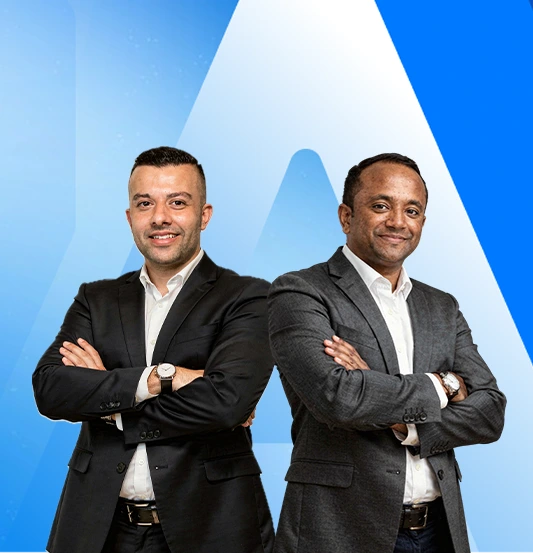

From every single moment, from the beginning till the end, they were there for me. They were very systematic and methodical in every single step and
Owner - ISRA
Increase in Monthly Bookings within 6 Months
Reduction in Appointment No-Shows

They delivered everything on time and it was of great quality. They go above and beyond to meet yourrequirements and deliver the product you are looking for.
Founder -LCard App
Increase in User Sign-Ups in First Quarter
Boost in Networking
Conversions

They are very knowledgeable in the sense that they have built so many of these types of applications that they..
Founder -CAR-UP App
Increase in Online Service Bookings
Reduction in Service Scheduling Conflicts

From every single moment, from the beginning till the end, they were there for me. They were very systematic and methodical in every single step and
CEO - WhipFlip
Faster Vehicle Listing to Offer Time
Increase in Lead-to-Sale Conversion Rate
From every single moment, from the beginning till the end, they were there for me. They were very systematic and methodical in every single step and
Owner - ISRA
Increase in Monthly Bookings within 6 Months
Reduction in Appointment No-Shows
They delivered everything on time and it was of great quality. They go above and beyond to meet yourrequirements and deliver the product you are looking for.
Founder -LCard App
Increase in User Sign-Ups in First Quarter
Boost in Networking Conversions
They are very knowledgeable in the sense that they have built so many of these types of applications that they..
Founder -CAR-UP App
Increase in Online Service Bookings
Reduction in Service Scheduling Conflicts
From every single moment, from the beginning till the end, they were there for me. They were very systematic and methodical in every single step and
CEO - WhipFlip
Faster Vehicle Listing to Offer Time
Increase in Lead-to-Sale Conversion Rate
It is building software designed for cloud infrastructure from the start: managed services rather than servers you maintain, horizontal scaling, automated deployment, and observability built in. The goal is an application that grows with demand without a rebuild.
At our rates, a cloud MVP runs $12,500 to $58,800, a production platform $30,000 to $147,000, and an enterprise or multi-tenant platform $75,000 or more. A migration programme runs $15,000 to $122,500 depending on the size of the estate.
Two to four months for an MVP, four to nine months for a production platform, and nine to eighteen months for an enterprise or multi-tenant build. Migrations run three to nine months depending on how many systems move and how clean the data is.
Migrate when the application works and the problem is where it runs. Rebuild when the architecture itself blocks what the business needs. Most programmes do both: move the estate, then re-platform the two or three systems that cost the most or break most often.
Usually the one your team already knows, unless a specific managed service or an existing commitment decides it. The differences that matter in practice are your team's familiarity, your compliance requirements, and the pricing commitments you already hold.
Not automatically. Lifting an application unchanged often costs more. Savings come from right-sizing, autoscaling, managed services replacing work your team does by hand, and committed capacity once demand is steady. We model that before the move, not after.
Only as far as you design for it. Portable building blocks such as PostgreSQL, containers, and object storage move between providers; proprietary services do not. On the commercial side, EU rules ban switching charges including exit egress from January 12, 2027, and major providers already waive egress for full exits.
Yes, including tenant isolation, onboarding, subscription billing, usage metering, and the admin tooling your support team needs. The isolation model is chosen against what your enterprise customers will accept in a security review.
Yes. Profiling, cleansing rules agreed with the business, mapping, repeated test loads, and reconciliation against numbers your finance team recognizes. Data is the most common reason migration timelines slip, so this work starts early.
Budget alerts and autoscaling ceilings from the first environment, spend visibility per environment and service, right-sizing after real usage, committed capacity once demand is steady, storage lifecycle rules, and cost per active user tracked monthly.
Yes. The backend carries the work: retrieval over your own content, prompt and context handling, usage limits, logging of inputs and outputs, and a review step for anything affecting money or customers. We treat the model as an external service with costs and failure modes.
You do. Source code, infrastructure as code definitions, documentation, and cloud accounts are yours, and we hand over with the documentation needed for another team to pick it up.
You can run it, we can run it, or we can run it while training your team to take over. Most clients start with a maintenance agreement covering updates, monitoring, and incremental features, then decide once the product stabilizes.
Tell us what you are building or moving, what it runs on now, and what the deadline is. We will tell you what the architecture should be, what it costs to build, and roughly what it will cost to run.
🔒 Your information is confidential and never shared. Guaranteed expert response within 1 hour.
Request a consultation or call 1-609-331-9194.
What you are building or moving
What it runs on now
What the deadline is