
Welcome to Blogs
Discover actionable insights, in-depth research, and expert perspectives, all in one place.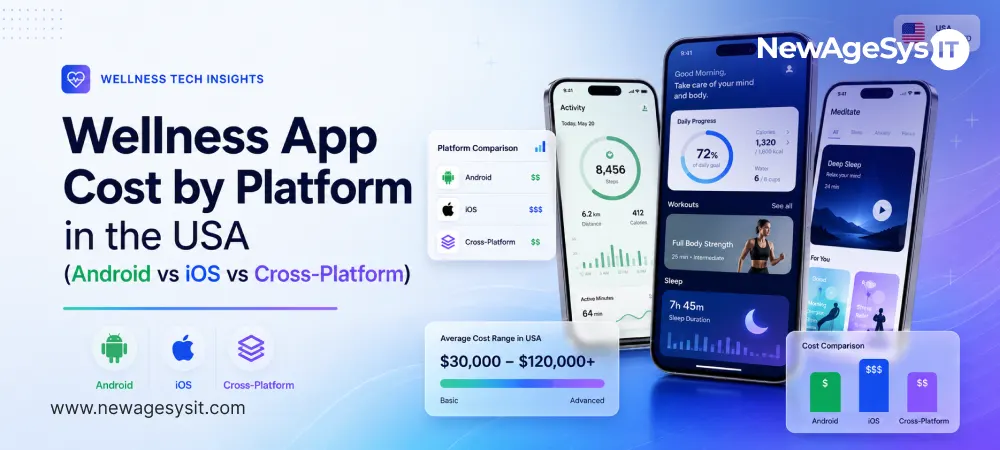
Wellness 7 min read
Wellness App Cost by Platform in the USA: Android vs iOS vs Cross-Platform in 2026

| This article is part of our series on Why US Wellness Businesses Should Consult a Technology Advisor Before Building an App |
Understanding wellness app cost by platform in the USA starts with a critical distinction. Platform choice affects your budget, but it rarely drives it. Health data compliance and mental health content safety infrastructure add wellness-specific costs. These apply differently across Android, iOS, and cross-platform approaches.
Founders who receive platform estimates without compliance scope consistently encounter 40–60% budget overruns. That gap emerges not from platform licensing or UI complexity.
It emerges from health data governance requirements, mental health content moderation infrastructure, and third-party SDK compliance audits. These cost layers exist regardless of which platform you build on. Identifying them early is what separates accurate budgets from optimistic ones.
Cost transparency at the planning stage enables better platform decisions. Wellness platforms that enter funding conversations with compliance costs already scoped present stronger financial cases.
Budgeting a compliant wellness product requires evaluating your wellness mobile and web app development services scope. Your wellness software and CRM development services requirements should be mapped before finalizing any platform budget.
Platform-Independent Cost Components in Wellness Apps
Founders must account for backend and compliance components before comparing platform costs. These apply regardless of platform choice.
Backend API development. covers wellness content management, user profiles, habit tracking, booking integration, and subscription billing. Depending on feature scope, this runs $30,000 to $90,000. The figure holds across iOS, Android, and cross-platform approaches equally.
Mental health content safety infrastructure. costs $10,000 to $30,000. Clinical disclaimer systems, crisis resource integration, content warning architecture, and App Store mental health compliance documentation all fall within this scope. No platform removes this requirement.
Health data compliance. covers HealthKit governance, Health Connect privacy implementation, and CCPA wellness data handling. Budget $8,000 to $25,000 here regardless of platform approach.
HIPAA compliance. applies where practitioner functionality is in scope. Encrypted health data storage, role-based access controls, and HIPAA-compliant messaging add $20,000 to $60,000 depending on implementation depth.
Guided content delivery infrastructure. covers audio CDN for meditation and breathwork alongside offline download architecture. This contributes $10,000 to $30,000 as a backend requirement shared across all platforms.
Mid-scope wellness app baseline costs run $58,000 to $235,000 before platform-specific development is considered. Estimates that fall below this range without explicit compliance exclusions are incomplete budgets. Platform choice adds to this baseline and cannot replace it.
Platform cost is one dimension of the Android vs iOS wellness apps decision covered in our pillar guide.
iOS-Only Wellness App Development Cost
iOS-only development costs vary significantly by feature scope, HealthKit depth, and mental health content requirements.
Basic iOS Wellness App: $35,000 to $80,000. Covers habit tracking, guided content delivery, and core user profiles. No HealthKit integration, no mental health content safety infrastructure, and no subscription billing. Suitable for early validation builds.
Mid-Scale iOS Wellness App: $80,000 to $200,000. Includes HealthKit integration, guided content, habit tracking, mental health content safety, and subscription billing. This scope represents most funded wellness platform launches targeting premium US audiences.
Premium iOS Wellness Platform: $220,000 to $600,000. Deep HealthKit integration, native Apple Watch features, AI personalization, sleep content architecture, and community functionality. Built for wellness brands competing at the top of the US market.
Apple Watch Native Wellness App: add $25,000 to $70,000. A native watchOS wellness app requires Swift development regardless of the iPhone app approach. Cross-platform frameworks do not extend to watchOS in any meaningful capacity.
Mental Health Content Safety: add $10,000 to $30,000. Clinical disclaimer infrastructure, crisis resource integration, and App Store mental health compliance documentation. Applies to any iOS wellness app carrying mental health or therapeutic content.
Add the platform-independent baseline of $58,000 to $235,000 to arrive at total iOS project cost. Brands building at the mid-scale or premium tier should budget with compliance costs fully scoped from the start. iOS development built for wellness requires both platform expertise and health data compliance depth.
Cost range clarity supports vendor evaluation, covered in Choosing the Right Wellness App Partner in the United States.
Android-Only Wellness App Development Cost
Android-only development carries its own cost structure. Device diversity, enterprise compatibility requirements, and Health Connect’s expanding data scope all influence final budgets.
Basic Android Wellness App: $40,000 to $90,000. Covers habit tracking, guided content delivery, and basic Health Connect integration. QA costs run slightly higher than the iOS equivalent due to device diversity testing across representative Android hardware.
Mid-Scale Android Wellness App: $90,000 to $220,000. Includes Health Connect integration, guided content, mental health content safety infrastructure, and MDM compatibility. Wellness brands targeting corporate wellness programs or managed device environments will typically land in this range.
Enterprise Android Wellness App: $180,000 to $450,000. Android Enterprise integration, corporate wellness deployment architecture, and large-scale access management define this tier. Organizations deploying wellness platforms across managed employee device fleets build here.
Android Device Diversity QA: add 20 to 30% QA overhead. Audio playback consistency and health data integration behavior vary meaningfully across Android devices. Wellness apps with guided meditation, breathwork, or sleep content require testing across a representative device set. This overhead applies regardless of development approach.
Play Store Mental Health Compliance Documentation: $2,000 to $6,000. Preparing mental health content safety documentation for Play Store submission is a discrete cost item often excluded from initial estimates.
Android wellness app development budgets require the platform-independent baseline added to these figures. That baseline runs $58,000 to $235,000 before platform costs apply.
Android-specific cost factors are covered in Android Wellness Apps: Benefits for Large-Scale US Wellness Chains.
Cross-Platform Wellness App Development Cost
Cross-platform development delivers iOS and Android simultaneously, making it the default consideration for wellness brands targeting both audiences without dual native budgets.
Basic Cross-Platform Wellness App: $55,000 to $130,000. Covers guided content delivery, habit tracking, and basic health data integration across both platforms. Entry-level scope for wellness brands validating product-market fit before committing to deeper platform investment.
Mid-Scale Cross-Platform Wellness App: $130,000 to $320,000. Includes HealthKit and Health Connect integration via native modules, mental health content safety infrastructure, and subscription billing across both platforms. Most funded wellness platform launches targeting broad US audiences fall within this range.
Full Cross-Platform Wellness Platform: $320,000 to $850,000. AI personalization, mindfulness content libraries, practitioner tools, and subscription management across iOS and Android. Wellness brands at this tier typically engage custom mobile app development services with dedicated health data compliance expertise. Built for brands scaling beyond initial launch into enterprise or premium consumer markets.
Native Module Overhead for Health Data: add $15,000 to $50,000. HealthKit and Health Connect each require platform-specific native engineers regardless of the cross-platform framework in use. This overhead is non-negotiable for any wellness app with meaningful health data integration.
Cost Saving vs Dual Native: 30 to 50%. For a mid-scale wellness app, cross-platform development saves $60,000 to $150,000 compared to building separate native applications. That saving narrows where deep native platform features are required.
Add the platform-independent baseline of $58,000 to $235,000 to these figures for accurate total project budgeting. Cross-platform savings are real, but compliance costs apply to every platform approach equally.
Wellness App Platform Cost
Platform choice follows audience, feature requirements, and compliance scope. Here is how each major wellness app scenario maps to the right approach.
Consumer Wellness App (Broad Audience): Cross-Platform. Both platforms are required from launch. Cost efficiency is critical at this tier. HealthKit and Health Connect integration is achievable through native modules without full native builds on each platform.
Premium Spa or Wellness Retreat App: Cross-Platform. A shared codebase handles booking infrastructure, HealthKit integration, and premium UI without native overhead. Apple Watch features are not typically required at this tier, making cross-platform the cost-efficient choice.
Premium Wellness App with Apple Watch Features: iOS-Native for watchOS. The Apple Watch requirement forces native iOS investment regardless of the iPhone app approach. watchOS development requires Swift and cannot be handled through cross-platform frameworks. Budget accordingly from the start.
Corporate Wellness Program: Cross-Platform. Android coverage is essential for broad employee participation across managed device environments. Cross-platform development with MDM compatibility handles enterprise deployment requirements across both platforms efficiently.
Mindfulness Platform: Cross-Platform. Mental health content safety updates deploy simultaneously across both platforms. For wellness brands where clinical disclaimer and crisis resource infrastructure requires frequent updates, simultaneous deployment reduces compliance risk.
Mental health safety infrastructure, health data compliance, and backend development must be budgeted before any platform line item is considered. Custom software development services scoped with these requirements from the start produce more accurate project budgets.
Final Thoughts
US wellness app development cost is driven primarily by health data compliance, mental health content safety infrastructure, and feature scope. Platform choice creates meaningful but secondary cost variation.
Wellness founders must budget health data compliance explicitly. Mental health safety infrastructure and platform-independent backend costs must follow. That combination produces the most accurate total project budgets. Platform cost estimates that exclude these components reflect an incomplete financial picture.
Map health data compliance to your specific wellness app category before vendor selection. Mental health content safety architecture and platform-independent backend costs require the same treatment. That sequencing provides the most accurate financial foundation for your development roadmap.
NewAgeSysIT supports wellness app founders and enterprise health technology teams. Compliant, platform-appropriate wellness products are scoped across iOS, Android, and cross-platform approaches.
Before selecting a vendor, map health data compliance to your wellness app category. Layer in mental health content safety architecture and platform-independent backend costs. That combination gives you the most accurate financial foundation for your development roadmap. Visit NewAgeSysIT to scope your project. Learn more about digital transformation solutions from a leading AI software company in the United States.
Core Development
Keep exploring the custom services.

AI Software Development
Custom AI Software Development
Build intelligent, production-ready software from machine-learning models to AI-driven automation designed around your business goals.
Learn more
Mobile App Development
Custom Mobile Application Development
Native and cross-platform mobile apps that are fast, secure, and built to scale across iOS and Android.
Learn more
Web App Development
Custom Web Application Development
Scalable, secure web applications, from customer portals to complex dashboards, tailored to how your business actually works.
Learn more



