
Welcome to Blogs
Discover actionable insights, in-depth research, and expert perspectives, all in one place.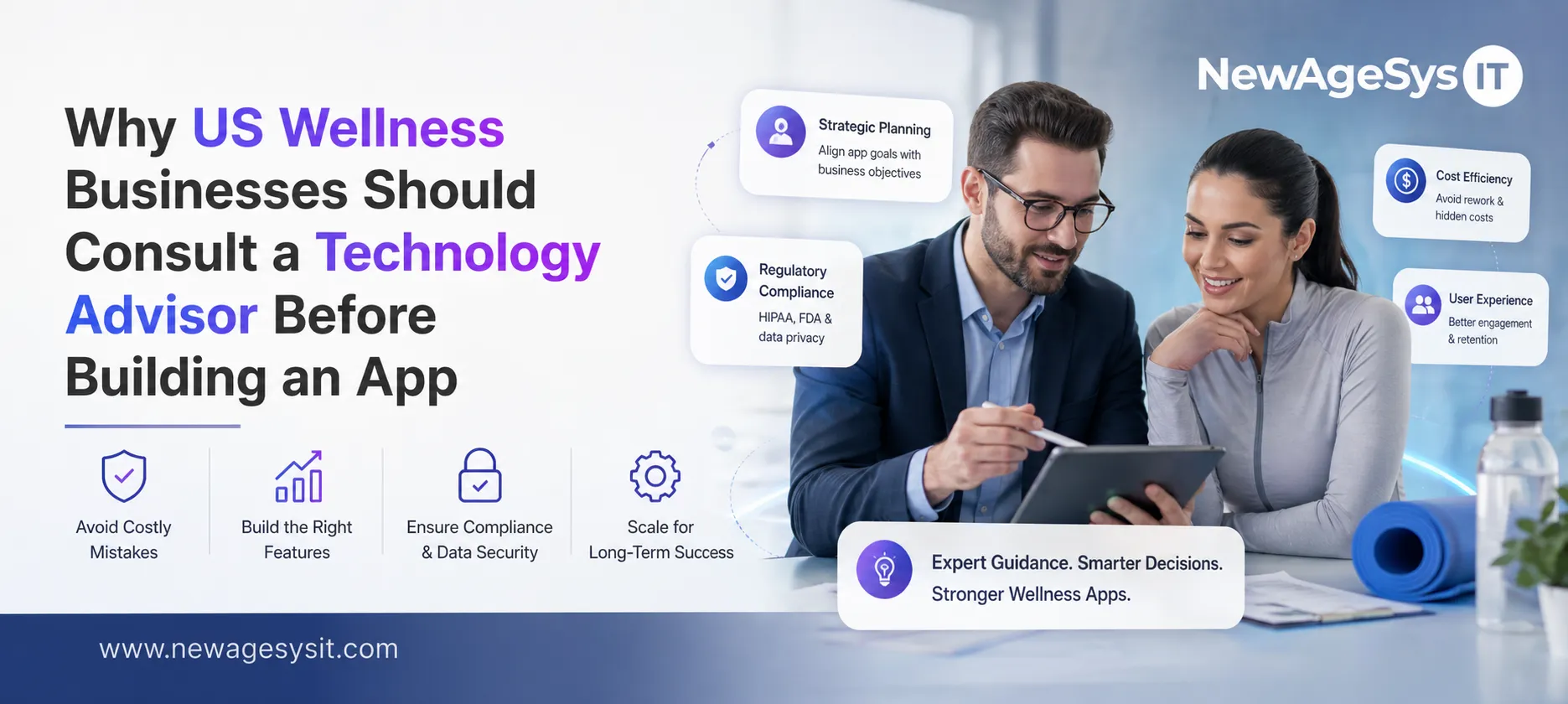
Wellness 7 min read
Why US Wellness Businesses Should Consult a Technology Advisor Before Building an App

Many costly wellness app failures begin before development starts, when founders choose the wrong architecture, underestimate mental health content safety requirements, or overlook fact-specific HIPAA implications for practitioner apps. For businesses evaluating wellness app technology advisors in the USA services, early guidance reduces these risks before they affect scope and budget.
Decisions around audio streaming infrastructure, wearable integrations, and subscription architecture can also create major rework if made without domain expertise. That is why specialized advisors supporting custom wellness app development bring value beyond general mobile agencies. They assess health data privacy obligations, wellness-specific UX expectations, and technical choices tied to long-term scalability.
Advisors also help determine when mobile products require supporting wellness software and CRM development architecture for booking, retention, or compliance workflows. General agencies often underestimate these combined requirements, which contributes to budget overruns. A pre-build advisory engagement may cost far less than correcting flawed scope, compliance gaps, or misaligned infrastructure later.
Engaging an advisor before architecture decisions are finalized typically delivers the strongest ROI through risk reduction, cost control, and stronger product planning.
Why Wellness App Development Requires Specialized Expertise
Wellness app development carries risks that general mobile teams often do not fully assess. A qualified wellness technology consultant in the USA helps founders evaluate issues that sit at the intersection of product strategy, compliance, and user behavior. Mental health content safety is one example, where disclaimer logic, crisis resource access, and evolving FDA digital health guidance may affect product requirements.
A specialized wellness app advisor also helps determine when practitioner business models may involve fact-specific HIPAA obligations, particularly for health coaching, integrative wellness, or naturopathic services. Health data governance adds another layer of complexity, including Apple HealthKit restrictions, Google Health Connect policies, CCPA protections for sensitive wellness data, and documentation expectations tied to app store submissions.
Wellness UX introduces separate expertise requirements because habit-based products have predictable abandonment patterns, onboarding in emotional wellness apps requires added sensitivity, and notification timing strongly influences retention. These issues are rarely solved through generic app strategy alone.
This is why a technology advisor is often the right starting point for significant investments, particularly when planning is tied to the broader Wellness Mobile Apps in the USA: Building Smarter Health & Self-Care Experiences framework. Specialized advisory input reduces risk by aligning compliance, UX decisions, and technical scope before development begins.
What a Wellness App Technology Advisor Delivers
A US wellness app development consultant delivers architecture validation, compliance risk mapping, and product scope planning that prevent costly surprises. These advisory deliverables often surface mental health content safety and health compliance costs general agencies miss, while also identifying when supporting wellness software and CRM development architecture may be needed for booking, retention, or compliance workflows.
Mental Health Content Safety Review
Reviews planned app features against mental health content safety requirements, identifying where clinical disclaimers, crisis resource access, and content warnings may be required.
Documents App Store health content compliance expectations before submission, reducing rejection risk caused by incomplete safety architecture and inadequate disclosure controls.
Health Data Compliance Assessment
Reviews planned features against Apple HealthKit governance, Google Health Connect policies, CCPA protections for sensitive personal information, and fact-specific HIPAA applicability in practitioner app contexts.
Wellness products requiring deep Apple ecosystem integrations, including HealthKit, WatchKit, or Core Motion, often benefit from specialized iOS-focused development expertise during the compliance architecture phase, where data handling and consent design decisions are defined early.
Recommends compliant data architecture, including encryption, consent management, data minimization, and access controls, before health data engineering begins.
Wellness-Specific Architecture Review
Evaluates audio and video delivery for offline access, background playback, and adaptive bitrate, ensuring infrastructure meets wellness user expectations across platforms, including considerations tied to Android app development.
Assesses AI personalization against behavior change science, identifying features that may create unrealistic expectations or introduce user safety concerns.
Competitive and Market Analysis
Maps the competitive landscape for a specific wellness app niche, assessing where meaningful differentiation is achievable against platforms such as Calm, Headspace, Practice Better, and similar incumbents.
Evaluates positioning opportunities based on content depth, feature gaps, audience focus, and defensible product strategy.
Realistic Cost and Timeline Model
Produces a cost estimate that includes mental health safety infrastructure, health data compliance requirements, AI functionality, and content delivery systems, not only development labor.
Builds timeline projections around technical scope, integration complexity, and compliance workstreams that often affect delivery schedules.
Five Wellness App Mistakes Technology Advisors Prevent
Weak planning causes many avoidable wellness app failures, which is why wellness technology strategy often begins with identifying preventable risks. One common mistake is launching mental health content without disclaimer architecture, crisis resource access, or content warnings, creating App Store rejection and liability exposure.
Another is allowing HealthKit data to interact with third-party analytics or ad tools in ways that may violate Apple governance rules. A skilled wellness app consultant also helps prevent practitioner apps from being built without safeguards where fact-specific HIPAA obligations may apply.
Audio infrastructure is another underestimated risk, especially when teams treat wellness media as simple file storage rather than planning for offline access, adaptive streaming, and CDN-backed scalable delivery.
Advisors also catch flawed AI personalization models that lack behavior change grounding and can reduce trust or increase churn. Many of these failures escalate because cost planning ignores compliance engineering, safety architecture, and infrastructure scope, areas often better surfaced through broader custom software development services planning.
This is also why realistic cost modeling is a major advisor deliverable, explored further in How Much Does a Wellness Mobile App Cost in the USA? Pre-build advisory work reduces these risks by aligning architecture, compliance, and scope before mistakes become expensive rework.
When to Engage a Wellness App Technology Advisor
The highest-return time to engage an independent wellness app advisor is before vendor selection, before development scope is defined, and before compliance assumptions shape architecture. Pre-build advisory review often prevents costly errors that are expensive to correct once engineering begins.
Advisor input is also valuable when deciding between native and cross-platform development, especially where wellness features may require direct access to health frameworks or sensor integrations. Mental health content planning is another critical trigger, particularly for apps addressing anxiety, grief, trauma, depression, or burnout, where safety architecture should be designed before content production starts.
Health data integration planning is equally important, because HealthKit and Health Connect compliance considerations should inform architecture before SDK implementation begins. A practical trigger question is whether anyone with HealthKit governance knowledge, mental health content safety expertise, and wellness app UX research experience has reviewed the product plan.
If the answer is no, advisory engagement may already be overdue. Mental health content safety strategy is also one of the highest-value advisor deliverables, explored further in Calm-Like Mindfulness & Mental Health Platforms for the US Market. In most cases, earlier engagement improves scope accuracy, lowers risk exposure, and strengthens product decisions before capital is committed.
The ROI Case for Wellness App Technology Advisory
The ROI case for pre-build wellness app advisory is often driven by avoided remediation costs rather than advisory fees alone. A comprehensive advisory engagement typically ranges from $6,000 to $22,000 and may cover mental health content safety, health data compliance, architecture review, competitive analysis, and cost modeling.
That cost is modest compared with failures advisors often help prevent. A HealthKit governance violation that leads to App Store removal can create lost acquisition and relaunch costs that may range from $25,000 to $120,000 in opportunity loss. Mental health content rejection caused by inadequate clinical disclaimer architecture may trigger delays that add $10,000 to $40,000 in re-submission and launch costs.
For practitioner apps, retrofitting safeguards after launch where HIPAA obligations may apply can require $50,000 to $180,000 in technical and policy remediation. These costs are often underestimated because they emerge after architecture decisions are already made. In many cases, advisory engagements prevent mistakes that cost five to twenty times more to correct later.
The ROI argument is therefore not only lower risk exposure, but stronger scope accuracy, faster approvals, and better capital allocation before development begins.
Final Thoughts
Engaging a wellness app technology advisor in the USA before development helps prevent compliance, safety, and architecture mistakes that commonly derail wellness app projects. Early advisory input improves decisions around mental health content safeguards, health data governance, technical scope, and infrastructure choices that affect scalability.
US wellness businesses that invest in domain-specialized advisory often build more compliant, more competitive, and more cost-predictable products. That planning also helps founders evaluate the right wellness app development company before major capital is committed.
If an organization is planning a US wellness mobile app, engaging specialized advisory before development decisions are made can prevent expensive rework while improving scope accuracy, partner selection, and cost predictability.
Core Development
Keep exploring the custom services.

AI Software Development
Custom AI Software Development
Build intelligent, production-ready software from machine-learning models to AI-driven automation designed around your business goals.
Learn more
Mobile App Development
Custom Mobile Application Development
Native and cross-platform mobile apps that are fast, secure, and built to scale across iOS and Android.
Learn more
Web App Development
Custom Web Application Development
Scalable, secure web applications, from customer portals to complex dashboards, tailored to how your business actually works.
Learn more



