
Welcome to Blogs
Discover actionable insights, in-depth research, and expert perspectives, all in one place.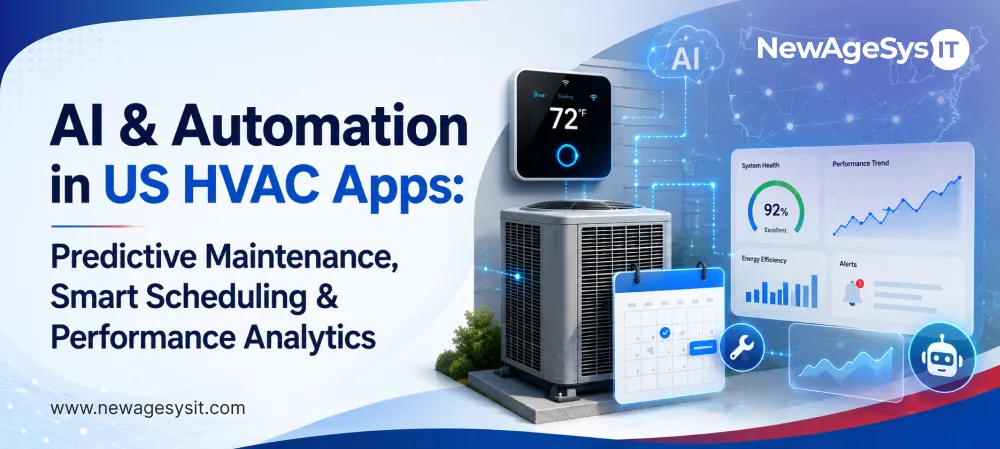
HVAC 8 min read
AI & Automation in US HVAC Apps: Predictive Maintenance, Smart Scheduling And Performance Analytics

| This article is part of our series on HVAC Mobile Apps in the USA: Building Smarter Field And Service Management Experiences in 2026 |
AI HVAC apps in the USA are becoming an operational requirement for enterprise HVAC businesses. Companies using AI are improving technician utilization, reducing emergency service volume, and creating more predictable operations.
Many businesses now invest in HVAC mobile and web app development services to modernize field operations. They also adopt custom HVAC software and CRM development services to connect operational data with decision-making.
IoT-connected HVAC equipment has made predictive maintenance practical across residential and commercial environments. Smart thermostats, sensors, and connected systems continuously stream performance data into mobile platforms. AI models analyze runtime patterns, temperature variance, pressure changes, and historical service outcomes to identify likely failures before breakdown occurs.
AI scheduling also improves one of HVAC’s most difficult operational problems. Dispatch decisions depend on technician skills, geographic location, appointment windows, vehicle inventory, and job priority. Manual coordination cannot consistently optimize these variables at scale, while AI-driven scheduling improves route efficiency and supports faster response times.
Enterprise HVAC businesses increasingly combine predictive maintenance with automation workflows inside mobile applications. Technician performance analytics now track completion rates, billable utilization, repeat visits, and response quality across locations. These insights help leadership improve workforce planning, strengthen service consistency, and support more profitable growth.
Predictive Maintenance and IoT Integration
Predictive maintenance has become one of the strongest AI applications in HVAC operations. A predictive maintenance HVAC app combines equipment telemetry with service workflows to reduce unexpected breakdowns. Many HVAC businesses expand these capabilities through custom mobile app development to support connected field operations.
Smart thermostat and equipment integrations provide the operational data layer for predictive maintenance. Businesses building connected technician experiences across Apple devices often invest in iOS HVAC app development.
Platforms such as Ecobee, Nest by Google, Honeywell Home, and Lennox iComfort expose performance data through APIs. Runtime patterns, temperature differentials, refrigerant pressure trends, and historical error codes create measurable equipment health signals.
An IoT HVAC app USA model uses machine learning to analyze equipment telemetry continuously. These models identify degradation patterns before customers experience complete equipment failure. Predicted failure events can automatically trigger customer outreach and schedule proactive service visits.
Proactive maintenance converts emergency service demand into planned operational work. HVAC apps can also detect efficiency drops and recommend tune-up visits before energy performance declines further. These recommendations improve customer value while creating recurring service opportunities.
Enterprise HVAC businesses increasingly package connected monitoring as a premium maintenance service. Multi-equipment dashboards allow operations teams to monitor entire maintenance agreement portfolios from one interface. Health scoring, service prioritization, and automated alerts improve planning across distributed customer locations.
AI-Powered Dispatch Optimization
Dispatch performance directly affects technician productivity, customer satisfaction, and daily revenue capacity. AI dispatch systems process operational variables simultaneously instead of relying on manual coordination. Businesses adopting smart scheduling HVAC capabilities improve technician utilization and reduce scheduling inefficiencies.
Modern HVAC dispatch uses multi-constraint optimization to generate daily assignments automatically. AI evaluates GPS proximity, EPA 608 certification level, customer availability windows, estimated job duration, and vehicle inventory. These decisions create route plans that manual dispatch teams consistently struggle to match.
Machine learning models improve schedule quality using historical service data. Job type, equipment configuration, technician history, and completion records help predict expected job duration. More accurate duration forecasts improve route planning and support reliable customer ETA communication.
AI also improves emergency response without disrupting the entire operating schedule. The system identifies the nearest qualified technician and recalculates affected routes automatically. Updated arrival estimates reduce customer uncertainty during urgent service situations.
Seasonal forecasting extends dispatch optimization beyond same-day scheduling decisions. AI predicts weekly service demand using historical patterns and weather conditions to support staffing decisions. Parts-aware dispatch also verifies vehicle inventory before assignment to reduce return trips.
Many field teams support these workflows through Android HVAC app development that enables real-time dispatch execution. AI scheduling and predictive maintenance build on top of the dispatch notification design, digital work order structure, and EPA refrigerant logging architecture that every HVAC mobile app must establish first, as the full foundation is mapped in Must-Have Features in Modern US HVAC Mobile Apps.
Performance Analytics for HVAC Businesses
Performance visibility has become a competitive requirement for growing HVAC operations. Modern HVAC apps combine operational reporting with AI-driven decision support capabilities. Businesses using HVAC performance analytics gain clearer visibility into technician output and recurring revenue trends.
Technician scorecards convert daily field activity into measurable business outcomes. Core metrics include jobs completed, revenue per technician, first-call resolution, customer satisfaction, and agreement conversions. These analytics help operations leaders identify coaching opportunities and improve workforce consistency.
Performance analytics becomes more valuable when connected to HVAC software and CRM platforms. Customer equipment history, maintenance agreements, dispatch activity, and service outcomes create a complete operational dataset. Many businesses extend these capabilities through custom software development services to support reporting requirements across locations
Revenue intelligence reveals how different service categories contribute to business performance. Analytics track installation, maintenance, emergency repair, and replacement revenue across weeks and seasons. This visibility helps leadership prioritize investment and respond to changing demand patterns.
Maintenance agreement analytics strengthen recurring revenue management and customer retention planning. Renewal trends, lapsed agreement recovery, and approaching expirations identify revenue exposure early. Customer lifetime value models also highlight retention priorities and upgrade timing opportunities.
Equipment replacement analytics identify aging systems approaching replacement thresholds. These insights create proactive replacement conversations instead of waiting for emergency equipment failures. The result is stronger planning and more predictable long-term revenue performance.
Automated Customer Communication and Journey Management
Customer communication automation has become a measurable growth lever for HVAC businesses. A connected AI HVAC platform USA strategy coordinates outreach across service, maintenance, and replacement workflows. Automation reduces manual follow-up while improving booking consistency and customer retention.
Seasonal campaigns help maintain service demand throughout the year. HVAC apps automatically launch spring cooling and fall heating outreach to maintenance agreement customers. This automated communication increases seasonal booking volume without adding administrative workload.
Journey automation also helps recover inactive customer relationships before they are lost. The platform identifies customers with no service activity for twelve months or longer. Outreach can reference equipment age and recommend inspection before major performance decline occurs.
Equipment lifecycle data supports proactive replacement engagement at the right time. Automated triggers initiate replacement conversations when systems approach average replacement age thresholds. This creates planned replacement opportunities instead of waiting for emergency equipment failure.
Post-service engagement continues after the technician completes the job. HVAC apps automatically request Google or Yelp reviews within twenty-four hours of completion. Consistent review generation strengthens local visibility and supports long-term customer acquisition.
Maintenance agreement retention also benefits from structured communication workflows. Renewal sequences can launch at sixty, thirty, and seven days before expiration. Enterprise HVAC platforms are the primary deployment environment for AI features, how dispatch optimization engines, maintenance agreement management, and revenue analytics connect into a unified enterprise architecture is mapped in ServiceTitan-Like HVAC Platforms for the US Market: How They Are Built.
Data Privacy and AI Safety in HVAC Apps
AI features in HVAC applications depend on continuous access to operational and customer data. Modern HVAC automation software must protect sensitive information while maintaining reliable decision quality. Privacy governance and safety controls become increasingly important as AI adoption expands.
Customer addresses, equipment records, and IoT performance telemetry require controlled data handling practices. These datasets qualify as sensitive operational information and demand encryption and access controls. HVAC businesses must also support CCPA rights and disclose data usage through privacy policies.
IoT integrations require governance beyond standard application security requirements. Data collected through Nest, Ecobee, Honeywell, and similar platforms must follow platform-specific usage rules. API access permissions and retention policies should align with each provider’s compliance standards.
AI systems analyzing refrigerant usage patterns must preserve underlying compliance documentation. Efficiency recommendations should never overwrite or modify original EPA refrigerant records. Data integrity remains mandatory because refrigerant logs function as regulatory documentation.
Recommendation quality also requires strict operational safeguards and validation controls. Predictive maintenance alerts should rely on measurable equipment performance instead of aggressive assumptions. False urgency damages customer trust and weakens long-term service relationships.
These governance requirements become especially important across technician apps and customer workflows. Businesses investing in HVAC mobile app development strengthen compliance visibility while supporting safer field operations. This approach supports building smarter field and service management experiences.
Final Thoughts
AI adoption in HVAC operations now delivers measurable operational and financial outcomes. A well-designed AI HVAC app in the USA creates value through predictive service delivery, scheduling efficiency, and stronger decision support. Businesses investing in connected intelligence are moving beyond reactive service models.
IoT-enabled predictive maintenance helps reduce emergency call volume and improve equipment reliability. AI dispatch optimization increases technician utilization by aligning assignments with operational constraints. Performance analytics transforms service activity into measurable insights that support retention and revenue planning.
These capabilities become more effective when implemented as a connected operational architecture. HVAC businesses combining predictive triggers, automated workflows, and analytics achieve stronger maintenance agreement retention. Long-term value comes from aligning AI decisions with real field and customer data.
Operational ROI also depends on building the correct data foundation early. Connecting equipment telemetry, dispatch intelligence, and reporting architecture improves implementation quality and scalability. Many HVAC businesses work with an AI app development company to align platform decisions with long-term operational goals.
If your HVAC business is planning AI and automation investments, define the architecture before development begins. Connecting IoT equipment data, AI dispatch logic, and analytics from the start improves measurable outcomes. Working with an experienced AI app development partner supports stronger execution and operational readiness.
Core Development
Keep exploring the custom services.

AI Software Development
Custom AI Software Development
Build intelligent, production-ready software from machine-learning models to AI-driven automation designed around your business goals.
Learn more
Mobile App Development
Custom Mobile Application Development
Native and cross-platform mobile apps that are fast, secure, and built to scale across iOS and Android.
Learn more
Web App Development
Custom Web Application Development
Scalable, secure web applications, from customer portals to complex dashboards, tailored to how your business actually works.
Learn more



