
Welcome to Blogs
Discover actionable insights, in-depth research, and expert perspectives, all in one place.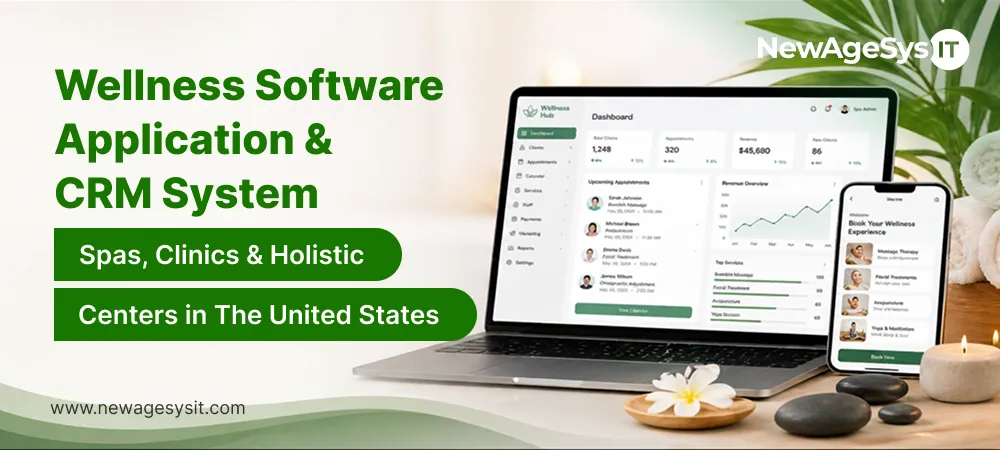
Wellness 10 min read
Wellness Software Application & CRM System for Spas, Clinics & Holistic Centers in The United States

Why US Wellness Businesses Are Investing in Purpose-Built Software
US spas, wellness centers, yoga studios, and holistic health clinics are moving toward purpose-built wellness software in the USA. Generic business software consistently fails to handle the workflows, compliance requirements, and client relationship patterns that define the wellness industry.
Platforms built for retail or general services require expensive workarounds just to handle multi-provider appointment booking, treatment packages, membership billing, and health intake forms. Even after those workarounds, critical gaps remain.
Client expectations around digital booking and personalized experiences have risen sharply. HIPAA compliance complexity has grown for businesses offering health-adjacent services.
Managing multi-modality appointments (massage, acupuncture, IV therapy, and float therapy) demands scheduling logic that generic tools cannot support. And competition from platforms like ClassPass has raised the technology baseline across the industry.
Businesses that invest in wellness mobile and web app development services consistently eliminate this friction from the start. Those that pair it with wellness software and CRM development services build a technology foundation designed specifically around wellness workflows, compliance obligations, and client lifecycle management.
This article series covers the full US wellness software landscape: CRM and client management, appointment and booking management, member retention and loyalty. It also covers data security and compliance, software development costs, and when to engage a wellness technology consultant before building.
The US Wellness Technology Landscape
Running a wellness business on disconnected point solutions creates more operational problems than it solves. A separate tool for booking, another for billing, a different system for intake forms.
The reconciliation overhead alone costs hours every week. Businesses investing in wellness software and CRM development services understand that a unified platform is the only way to eliminate this friction entirely.
Here are the core categories that define the US wellness technology stack:
- Wellness CRM : the operational hub for client profiles, appointment history, treatment preferences, health intake data, membership management, and rebooking automation. This is the technology that defines the entire client relationship experience in spa management software USA.
- Appointment and booking management : real-time availability across multiple providers and treatment rooms, package redemption tracking, online self-booking, and cancellation policy enforcement. The client-facing feature most directly correlated with satisfaction.
- Point of sale and retail : product retail sales, gift card management, gratuity processing, and package purchases integrated directly with the wellness center software – eliminating reconciliation overhead from disconnected systems.
- HIPAA-sensitive intake forms : health history questionnaires, contraindication assessments, and medical clearance forms for treatment-based services. The compliance infrastructure every wellness business offering health-adjacent services must maintain.
- Wellness compliance : HIPAA applicability is always fact-specific and not categorical, CCPA for California clients, informed consent for treatment-based services, and minor client consent. This regulatory layer defines what data can be collected and how it must be protected.
US spa software and holistic health software that integrates all these categories into a single platform consistently outperforms disconnected point solutions – in operational efficiency, client experience, and compliance readiness.
Wellness CRM: The Client Relationship Core
A wellness CRM is far more than a contact database. It is the operational core that connects every client touchpoint, from the first inquiry through consultation, first appointment, and treatment package.
Repeat visits, long-term membership, and revenue per visit all depend on how well that core is built. No other technology investment has a greater impact on client retention in a US wellness business.
Generic CRM platforms were not built for this. They do not anticipate membership holders at different tier levels, package clients with remaining session balances, couples and group booking relationships, or gift certificate recipients.
Adapting them requires 20-30 custom fields and workflows and even then, critical gaps remain in intake health history management, treatment note storage, and HIPAA-appropriate access controls.
Purpose-built wellness CRM tracks treatment preferences, contraindication flags, preferred providers, allergen history, and medical notes – the data that enables every provider to deliver a personalized experience without asking the same questions at every visit.
Rebooking automation triggers follow-up after each appointment, prompting the client to schedule their next visit automatically. It is the single most effective retention mechanism in the wellness software stack.
Client communication history captures every touchpoint: booking confirmations, treatment notes, retail purchases, and personal communications, building the relationship context that transforms transactional visits into trusted wellness relationships.
The complete feature framework for US wellness CRM is covered in Wellness CRM: Must-Have Features for US Spas, Yoga Studios & Holistic Health Centers. [Link to Cluster 1].
Appointment & Booking Management: The Operational Platform
Appointment and booking management in a US wellness business is significantly more complex than general service scheduling.
A wellness center with massage therapists, estheticians, acupuncturists, and yoga instructors requires a booking system that manages each provider’s availability independently.
Room and equipment double-booking across multiple providers and treatment rooms is a coordination challenge that generic scheduling tools were never designed to handle.
Online self-booking is now the baseline client expectation. Platforms like Vagaro and Mindbody have established 24/7 digital access, real-time availability display, and instant confirmation as the standard.
Wellness businesses still requiring phone booking lose clients to competitors who offer this experience.
Beyond scheduling, purpose-built wellness booking software handles treatment package redemption, tracking remaining credits, enforcing expiration dates, and prompting staff when packages run low.
Waitlist automation captures cancellations that would otherwise represent lost revenue.
Intake form delivery at booking ensures clients complete health questionnaires before arrival, so providers review critical information before the session begins.
The full feature and architecture framework for US wellness appointment and booking management software is covered in Appointment & Booking Management Software: Key Features for US Wellness Centers. [Link to Cluster 2].
Member Retention and Loyalty: The Revenue Protection Layer
Client retention is where wellness businesses either build sustainable profitability or absorb compounding revenue loss that front desk teams rarely notice until the relationship has already gone cold.
Industry research consistently cites client acquisition costs in wellness businesses running 5 to 7 times higher than retention costs, with profitability in most wellness models beginning at the second or third visit. This is a commonly cited industry benchmark.
That single economic reality makes retention technology the highest-ROI investment in the wellness software stack.
Wellness client churn is rarely loud. Clients do not cancel memberships or send complaint emails. They simply stop booking. By the time a front desk team notices, the relationship has already gone cold.
Purpose-built retention tools identify this pattern early, triggering automated re-engagement sequences at 30, 60, and 90 days after the last visit, personalized to the client’s last treatment and provider relationship.
Membership program tools add a recurring revenue layer that smooths cash flow and dramatically increases annual client value.
Loyalty points, milestone recognition, and automated post-appointment feedback surveys complete the retention infrastructure that keeps clients engaged between visits.
The full framework for member retention and loyalty program tools in US wellness software is covered in Member Retention & Loyalty Program Tools in US Wellness Software. [Link to Cluster 3]
Wellness Data Security and Compliance
Compliance is the layer of US wellness software that most business owners underestimate, until a liability claim, a data breach, or a regulatory audit makes the gap visible.
The regulatory landscape for wellness platforms spans potential HIPAA obligations, CCPA and state privacy laws, informed consent management, digital waiver enforceability, and minor client consent.
HIPAA applicability in wellness is widely misunderstood. Not all spas and wellness centers are HIPAA-covered entities.
Medical spas with licensed nurse practitioners, acupuncture clinics, naturopathic practices, and integrated wellness centers offering health services are more likely to qualify.
The determination is always fact-specific and requires qualified healthcare legal counsel. Never assume.
CCPA applies to US wellness platforms with California clients that meet revenue or data volume thresholds.
Health intake data, treatment history, and behavioral data are sensitive personal information categories requiring enhanced protection under CCPA/CPRA.
Digital informed consent is the most universally applicable compliance requirement across all wellness business types, and the most implemented incorrectly.
Electronic consent forms must meet ESIGN/UETA standards to be legally enforceable. A simple checkbox is not a valid digital signature.
The complete compliance framework for US wellness software, covering HIPAA, CCPA, informed consent, and digital waiver management, is covered in Wellness Data Security & Compliance: HIPAA, CCPA & US Data Privacy Laws for Wellness Platforms. [Link to Cluster 4]
Wellness Software Development Cost in the USA
Wellness business owners who receive generic estimates frequently encounter significant budget overruns mid-development, because compliance architecture and wellness-specific workflows add costs that general software estimates rarely reflect.
Here are realistic planning ranges for the primary wellness software categories:
- Wellness CRM development : $50,000–$220,000 for a custom wellness CRM with client management, appointment booking, package billing, and basic retention features : depending on provider count and feature depth.
- Full wellness management platform (CRM + booking + POS + retail + intake forms + mobile app) : $180,000–$600,000+ depending on scale and integration complexity.
- HIPAA-compliant architecture (if applicable) : adds 15–25% to development cost for wellness platforms collecting health intake data that constitutes PHI.
- Ongoing costs : payment processing fees, SMS/email notification costs, and maintenance typically add 15–25% of initial development cost annually.
- Off-the-shelf comparison : Vagaro ($30–$90/month), Mindbody ($139–$599/month), and Boulevard ($175–$435/month). Annual costs appear lower but customization limits and per-location fees compound at scale.
A detailed cost breakdown for US wellness software and CRM development is covered in Cost of Wellness Software & CRM in the USA: Key Factors & Budget Ranges. [Link to Cluster 5]
The Value of a Wellness Technology Consultant Before Building
The most expensive wellness software mistakes are made before development begins.
Selecting the wrong technology vendors, misidentifying HIPAA obligations, or building consent forms that are not legally enforceable are decisions that cost $40,000–$200,000 to correct after development has begun.
Over-investing in SaaS platforms that cannot support specific multi-modality workflows carries the same risk.
A wellness technology consultant brings HIPAA applicability expertise for wellness business models, treatment-specific workflow design knowledge, and payment processing compliance understanding that general software consultants simply do not have.
HIPAA compliance determination is always fact-specific.
Wellness businesses offering IV therapy, acupuncture, naturopathic medicine, or aesthetician services under medical supervision may have HIPAA obligations that general wellness businesses do not.
Only qualified healthcare legal counsel can make this determination.
Pre-build consultation typically costs $8,000–$30,000, and consistently prevents the most common and most expensive wellness software mistakes.
The full case for engaging an independent wellness technology consultant before building is covered in Do You Need an Independent Wellness Tech Consultant Before Building Software in the US? [Link to Cluster 6]
Key Technology Trends Shaping US Wellness Software
AI-powered wellness personalization, recommendation engines that suggest treatment sequences, product retail pairings, and provider matches based on each client’s wellness history and stated goals, is redefining the client experience standard across US wellness businesses.
The wellness businesses pulling ahead of competitors are not just digitizing existing workflows. They are adopting technology that creates measurably better client experiences and stronger retention outcomes.
Five trends are defining competitive advantage in wellness platform USA right now:
- AI-powered wellness personalization : recommendation engines that suggest treatment sequences, product retail pairings, and provider matches based on each client’s wellness history and stated goals.
- Virtual and hybrid wellness delivery : telehealth consultations for naturopathic and functional medicine practices, virtual yoga and meditation sessions, and digital wellness coaching, expanding geographic reach beyond the physical location.
- Wearable integration : connecting Apple Health and Google Health Connect data to client wellness profiles, enabling data-informed service recommendations that strengthen the client relationship. For iOS-first wellness platforms, custom iOS app development with HealthKit integration pulls Apple Health data directly into the client profile — without requiring manual data exports from the client
- Predictive retention analytics : machine learning models identifying clients at risk of lapsing before they stop booking : enabling proactive outreach that preserves revenue before the relationship goes cold.
- Contactless client experience : digital intake forms, mobile check-in, and NFC payment reducing front desk friction and improving the arrival experience.
Wellness businesses building these capabilities into their platforms through custom software development and custom mobile app development are setting the technology standard that increasingly digitally native US wellness clients will come to expect.
Final Thoughts
US wellness businesses that invest in purpose-built software, designed around their specific treatment workflows, client lifecycle, and compliance obligations, consistently outperform those relying on generic platforms.
Wellness businesses that treat CRM, appointment management, member retention, data security, and cost planning as interconnected layers of a single technology strategy build platforms that compete effectively in an increasingly demanding US market.
The decisions made now define client experience, retention capability, and operational efficiency for years ahead.
If your organization is planning wellness software or CRM development, aligning technology decisions with your client lifecycle requirements, compliance obligations, and long-term growth strategy before development begins significantly improves outcomes.
NewAgeSysIT works with US spas, clinics, and holistic centers to build wellness software and CRM systems designed around treatment workflows, client lifecycle management, and compliance obligations from day one.
Core Development
Keep exploring the custom services.

AI Software Development
Custom AI Software Development
Build intelligent, production-ready software from machine-learning models to AI-driven automation designed around your business goals.
Learn more
Mobile App Development
Custom Mobile Application Development
Native and cross-platform mobile apps that are fast, secure, and built to scale across iOS and Android.
Learn more
Web App Development
Custom Web Application Development
Scalable, secure web applications, from customer portals to complex dashboards, tailored to how your business actually works.
Learn more



