
Welcome to Blogs
Discover actionable insights, in-depth research, and expert perspectives, all in one place.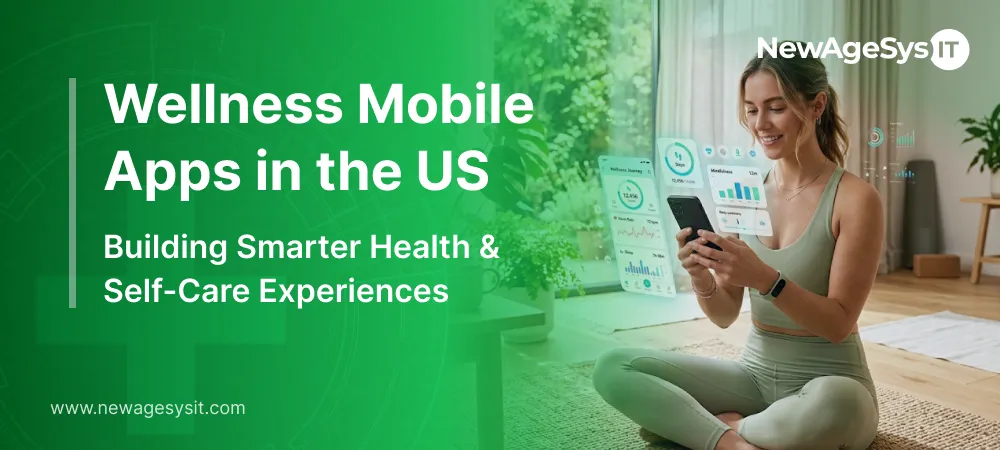
App Development 10 min read
Wellness Mobile Apps in The USA: Building Smarter Health & Self Care Experiences

Wellness is no longer accessed occasionally. It now lives on smartphones. Users book spa sessions, track sleep, follow guided meditation, log nutrition, and receive coach check-ins, all in one place. This shift has made wellness mobile app development USA a strategic priority for businesses aiming to stay relevant.
Platforms like Calm, Headspace, Noom, and MyFitnessPal have set a high benchmark for user experience. Their growth has also validated the market. Calm’s multi-billion-dollar valuation and Headspace’s merger with Ginger show the scale of demand for digital wellness. Businesses that fail to meet these expectations risk losing clients to app-first platforms.
Wellness businesses building competitive mobile experiences require two distinct development capabilities: a consumer-facing mobile and web app layer that delivers personalized wellness content and daily engagement, and a backend wellness software and CRM layer that manages scheduling, client data, and retention operations.
This blog maps the full US wellness mobile app landscape. It covers feature strategy, mindfulness platforms, practitioner tools, AI-driven personalization, compliance requirements, and cost planning.
The US Wellness Mobile App Market: Consumer vs Professional Apps
The US wellness app market is divided into two primary categories: consumer-facing apps and professional practitioner apps. Together, they define the broader landscape of health app development in the USA.
Consumer wellness apps are designed for end users. These include meditation, sleep tracking, nutrition logging, mental health support, yoga, and holistic self-care platforms. They compete on personalization, content quality, community features, and habit loop design. The goal is simple: help users build consistent wellness routines. Even small UX friction can reduce daily engagement.
Professional wellness apps serve coaches and practitioners. They focus on client management, scheduling, treatment notes, program delivery, and progress monitoring.
These apps compete on efficiency and program delivery quality. Practitioners need tools that strengthen client relationships while reducing administrative workload, which is why choosing the right US wellness app builder becomes critical for long-term scalability.
Many US wellness businesses require both layers. A client-facing app supports booking, tracking, and engagement. A practitioner app manages programs, notes, and communication, often supported by wellness software and CRM development services that handle backend operations like scheduling, client data, and retention.
US wellness businesses that require both consumer and practitioner layers need a development approach that designs these experiences as a connected system. This is where wellness mobile and web app development services built for the US market become the foundation not an add-on
Across both categories, health data privacy is essential. Apps collecting sleep data, mood logs, and nutrition records must comply with Apple HealthKit data governance.
HealthKit data cannot be used for advertising or shared with third parties without explicit user consent. CCPA additionally classifies wellness health data as sensitive personal information for California users. Mental health apps also require careful content safety and alignment with evolving FDA digital health guidance.
Must Have Features in US Wellness Mobile Apps
Competitive US wellness apps are built around a clear set of core features. These include guided practice delivery, sleep tracking, nutrition logging, mood journaling, and wearable integration. Together, they shape how users engage with wellness on a daily basis, especially as users of self-care apps in the US expect personalized and consistent daily support.
Guided practice delivery sits at the center. Apps offer meditation sessions, breathwork, sleep stories, and yoga flows through audio and video. Offline access is equally important, as users often engage without consistent connectivity. Sleep tracking adds another layer of value.
Many wellness businesses also require a web application layer for practitioner-side administration enabling coaches and clinic managers to oversee client programs, scheduling, and reporting from desktop interfaces alongside the consumer mobile experience.
Integration with Apple HealthKit, Google Health Connect, and wearable devices helps turn raw sleep data into meaningful insights. Mood and mental wellness journaling supports self-awareness.
Daily check-ins and trend visualization help users understand patterns over time. Nutrition and hydration tracking further expand this view. These features focus on nourishment, energy, and consistency rather than strict calorie control.
Progress visualization keeps users motivated. Streaks, habit tracking, and wellness trends make improvement visible. At the same time, push notifications enable habit formation. Well-timed notifications and personalized prompts support regular engagement without adding pressure.
Mindfulness and Mental Health Platforms: The Calm Model
Building a Calm-like mindfulness platform requires more than content alone. It depends on three elements working together. High-quality audio and video delivery is essential. Strong mental health content safety frameworks are equally important. A sustainable subscription model is also needed to compete in the US market, especially within mindfulness app development, where user expectations are already well defined.
Content depth defines long-term success. Leading platforms offer meditation, sleep stories, breathwork, movement, and even kids’ content. This range keeps users engaged over time. Niche wellness brands can compete by going deeper into specific areas. Trauma-informed practices, somatic wellness, and culturally relevant mindfulness create stronger differentiation, particularly in the growing mental health app USA landscape.
Mental health content safety is a core requirement. Content addressing stress, anxiety, grief, or burnout must include disclaimers, content warnings, and access to crisis resources. These platforms are not a substitute for licensed medical or mental health care. Users experiencing clinical symptoms of anxiety, depression, grief, or trauma should seek support from qualified healthcare professionals.
FDA digital health guidance for mental health apps is an evolving area that wellness app teams must monitor and account for in product design.
Subscription models drive retention. Most platforms use a tiered approach. Free content builds trust, while premium plans unlock full access. Annual subscriptions often improve long-term value.
Wellness Coach and Practitioner Mobile Apps
US wellness professionals are increasingly mobile-first. Coaches, holistic practitioners, and integrative consultants now manage their practices through smartphones and tablets. Client scheduling, wellness program delivery, progress tracking, and communication are handled in one place.
This shift makes practitioner apps essential for scaling without adding administrative complexity, especially for businesses building a wellness app for spas and multi-service wellness centers.
These apps differ from consumer platforms in both purpose and structure. They focus on efficient client management and structured program delivery. Practitioners can assign personalized wellness protocols to individual clients. These may include guided practices, supplement plans, lifestyle recommendations, and daily habit tracking, all accessible through a connected client interface.
Secure communication is critical. Messaging, check-ins, progress updates, and session notes must be managed within a protected environment. HIPAA applicability for wellness practitioner apps is fact-specific and depends on the nature of services offered and the client relationship.
Practitioners whose services qualify as healthcare must implement HIPAA technical safeguards for client health information. This determination requires qualified healthcare legal counsel and should not be assumed without professional guidance.
AI and Automation in US Wellness Apps
AI and automation are shaping how modern wellness apps deliver personalized experiences. Instead of generic programs, users now expect adaptive support based on their behavior, goals, and daily patterns. This shift creates a clear competitive advantage, especially as every wellness mobile platform USA is expected to deliver personalization as a core feature, not an add-on.
AI-powered wellness plans are built using data such as sleep patterns, stress levels, lifestyle habits, and user goals. These systems adjust recommendations over time, making wellness journeys more responsive. Habit nudge intelligence further improves consistency. Algorithms identify when users are likely to skip practices and deliver timely, personalized reminders. Adaptive content recommendations enhance engagement.
Apps suggest the right meditation, breathing exercise, or sleep session based on mood logs and recent activity. AI-driven intake assessments also play a key role. Conversational onboarding helps map users to personalized starting programs.
However, AI in wellness requires clear boundaries. These systems must not provide clinical diagnosis or replace licensed care. AI-generated wellness recommendations are not medical advice and must not substitute for licensed healthcare.
FDA digital health guidance for AI-based wellness apps is an evolving area. Teams building AI wellness features should consult qualified legal counsel to assess regulatory applicability.
Health Data Privacy in US Wellness Mobile Apps
Health data privacy is a core requirement for US wellness mobile apps. These platforms handle sensitive information such as sleep patterns, mood logs, nutrition records, and mindfulness activity. As a result, strict data governance frameworks must be followed.
Apple HealthKit sets clear rules for iOS apps. HealthKit data, including sleep, heart rate, and mindfulness minutes, cannot be used for advertising purposes or shared with third parties without explicit user consent.
This is a hard restriction enforced by Apple at the platform level. Similar restrictions apply to Android through Google Health Connect, which governs how health data is accessed and used across apps.
For apps serving users in California, CCPA adds another layer of responsibility. Wellness data may be classified as sensitive personal information. This requires transparent data handling, user consent, and clear privacy disclosures.
HIPAA may apply to wellness practitioner apps, depending on the nature of services offered. When applicable, apps must implement secure data storage, access controls, and compliant communication systems. This determination is fact-specific and requires qualified healthcare legal counsel, not general legal advice.
Mental health data requires additional care. Mood tracking, journaling, and self-assessments must be handled with heightened privacy protections to maintain user trust and safety.
Technology Stack for US Wellness Mobile Apps
Choosing the right technology stack is a critical decision in wellness mobile app development USA. Most US wellness apps use cross-platform frameworks like React Native or Flutter to reach both iOS and Android users efficiently. However, native approaches are often preferred when deeper integrations are required.
For example, apps relying heavily on Apple HealthKit or advanced sensor data benefit from dedicated iOS development, while Android-specific features such as Google Health Connect integration, Android-native push notification behavior, and device-specific sensor access are better served through dedicated Android app development.
Audio and video infrastructure is equally important. Wellness apps depend on the smooth delivery of meditation sessions, sleep stories, and breathwork content. Reliable streaming, offline access, and background playback are essential for a consistent user experience.
Health data integration forms the foundation of personalization. Platforms connect with HealthKit and Health Connect to capture sleep, activity, and heart rate data. This enables more meaningful wellness insights.
Push notification systems also play a key role. Services like Firebase Cloud Messaging and APNs enable personalized reminders that adapt to user behavior while respecting quiet hours.
In addition, mental health content requires structured moderation and timely disclaimer delivery. Mental health content safety requires a structured technical layer within the app: content categorisation that triggers appropriate disclaimers at defined touchpoints, crisis resource delivery for high-sensitivity content, and content warning systems that appear before potentially distressing wellness material.
This is an engineering requirement, not an editorial afterthought.
Wellness Mobile App Development Cost and Partner Selection
Wellness mobile app development costs vary based on feature depth, integrations, and personalization requirements. Planning for wellness mobile app development USA requires a clear understanding of these cost tiers and what drives them. A basic consumer app with guided content and simple tracking typically ranges from $50,000 to $130,000.
Mid-scale apps that include HealthKit or Health Connect integration, content libraries, habit tracking, and AI recommendations usually fall between $130,000 and $380,000. More advanced platforms with audio libraries, AI personalization, practitioner tools, subscription models, and wearable integration can range from $380,000 to $1.2M or more.
One often underestimated cost factor is mental health content safety. Features like clinical disclaimers, crisis resource integration, and content warning systems add both technical and editorial complexity.
Choosing the right custom mobile app development partner is equally important experience with HIPAA, health data integration, and wellness-specific UX matters more than general app development skills.
Conclusion
Building successful wellness apps in the US goes beyond standard mobile development. It requires a deep understanding of health data privacy, mental health content safety, and wellness-specific UX. User expectations are shaped by platforms like Calm, Headspace, and MyFitnessPal, making this a specialized challenge that general agencies often underestimate.
Apps designed around real behavior change, compliant data practices, and consistent habit formation create stronger and more sustainable user engagement. Success in wellness mobile app development USA depends on aligning these elements early in the process.
If your organization is planning US wellness mobile app development, aligning feature scope, health data compliance requirements, and mental health content safety design with your business model before development begins significantly improves both cost predictability and product outcomes.
Apps designed around real behavior change, compliant data practices, and consistent habit formation create stronger and more sustainable user engagement. Teams at NewAgeSysIT have supported wellness businesses across consumer self-care platforms, practitioner tools, and mindfulness applications in the US market.
Core Development
Keep exploring the custom services.

AI Software Development
Custom AI Software Development
Build intelligent, production-ready software from machine-learning models to AI-driven automation designed around your business goals.
Learn more
Mobile App Development
Custom Mobile Application Development
Native and cross-platform mobile apps that are fast, secure, and built to scale across iOS and Android.
Learn more
Web App Development
Custom Web Application Development
Scalable, secure web applications, from customer portals to complex dashboards, tailored to how your business actually works.
Learn more



