
Welcome to Blogs
Discover actionable insights, in-depth research, and expert perspectives, all in one place.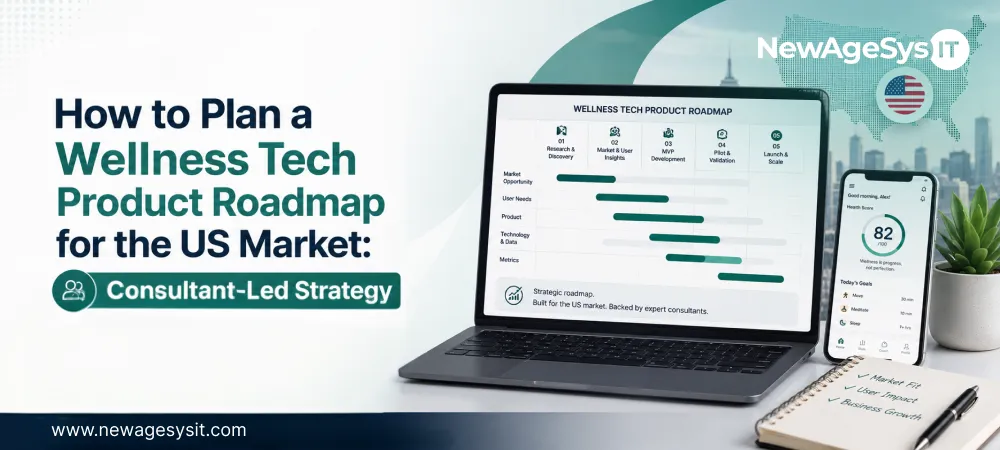
Wellness 5 min read
How to Plan a Wellness Tech Product Roadmap for the US Market: Consultant-Led Strategy

US wellness businesses often invest in digital transformation. However, they do so without a structured roadmap for wellness tech products. This leads to expensive mistakes.
They frequently select SaaS platforms that cannot support compliance requirements. They also miss HIPAA obligations. They also pursue wearable integration without understanding the implications of data governance.
A wellness tech product roadmap in the USA is not a feature list. It is a multi-year strategic investment plan aligning technology decisions with business objectives, compliance obligations, and wearable data access requirements. Wellness workflow design, HIPAA applicability, and wearable SDK knowledge require highly specialized domain expertise, making consultant-led roadmap development valuable.
Earlier roadmap engagement always delivers greater ROI. Teams investing in wellness mobile and web app development services or wellness software and CRM development services consistently outperform those making reactive technology decisions.
Phase 1: Current State Assessment
Every WellTech roadmap USA begins with an honest inventory of what exists today.
- Technology inventory: CRM, booking system, billing platform, communication tools, client app, and wearable integrations are assessed against current and future business needs. Gaps and redundancies both carry cost implications.
- Compliance assessment: HIPAA applicability determination requires healthcare legal counsel. This stage reviews California client CCPA exposure and informed consent architecture, not platform selection.
- Wearable data landscape: Which devices do current clients use? Are any integrated today? What is the existing health data collection model? This information shapes the entire wearable WellTech product strategy phase.
- Client experience audit: Identifying where the digital client journey creates friction. These friction points are typically driving lapsed client patterns.
- Staff workflow analysis: Where staff time consumes administrative tasks, automation could address this issue. These are the highest-ROI automation targets in most wellness businesses.
Phase 2: Wearable Data Strategy
The most important part of wellness platforms is the wearable data strategy phase, which is missing from most general technology roadmaps.
- Client wearable mapping: Map which wearable devices clients predominantly use, like Apple Watch, Oura Ring, Whoop, or Garmin, before prioritizing integration investment. Building for the wrong platform first is a costly sequencing mistake.
- Order of wearable integration: HealthKit is the first step for high-end wellness brands whose customers mostly use iOS. Recovery-focused programs with Whoop users prioritize the Whoop API. Sequencing decisions should follow client demographics, not vendor preference.
- Health data governance design: Storage, access controls, consent management, and the ability to delete CCPA data must all be spelled out before any wearables are added. Governance designed after integration is significantly more expensive to retrofit.
- AI coaching data requirements: Define the wearable data the planned AI wellness coaching requires, then map those requirements to the wearables that provide it.
- Wearable API cost modeling: Recurring budget lines include ongoing maintenance costs and per-API subscription fees. They belong in the roadmap from day one.
Phase 3: Technology Decision Architecture
Phase 3 answers the foundational WellTech investment question: buy or build for each capability?
- Buy vs. build evaluation: The wellness CRM, booking system, client app, AI coaching, wearable integration, and content delivery are all looked at separately. The answer is rarely the same across all capabilities.
- Platform selection with wellness-specific criteria: Wearable integration depth, wellness workflow design, informed consent architecture support, and HIPAA compliance capability are not generic software feature lists. Platforms like Vagaro, Mindbody, Jane App, and Healthie are evaluated against actual requirements.
- Integration architecture: Custom software development designs the API and data connections between bought and built components ensuring client data, wearable health data, and wellness program records flow coherently across the stack.
- AI feature roadmap: AI wellness coaching requires a wearable data foundation before model development begins and clinical safety review before deployment. Sequencing matters.
- Mobile platform strategy: Decisions about iOS, Android, and cross-platform custom mobile app development should be based on target client demographics and Apple Watch integration requirements not vendor defaults or developer familiarity.
Phase 4: Phased Investment Plan and Success Metrics
A WellTech investment plan without defined phase gates is a budget without accountability. This phase converts roadmap strategy into sequenced, measurable commitments.
- Year 1 priorities: HIPAA compliance architecture, informed consent systems, and CCPA infrastructure come first. Digital booking, digital intake, and a basic client app are the most urgent client experience improvements that form the wearable integration foundation, along with compliance.
- Year 2–3 investment: As wearable data infrastructure matures, AI wellness coaching development becomes viable. Year 2–3 initiatives include hybrid virtual and physical wellness delivery and advanced retention analytics.
- Objective authorization criteria: Client digital adoption metrics, retention improvement, compliance audit pass, and revenue per client change are phase gate criteria. Gates prevent premature investment in later phases.
- KPI framework: Client app adoption, wearable integration uptake, lapsed client rate change, and retention improvement before the program starts, not after results disappoint.
- Contingency: Budget explicitly for HIPAA architecture changes, wearable API updates, and wellness regulation changes. These are predictable uncertainties in every multi-year WellTech program.
The Value of Consultant-Led WellTech Roadmap Development
A structured well-tech roadmap is only as strong as the domain expertise behind it. Consultant-led development brings five capabilities internal wellness teams rarely hold.
- HIPAA wellness expertise: Consultants work with qualified healthcare legal counsel. They provide compliance clarity. This clarity helps prevent the most costly WellTech mistake. That mistake is building a HIPAA-covered wellness business platform without safeguards.
- Wearable ecosystem knowledge: Direct experience with HealthKit, Oura Ring, Whoop, and Google Health Connect integration landscapes. Understanding which wearable provides which wellness data and what the API constraints are determines integration sequencing.
- Informed consent law for wellness: Understanding what ESIGN/UETA compliant digital consent looks like for specific wellness service types across different US states. This information is not general software knowledge.
- WellTech vendor landscape: Consider Vagaro, Mindbody, Jane App, Healthie, and custom development based on needs and implementation experience, not vendor marketing.
- Rapid delivery: Consultant-led roadmaps deliver in 6–10 weeks what internal teams take 6–18 months, at much lower opportunity cost.
Building a WellTech Roadmap That Delivers
US wellness companies that invest in roadmap development before technology procurement have higher client adoption, lower integration costs, and stronger compliance. Mistaken SaaS platforms, unmanaged wearable data, and missed HIPAA deadlines are all examples of reactive technology purchases that cost more to fix than to avoid.
A structured, consultant-led WellTech strategy roadmap transforms fragmented technology decisions into coherent, compliant, competitive investments. HIPAA applicability, wearable SDK knowledge, and informed consent architecture are too specialized to develop without domain expertise. To see how a US WellTech product roadmap partner approaches HIPAA applicability, wearable data strategy, and phased investment planning before any technology vendor is selected, explore our work with wellness founders and enterprise teams.
Core Development
Keep exploring the custom services.

AI Software Development
Custom AI Software Development
Build intelligent, production-ready software from machine-learning models to AI-driven automation designed around your business goals.
Learn more
Mobile App Development
Custom Mobile Application Development
Native and cross-platform mobile apps that are fast, secure, and built to scale across iOS and Android.
Learn more
Web App Development
Custom Web Application Development
Scalable, secure web applications, from customer portals to complex dashboards, tailored to how your business actually works.
Learn more



