$1.1T Market by 2032
A booming SaaS economy with projected growth from $315.8B today to $1.1T over the next decade.
Guaranteed Expert Consultation Within 1 Hour. Click Here!
Guaranteed Expert Consultation Within 1 Hour. Click Here!

Launch secure, high-performance iOS & Android apps built to grow your business — delivered by a proven & dedicated US-based development team.
Apps
Delivered

Project Management
Trusted by startups and enterprises across multiple industries.

SaaS, to some, may still feel like a new bandwagon to jump on. However, the bandwagon is estimated to grow to $315.8 billion this year, and is showcasing a projection of reaching $1.1 trillion by 2032.
To add, there is a sea of products like Netflix, Zoom, Grammarly, Canva, etc., that are SaaS at their very core. So, naturally, if you have a SaaS-based idea for a business venture, and are wondering “How to build a SaaS application?”, you are very right in thinking so.
But, as stated earlier, the market is flooded with SaaS-based solutions, so the competition is heavy. And, a single wrong step at an early stage, such as development, can put your success into jeopardy. So, again, you are right about researching the course of action beforehand.
However, where do we come in this picture? Well, there are two sides to it. Firstly, we are a SaaS development company, which means we are familiar with the ropes around SaaS development, hence this article to help you. And, if you want more, we can be your partner in crime for turning your SaaS idea into a tangible reality (but we will talk about this later).
So, let’s begin!
A booming SaaS economy with projected growth from $315.8B today to $1.1T over the next decade.
A clear roadmap from market analysis and design to monetization and post-launch scaling.
Realistic budgets, timelines, and technology recommendations for MVP through enterprise SaaS.











To understand what SaaS application development is, we first need to understand what SaaS really means and what are SaaS products.
SaaS, as its full form suggests, is software as a service. To add, a SaaS product is a cloud-based software solution hosted online, but not on internal company servers. Instead of purchasing the software outright, users pay a subscription fee to access it via a web browser or app — which is why SaaS products are fundamentally delivered through web application development, built to be browser-accessible, scalable, and continuously updated. So basically, this model eliminates the need for businesses to invest heavily in IT infrastructure while ensuring smooth, uninterrupted software updates that enhance functionality without disrupting user experience.
In essence, the development of such products is known as SaaS application development.
Now, there are several ways SaaS application development may differ from the generic software or app development, because of how it behaves. We’ll share a few additional points, not covered above:
The data of a SaaS application is stored securely on a cloud server, while traditional software relies on local and on-premise storage.
SaaS platforms receive automatic and real-time updates, as opposed to traditional software that requires manual or versioned upgrades.
SaaS applications are built to accommodate as many users as possible across regions, so scalability is a mandate. Contrarily, traditional apps may require limited scalability.
Unlike traditional setups, where the maintenance is carried out by multiple IT teams, SaaS providers handle maintenance centrally.
SaaS applications are built such that they are accessible anytime, anywhere, with just an active internet connection.
It follows a multi-tenant structure. Basically, multiple users are sharing the SaaS service simultaneously, so concurrency is a big need too.
The Upfront cost for developing a SaaS product is low. However, there are recurring payments, while traditional software requires an initial investment.
Discover your project budget with our interactive AI-powered app cost calculator.
Around 23,482 SaaS-based companies are operating in the U.S alone. Such interest is no coincidence. Instead, it is because of the tremendous benefits SaaS architecture offers that companies are getting pulled in this direction. We will be reiterating a few benefits from above with a different perspective, for a better understanding. So, here they are:
The subscription model provides a stable income stream, enabling companies to plan for growth with predictable cash flow.
SaaS eliminates the need for significant investment in software and hardware, making it easier for clients to adopt.
SaaS can easily scale to accommodate growing user bases without requiring large infrastructure investments, ideal for startups and expanding companies.
With internet access, SaaS software is accessible from anywhere, broadening your customer base.
SaaS providers handle updates and improvements, ensuring users always have access to the latest features and security patches.
Centralized hosting and regular updates reduce the risk of piracy and hacking, while subscription-based access discourages unauthorized use.

Get expert guidance before you invest in AI software development. Work directly with Giovanni and Bibin to validate your technology direction, align AI with business goals, and make confident decisions that reduce risk and accelerate outcomes.
Request a Strategic Consultation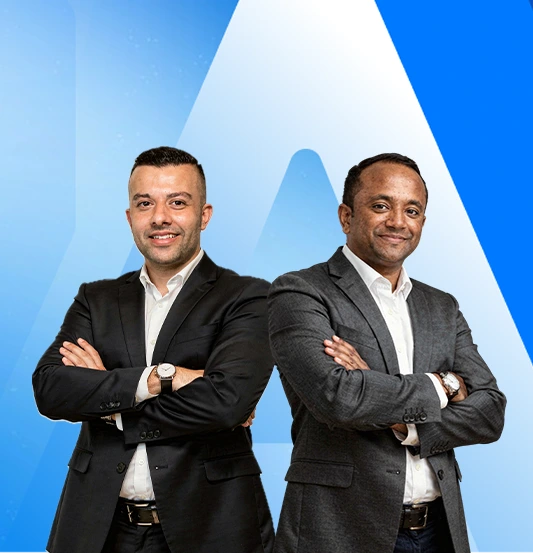
You must be aware of the SaaS applications that appeal to your target market. However, if you are not, the main categories of software-as-a-service available on the market are outlined here. This will help you determine what direction your idea would take and what kind of SaaS application development you may expect:
These SaaS applications are intended for companies looking to enhance their marketing tactics and foster stronger client relationships. HubSpot is one of the leading examples.
These applications assist businesses in managing their content resources.
Here, WordPress.com serves as an example of a CMS SaaS. Being one of the top custom software development companies in New Jersey, our experts have been developing content management systems for organizations of different sizes across the globe.
ERP systems aid big businesses or organizations in organizing and managing their day-to-day business activities or operations. It includes processes like manufacturing, reporting, commerce, sales, human resources, supply chain, etc. Some notable examples that fall in this category include Oracle NetSuite, Microsoft Dynamics 365, and SAP Business One.
SaaS based accounting solutions are usually designed to cater to the needs of finance professionals. It automates and simplifies the accounting and financial operations of your organization, often including billing and invoicing. One example that serves this type of solution is Zoho.
Software development companies can benefit from this SaaS type. How? Companies can manage their workflow and engage with team members in a shared workspace by dealing with task assignments, resource allocation, and project tracking. Jira and Trello are good examples.
These tools are made for a particular industry and are intended to optimize particular business procedures. One example of these tools is Veeva for pharmaceutical management. Being one of the specialized custom application development companies, we, as a SaaS development company, deliver vertical SaaS products for startups and enterprises.
This is for online retailers who want to take control of their inventory, shipping, taxes, and merchandise. Shopify and BigCommerce are two well-known e-commerce software products.
Under this, tools that support an organization’s marketing strategies and campaigns, and track the success of their business, fall. Here, tools like (Google Analytics), social media management platforms (HootSuite), and SEO toolkits (SEMrush) come.
For easier understanding, solutions like cloud storage and file-sharing applications (Google Drive), time-tracking tools (Harvest), online chats (Slack), and video conferencing instruments (Google Hangouts) serve as the best examples. This SaaS product type covers various kinds of solutions.
How We Helped Top US Brands in Build Winning Mobile Apps

Developing a SaaS product is not the same as creating a standard mobile application. So, let’s learn more about the SaaS development process, for familiarity with the complexities associated with it, in advance:
You should have a solid understanding of the market before beginning to design SaaS applications. Understanding your target market is essential, as is researching your rivals’ products, business plans, and other strategies.
To understand how to create a SaaS application that may differentiate itself from all of the other goods on the market, market research is crucial.
Take into account the following project requirements before beginning to design SaaS apps:
To make the SaaS product user-friendly, it is crucial to have an outstanding UI/UX design. Users have an abundance of options, as you are aware. They don’t want to remain on websites or applications with ambiguous and ugly looks. Create an app that is easy to use in order to increase its profitability.
Keep in mind that the design process costs money and takes time. The wireframe, or the schematic arrangement of several components on an application screen, is where it all starts. Wireframes often display the screen connection in monochrome.
Designers then give the app a visual aesthetic. They experiment with fonts, colors, and visual components. App conditions and screens are made by designers. The prototype comes next. Lastly, they provide the developers with their designs. As one of the leading custom software development companies, as a SaaS development company, we have expert UI/UX designers to meet your business needs.
Selecting the appropriate technology for a SaaS application is quite difficult. You must convince the mobile app development team of the project’s needs, features, and design particularly relevant when your SaaS product also requires a companion mobile interface alongside the core web platform. They can select the technology required for the creation of SaaS apps. Verify that the solution has been updated. Select scalability-ensuring tools.
Pricing is a tactic as well. It is essential to any SaaS product. Since subscription plans are no longer unexpected, you should develop a variety of plans to satisfy and exceed user expectations.
Additionally, it might be prudent to include additional free functions. Another option is to provide a free trial. SaaS vendors give subscriptions for a range of user counts, from three to a thousand accounts.
SaaS products can only attract customers if they provide a worthwhile solution. Before they subscribe and pay for a product, let customers consider its worth.
Some mobile apps, for example, provide a free 14-day trial. It is a useful method for educating users about the app’s worth and advantages. Additionally, you might charge a single user for the platform. They may find this deal convenient.

SaaS application development is a much wider topic, as one would anticipate, simply because of the spectrum of types of SaaS development. However, for effective development, based on your use case, choosing the right tech stack can be its making or breaking point.
Why is it so? Well, once an application is released into the market, it is important to at least estimate the next course of action while keeping its USP (Unique Selling Proposition) in check. For some businesses, it could be performance, while others would have a heavy focus on scalability. And, when we factor in these aspects, finding the right tech stack becomes super important.
This is simply because every programming language, framework, cloud environment, etc., carries its own pros and cons, which may disrupt or elevate your future goals.
Ideally, if a business hires an outsourcing partner, these issues are resolved through active consultation. In fact, these companies themselves suggest the best possible tech stack for the defined goals. However, for beginners’ knowledge, in this department, getting yourself familiar with commonly used technology stack components would gain you more perspective.
Below are the most common tech stack components used:
| Component | Popular Choices | Purpose / Benefits |
|---|---|---|
| Frontend | React, Angular, Vue.js | Enables a fast, interactive, and responsive user interface across devices |
| Backend | Node.js, Python (Django/Flask), Ruby on Rails | Handles server-side logic, API integration, and real-time data processing |
| Database | PostgreSQL, MongoDB, MySQL | Stores structured or unstructured data securely and supports fast queries |
| Cloud Hosting | AWS, Google Cloud Platform (GCP), Microsoft Azure, DigitalOcean | Ensures high availability, scalability, and reliable infrastructure for SaaS delivery |
| Integrations (Optional) | AI/ML APIs, Payment Gateways (Stripe, Razorpay), Analytics Tools | Adds automation, monetization, and insights to enhance product value |
Note: Just to put this in your mind, we are again repeating that a good tech stack for your custom SaaS development would not only deliver you functional competency but also make your product future-ready. This is in tandem with general requirements like growing user demand, integrations, and technological advancements.
Around 75% of the venture-backed SaaS startups fail without returning any capital to the investor. In fact, in 30-40% of such cases, every dollar invested is lost.
No fear-mongering was attempted here. However, as an emerging entrepreneur or startup, it is important for you to understand the other side, i.e., the investor side. It’s not like investors aren’t privy to such stats. In fact, they are the very source of such stats.
But the thing to learn here is that investors need something tangible to bet on. See, there are approximately 58,000 companies operating in the SaaS sector, out of which 16,000 are startups. To add, the annual growth rate of the startups in the SaaS sector is 11.96%.
And, even after all this, it’s not like investors are not willing to give their money. They themselves understand that most of their investments may not survive. However, they are always looking for that venture where they’d make a million bucks, thereby minimizing or overcoming their losses.
So, how do we garner the trust of an investor so that they would give us the desired money to kickstart our idea? Well, three words for you: “SaaS MVP development.”
Most businesses can’t remain bootstrapped in the long run. However, most business owners need to be cash positive, so that at least they are able to get an MVP developed for their idea.
Also Read: Want to learn what an MVP is? And how to build one? – Here’s an article for you!
To add, if you have a brief idea of what an MVP is, then below are several reasons why MVPs are trusted by an investor:
| Investor Expectation | How an MVP Addresses It |
|---|---|
| Market Validation | Real user feedback shows the idea has demand |
| Reduced Risk | Delivers proof-of-concept for large-scale funding |
| Scalability Insight | Highlights the technical foundation and scalability of the product |
| Financial Efficiency | Shows that founders can achieve results with limited resources |
| User Engagement Metrics | Measurable data via metrics like sign-ups, retention, or early revenue |
The cost of building a Saas application depends on factors like project complexity, number of features, tech stack, design scope, and the location of the development team.
And, understanding all these variables will help you plan budgets effectively and even estimate realistic timelines.
However, to get you a general idea, below we share the factors that affect cost in several contexts along with cost and timeline estimates.
| Factor | Description |
|---|---|
| App Complexity | More advanced features (AI, analytics, integrations) mean a higher cost |
| Feature Scope | Core MVP features usually cost less, in comparison to full-scale enterprise modules |
| Tech Stack | The choice of backend, frontend, and cloud infrastructure also impacts development and maintenance costs |
| Design & UX | Custom UI/UX design adds decent cost but also enhances app’s usability and retention |
| Team Location | Outsourcing teams from developing nations like India offer cost-effective and high-quality development compared to the U.S. or Europe |
| Project Type | Description | Estimated Cost (USD) | Timeline |
|---|---|---|---|
| MVP (Basic SaaS) | Core features only (authentication, dashboard, billing) | $25,000 – $50,000 | 2–3 months |
| Mid-Level SaaS | Added modules, integrations, and analytics | $50,000 – $120,000 | 4–6 months |
| Enterprise SaaS | Advanced security, scalability, and custom architecture | $120,000+ | 6–12 months |
Now, the advantage of hiring a good outsourcing company truly shines here. A SaaS development outsourcing company can help reduce costs by 40%-60% while maintaining global quality standards.
The 40-60% cost reduction we talked about earlier is applicable in comparison to having your own in-house team. However, the reduction mentioned may not also be true if you outsource your SaaS application development to a developed country like the USA, UK, etc.
But, not with us!
We are a U.S.-based SaaS development company with extensive experience of 30+ years developing software and apps. In fact, our range of work so far covers multiple industries like Healthcare, Transportation, FinTech, Real Estate, etc.
And, yes, we do provide custom SaaS development services as well as IT augmentation services. Also, we price our clients at an affordable range of $25-$49 per hour. But how are we able to do it? Well, we have multiple offshore development centers that help us keep our costs to a minimum.
Launching your SaaS product is only the first step taken. In reality, the success doesn’t lie in creating a product and deploying it in the market. Rather, keeping it operational and competitive through continuous feature improvements, proactive maintenance, and having a realistic plan for scalability.
So to stay ahead of the curve, there are several key post-launch priorities that you need to factor in beforehand. Below are all the necessary ones.
| Focus Area | What It Involves | Why It Matters |
|---|---|---|
| Continuous Monitoring | Track uptime, performance metrics, and error logs by using tools like New Relic or Datadog | This prevents downtime, ensures reliability, and helps in maintaining a positive user experience |
| Security & Compliance Updates | Regular patches, encryption upgrades, and compliance checks (GDPR, HIPAA, SOC2) | Protects user data and sustains customer trust |
| Feature Enhancements | Introduction of new integrations, automation, and personalization features | Keeps the platform competitive and user-centric |
| Customer Feedback Loop | Gathering insights via analytics, surveys, and in-app behavior tracking | Identifies gaps and guide feature roadmap decisions |
Outsourcing SaaS application development doesn’t end at deployment. In fact, several companies, such as us, provide long-term support for sustainable growth by providing dedicated teams.
Here are some of the advantages that you reap by having a post-launch team on board:
| Outsourcing Advantage | Impact |
|---|---|
| Dedicated Support Teams | 24/7 monitoring, incident resolution, and version upgrades |
| Cost-Effective Scaling | Add or reduce resources based on usage and growth patterns |
| Specialized Expertise | Access DevOps, QA, and security professionals without in-house overhead |
| Faster Iterations | Agile updates and continuous delivery pipelines to deploy new features faster |
Without a doubt, adopting SaaS as an architecture to deliver a solution will put you at a tremendous advantage as opposed to someone who is still taking the traditional route. However, it is important to tread this route carefully. From the conception of the idea to its market validation to its final deployment, everything would require effort to ensure imminent success. And, for doing so, if you have a capable in-house team already waiting for their next mission, great. However, if that is not the case, choosing an outsourcing company for your SaaS product development would be ideal, both financially and time-wise.
Stating this, if by any means, we have been able to help you with finding the answer to “How to build a SaaS application?” then we would like to be considered as your next partner. Not only do we have a team of capable developers, but our years of experience have enabled us to run through complex terrains of SaaS products. So, see you on the other side.

“From every single moment, from the beginning till the end, they were there for me. They were very systematic and methodical in every single step and …”
Owner - ISRA
Increase in Monthly Bookings within 6 Months
Reduction in Appointment No-Shows
“They delivered everything on time and it was of great quality. They go above and beyond to meet yourrequirements and deliver the product you are looking for….”
Founder - L-Card App
Increase in User Sign-Ups in First Quarter
Boost in Networking Conversions

“They are very knowledgeable in the sense that they have built so many of these types of applications that they..”
Founder -CAR-UP App
Increase in Online Service Bookings
Reduction in Service Scheduling Conflicts

“From every single moment, from the beginning till the end, they were there for me. They were very systematic and methodical in every single step and …”
CEO - WhipFlip
Faster Vehicle Listing to Offer Time
Increase in Lead-to-Sale Conversion Rate

“The NewAgeSysIT team has been instrumental from day one. They didn’t just build the app — they helped shape the vision, solve critical challenges, and turn our idea into a platform that’s already making a real impact.”
Founder — Town Connect Network
Increase in Community Member Engagement
Faster Feature Implementation Cycles

“They were flexible, responsive, and delivered everything on time. The milestone process gave me complete confidence, and getting approved on both app stores on the first submission was incredible.”
Founder — Guaranty Tip Sheet
App Downloads Across iOS & Android
Average User Rating on App Stores
“From every single moment, from the beginning till the end, they were there for me. They were very systematic and methodical in every single step and …”
Owner - ISRA
Increase in Monthly Bookings within 6 Months
Reduction in Appointment No-Shows
“They delivered everything on time and it was of great quality. They go above and beyond to meet yourrequirements and deliver the product you are looking for….”
Founder - L-Card App
Increase in User Sign-Ups in First Quarter
Boost in Networking Conversions
“They are very knowledgeable in the sense that they have built so many of these types of applications that they..”
Founder -CAR-UP App
Increase in Online Service Bookings
Reduction in Service Scheduling Conflicts
“From every single moment, from the beginning till the end, they were there for me. They were very systematic and methodical in every single step and …”
CEO - WhipFlip
Faster Vehicle Listing to Offer Time
Increase in Lead-to-Sale Conversion Rate
“The NewAgeSysIT team has been instrumental from day one. They didn’t just build the app — they helped shape the vision, solve critical challenges, and turn our idea into a platform that’s already making a real impact.”
Founder — Town Connect Network
Increase in Community Member Engagement
Faster Feature Implementation Cycles
“They were flexible, responsive, and delivered everything on time. The milestone process gave me complete confidence, and getting approved on both app stores on the first submission was incredible.”
Founder — Guaranty Tip Sheet
App Downloads Across iOS & Android
Average User Rating on App Stores
Finding the right partner is as essential as finding the right idea to launch in the market.
Good support has the power to completely transform your journey, from initial release to success. So, here are a few things that you can use to assess a SaaS development company:
Start by checking the experience of the prospective company, and assess their past project, MVPs, and client success stories.
Make sure that they work with a modern tech stack.
Learn whether your partners prefer to use frameworks like Agile or Scrum to make their delivery fast and take active feedback.
Review their UI/UX capabilities to improve the chances of adoption and retention of your product.
Verify whether they have the necessary knowledge required to become compliant with compliance standards like GDPR, HIPAA, or SOC 2.
Confirm if they deliver post-launch support for essential future tasks like maintenance, updates, and monitoring.
Ensure that they are responsive and are comfortable working in your time zone.
Here is how long different SaaS applications can take, in terms of the complexity of the development and the work done on them:
The amount of development time required for SaaS application, majorly depends on the complexity of the idea. Ideally, for an MVP, it should take between 2-4 months. For a mid-level SaaS application, this time can range between 5-9 months, while an enterprise-grade SaaS platform taken from 9-18+ months.
Validating your idea before making any investment in development is collateral to avoid any unnecessary loss of money. Here are the guided steps that you can follow for effectively validating your idea:
Make sure that the problem you are trying to solve is real and is a recurring pain point for at least a specific set of audiences.
Analyze what your competitors are offering, factor in the pricing models used, and customer feedback to find gaps and opportunities to tap.
Present your idea, highlight benefits, and collect sign-ups or interest before you actually start to build.
Interview potential users to understand what their needs are, and they will be willing to pay for the kind of solution you are building.
An MVP is a simplified version of your application with only the core features. So build one, and test its usability and traction to know if you want to go ahead.
Take note of metrics like user engagement, retention, and conversion to further refine your offering.
If you are a startup, rather than building your own team, outsource the efforts to a capable company to reduce time and cost.
To make sure that your SaaS application covers all the essential features, follow the steps below:
Define the core idea and what is core functionalities are going to be.
Choose the right tech stack that not only supports your development cycle but also future updates.
Make an aim to design an intuitive UI/UX so that the features delivered are usable by your target audience.
Start the development cycle, but start small, i.e., building an MVP would be ideal.
Integrate key systems. For example, payment gateways, APIs, cloud storage, etc.
Ensure that all the necessary compliances are met based on the region and security requirements.
Set up automated updates to further upgrade your offering.
Continuously test and optimize to improve your app.
To create an MVP for your product idea, the best route to take is to first define all the core features.
Once they are laid out, find a credible outsourcing partner, and they’ll do the heavy lifting for you.
There are several ways to ensure that your SaaS product has enhanced security. We have mentioned a few below:
There are several ways of doing it. First, would be to look for all the relevant compliances and become compliant. Additionally, you can focus on aspects mentioned below, if remaining, as most of them would be covered while getting compliant.
Integration of user authentication to your product through mechanisms like MFA (multi-factor authentication) and encrypted passwords.
Encrypt data using SSL/TLC or AES-256.
Set role-based access controls within the infrastructure to limit and delimit access.
Conduct regular security audits and vulnerability scans to weed out issues.
Automate backups to prevent any customer data loss during any unforeseen situation.
Set up real-time monitoring tools that detect and respond to any threat instantly.
Some of the most common challenges one may face during their SaaS product development cycle are:
Here are the most common challenges faced during a SaaS product development cycle:
Protecting user data + meeting and maintaining compliance standards.
Ensuring scalability as the app’s user base grows.
Integration with third-party APIs and services without any workflow disruptions.
Keeping your users engaged and the churn to a minimum.
Maintaining speed and reliability even during hours of heavy loads.
Balancing the development costs along with infrastructure and ongoing maintenance.
Standing out in the current saturated SaaS market.
Keeping up with technical debt due to the initial development rush.
Finding the right talent for the SaaS development of your idea.
A few routes you can take to build a scalable SaaS architecture are:
Using a multi-tenant model to deliver your solution to multiple customers.
Utilization of cloud infrastructure for deployment, processing, transaction, memory storage, etc.
Implementing load balancing to keep the service operational even in peak hours.
Optimizing data design for better data flow.
Adopting microservices to keep a modular architecture aids in easy fixes without taking the entire service down.
Caching strategically so that customers have access to their desired features or services almost instantly.
Enabling auto-scaling to scale up or down your cloud requirements.
Monitoring and analyzing the performance of systems at all times.
Not everyone needs AI or automation. However, in most SaaS products, it does emerge as a requirement. So, here are some scenarios when you can consider it, but it should only happen after MVP validation.
For repetitive tasks.
To enhance user experience.
For scaling operations.
When data to train models is available.
Gaining a competitive advantage.
The only way to measure the success of any SaaS product is by measuring the metrics. The metrics can change depending on the product. However, some common examples are monthly recurring revenue (MRR), customer churn rate, customer lifetime value (CLTV), net promoter score (NPS), etc.
We grow strong with a 100% in-house team, 30+ years of industry expertise, and proven results. From concept to launch, we deliver innovation with precision and reliability.
Your idea is 100% protected by our non-disclosure agreement
Guaranteed expert consultation within 1 hour
Call directly: 1-609-919-9816
Get a free project estimate in under 60 minutes.
