Service Scope
Five modernization categories define the service scope. They are: legacy code re-engineering, database migration, mainframe-to-cloud migration, monolith-to-microservices migration, and UI/UX modernization.
Guaranteed Expert Consultation Within 1 Hour. Click Here!
Guaranteed Expert Consultation Within 1 Hour. Click Here!

Launch secure, high-performance iOS & Android apps built to grow your business — delivered by a proven & dedicated US-based development team.
Apps
Delivered
Years
Experience

Project Management
Trusted by startups and enterprises across multiple industries.

Legacy application modernization is the re-engineering of outdated software systems into modern, cloud-native platforms. It covers COBOL, RPG, VB6, .NET Framework, Oracle Forms, and unsupported Java modernization. It addresses systems that block integration, fail compliance, or consume disproportionate maintenance budgets. Modernization preserves validated business logic while replacing the underlying technical infrastructure.
Modernization is not a rewrite. Business rules and data that the organization depends on are preserved throughout the process. Only the technical architecture, infrastructure, or user interface is replaced.
Five modernization categories define the service scope. They are: legacy code re-engineering, database migration, mainframe-to-cloud migration, monolith-to-microservices migration, and UI/UX modernization.
Engagements deliver four outcomes. These include reduced IT maintenance costs, restored compliance and integration capabilities, and the elimination of legacy key-person dependency.
NewAgeSysIT delivers legacy application modernization services to enterprise IT directors and CIOs. The services are also delivered to CFOs evaluating legacy TCO and operations leaders constrained by legacy systems. The practice serves the US market across AWS, Microsoft Azure, and Google Cloud environments.

Legacy application modernization transforms an existing software system. It extends useful life, restores integration capability, or migrates to a supported technology platform. This is distinct from replacing the system entirely with a commercial off-the-shelf product.
Modernization retains the organization's accumulated business logic. It replaces the technical layer that makes that logic expensive, fragile, or non-compliant.
Four diagnostic signals indicate a system has crossed into legacy territory.
The system runs on an end-of-life technology stack. Common examples are COBOL (IBM z/OS), VB6 (Windows Server 2012), Oracle Forms 6i, and .NET Framework 3.5. Microsoft ended .NET Framework mainstream support. Oracle ended support for Forms 6i in 2010.
The system cannot integrate with modern APIs. Proprietary data formats, flat-file interfaces, or vendor-locked SOAP services block REST and GraphQL integrations. These predate modern API standards and cannot be bridged without significant middleware overhead.
The system needs scarce specialist knowledge to maintain. COBOL developers and RPG programmers are retiring. Organizations that rely on one or two individuals who understand the system face an existential operational risk.
The system fails at regulatory compliance. PCI DSS, HIPAA, SOC 2, and GDPR cannot be met by systems unable to receive security patches or produce compliant audit logs.
Addressing these signals delivers three primary business outcomes. They are: reduced maintenance cost, restored compliance, and eliminated vendor dependency. The next section covers how the modernization strategy is chosen based on the system profile and business risk.
There are six legacy modernization strategies to consider. First, Rehost means a lift-and-shift to the cloud. Second, Replatform involves a managed cloud with the fewest code changes.
Third, Refactor means restructuring without changing behavior. This follows the Re-architect that decomposes the system into microservices. Next is Rebuild, which rewrites the system while preserving business logic. Sixth, Replace retires the system and adopts a commercial platform.
Strategy selection is a business decision rather than a technical preference. The wrong strategy adds cost and timeline without delivering the expected business outcome.
| Strategy | When to Use |
|---|---|
| Rehost | Infrastructure cost is the primary problem. Application logic is stable and low-change. |
| Replatform | Infrastructure is unsupported or costly. Application logic does not require re-engineering. |
| Refactor | The architecture is sound, but technical debt has accumulated over the years of unmanaged change. |
| Re-architect | Scalability, independent deployability, or team autonomy requires microservices decomposition. |
| Rebuild | Business logic is valid, but the codebase is too degraded to refactor or re-architect. |
| Replace | A commercial platform exists that covers the system's function without custom development. |
The two subsections below define low-disruption and high-intervention strategies, each with named use cases.
Rehost moves the application to AWS EC2, Microsoft Azure Virtual Machines, or Google Compute Engine without code changes. It eliminates on-premises hardware costs and enables cloud monitoring. It does not address underlying technical debt. This strategy applies to stable systems, low change, and requires infrastructure cost reduction without re-engineering.
Replatform migrates from on-premises Oracle Database to Amazon RDS, or from IIS on bare metal to AWS Elastic Beanstalk. Minimal code changes are required to gain managed infrastructure. This strategy applies when the application logic is sound, but the infrastructure layer is unsupported or incurs an additional cost.
Refactor restructures the existing codebase, improves modularity, eliminates dead code, and updates dependencies without changing external behavior. Maintenance costs are reduced without changing the deployment model. This strategy applies to systems with a solid underlying architecture that have accumulated years of unmanaged technical debt.
Re-architect decomposes a monolithic application into microservices deployed on AWS ECS, AWS Lambda, or Kubernetes. Each service owns its own data store and exposes a REST or GraphQL API. This strategy applies to high-traffic applications where a single monolith creates deployment bottlenecks, scaling constraints, or team coupling problems.
Rebuild rewrites the application on a modern technology stack while preserving the business logic model extracted from the existing system. The legacy system runs in parallel until the new system achieves functional parity. This strategy applies to systems with sound business rules but architecturally terminal codebases.
Replace retires the legacy application and migrates business processes to Salesforce, ServiceNow, SAP S/4HANA, or Microsoft Dynamics 365. Data migration from the legacy system is the core engineering challenge. This strategy applies when a commercial platform manages the system's generic business functions more effectively than custom development.

Discover your project budget with our interactive AI-powered app cost calculator.
Legacy application modernization serves four distinct US enterprise buyer profiles. Each faces a specific operational and financial risk that continued legacy maintenance cannot resolve.
The risk grows with every year of deferred modernization investment. NewAgeSysIT delivers legacy modernization across all four buyer profiles below.
Banks, credit unions, insurance carriers, and capital markets firms run COBOL on IBM z/OS mainframes or legacy Java applications. Core banking, policy administration, claims processing, and regulatory reporting systems bear the highest modernization urgency.
PCI DSS 4.0, effective March 2025, introduced requirements that many legacy payment systems cannot meet without re-engineering. Core systems often run on Oracle Database environments, requiring re-engineering to meet PCI DSS 4.0. FFIEC cybersecurity guidance needs documented patch management for all systems that process financial data.
Legacy systems that cannot receive vendor security patches fail both requirements. This profile includes fintech companies with legacy core banking dependencies inherited through acquisitions.
Hospitals, health systems, and medical device manufacturers run legacy EHR integrations and HIPAA-covered data systems on end-of-life technology stacks.
The 21st Century Cures Act mandates interoperability of FHIR R4 APIs for health systems. Legacy HL7 v2 integrations cannot expose FHIR R4 APIs without re-engineering.
ONC Final Rule compliance deadlines are not negotiable. Legacy systems that block FHIR interoperability create information-blocking violations with enforcement consequences.
Discrete and process manufacturers run SAP ECC, Oracle E-Business Suite, and Infor ERP systems integrated with older SCADA and OT networks.
SAP ECC 6.0 mainstream support ends in 2027. Extended support runs to 2030 at additional cost. Oracle EBS 12.1.3 Premier and extended support both concluded by 2023.
Manufacturers not yet on SAP S/4HANA or Oracle Cloud ERP face unsupported core systems within a hard deadline.
Federal contractors and government agencies run legacy case management systems built on COBOL, RPG, PowerBuilder, and early .NET Framework. Federal cloud deployments need FedRAMP authorization.
FISMA requires continuous tracking of all federal information systems. Legacy systems that cannot be continuously monitored, patched, or cloud-deployed fail to adhere to both frameworks.
Legacy systems also risk failing Section 508 accessibility requirements, which now carry enforcement consequences. AWS GovCloud and Azure Government provide the compliant cloud environments these migrations target.

Get expert guidance before you invest in AI software development. Work directly with Giovanni and Bibin to validate your technology direction, align AI with business goals, and make confident decisions that reduce risk and accelerate outcomes.
Request a Strategic Consultation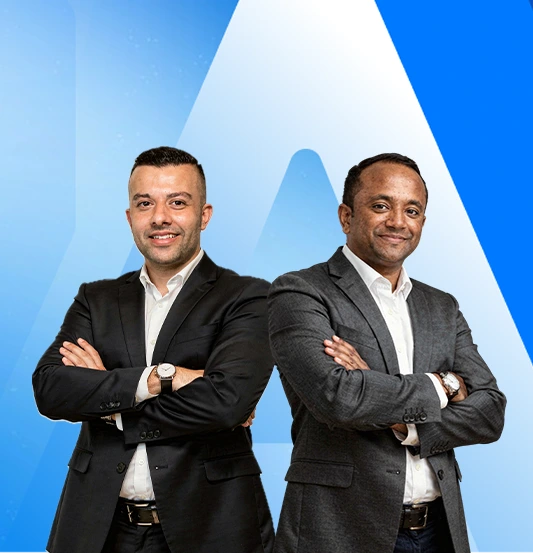
NewAgeSysIT delivers across six legacy modernization tracks. These include code re-engineering, database migration, mainframe-to-cloud migration, monolith-to-microservices migration, UI/UX modernization, and API development. All six tracks include risk assessment and rollback planning before any production migration begins.
These services modernize existing systems. They are not greenfield developments. Every engagement begins with a legacy system assessment before scoping any modernization work. All six tracks are available independently or as a combined modernization programme across AWS, Microsoft Azure, and Google Cloud environments.
Legacy code re-engineering involves migrating codebases from COBOL, VB6, PowerBuilder, Oracle Forms, and PHP to modern supported stacks. Target platforms include Java, .NET 8, Python, C#, React, and Node.js. Code re-engineering is not a rewrite.
The migration extracts, documents, and preserves business logic, validation rules, and calculation models in the new system. SonarQube and CAST Highlight automate codebase analysis. Incremental module migration, unit test suite creation, parallel running, and feature parity validation precede each production cutover.
Database migration covers Oracle to PostgreSQL or Aurora, SQL Server to Azure SQL Managed Instance, and Sybase to PostgreSQL. It also spans IBM DB2 to PostgreSQL and from on-premises databases to Amazon RDS. Database migration does more than copy a schema. Engineers extract, translate, and validate business logic in stored procedures, triggers, and functions before data migration begins.
AWS SCT automates syntax conversion. Every engagement includes stored procedure translation, data profiling, ETL pipeline development, performance benchmarking, and a zero-downtime cutover strategy.
Mainframe-to-cloud migration moves IBM z/OS COBOL and RPG workloads to AWS, Microsoft Azure, or Google Cloud. Scope covers batch job migration, OLTP migration, VSAM file conversion, JCL translation, and IMS or DB2 database migration. Mainframe migration is the highest-risk legacy modernization category. A batch job failure processing millions of daily financial transactions is not recoverable.
NewAgeSysIT uses a shadow-run validation approach. The migrated system runs in parallel before any production traffic shifts. COBOL and RPG translation uses Micro Focus or Astadia. JCL workloads migrate to AWS Step Functions and AWS Batch.
Monolith decomposition encompasses Java, .NET, and PHP applications. DDD-bounded context analysis, strangler-fig implementation, and service extraction define the engineering approach. It also covers event-driven architecture via Apache Kafka or AWS SQS.
Decomposition is not breaking an application into arbitrary pieces. DDD event-storming workshops with domain experts precede any service-extraction code. Each service owns its data and exposes a REST API. Kubernetes deployment, Datadog observability, and API gateway management via Kong or AWS API Gateway complete the delivery.
Legacy UI modernization replaces Oracle Forms, WinForms, TN3270 terminals, and Flash interfaces with React or Angular front-ends. Existing backend systems are preserved. A React or Angular front-end over a legacy backend REST adapter can be delivered in 8 to 16 weeks. This is significantly faster than full application re-engineering.
Every modernization engagement includes legacy interface discovery, screen mapping, REST API adapter development, and user journey mapping. It also covers WCAG 2.1 AA compliance and UAT with operational staff.
API development wraps legacy systems with modern integration layers. Scope covers REST APIs over legacy SOAP services, GraphQL layers over relational databases. The scope also includes EDI-to-REST translation and CDC event streaming via Debezium.
API wrapping is the lowest-risk first step in a modernization programme. All APIs are documented to OpenAPI 3.0 specification.
A REST API over a legacy COBOL system enables modern cloud applications to consume mainframe data without waiting for a full migration. API development uses Node.js, Java Spring Boot, or Python FastAPI. AWS API Gateway and Azure API Management handle gateway and lifecycle management.
A production-grade legacy modernization engagement combines business logic preservation, risk-controlled migration, data integrity validation, and post-migration observability. It eliminates the primary failure mode of legacy modernization. This involves migrating the system without preserving institutional knowledge encoded in the codebase.
Every engagement starts with discovery before writing any code. The four capability categories below determine whether an engagement delivers the intended outcome or creates new problems.
Codebase analysis utilizes SonarQube, CAST Highlight, or Understand by Scitools to measure cyclomatic complexity and dead code percentage. It also measures coupling metrics and technical debt. The output is a prioritized technical debt report. Business logic extraction combines SME interviews and code archaeology to reverse-engineer undocumented business rules.
The extracted logic becomes the acceptance test suite for the modernized system. Data profiling incorporates schema analysis, orphaned records, duplicate keys, and referential integrity validation.
Integration discovery documents all inbound and outbound interfaces, including SOAP services, file-based interfaces, and vendor EDI connections. Each integration receives a migration complexity risk rating.
TCO analysis compares legacy maintenance costs with projected costs for the modernized system over a five-year horizon. The migration strategy recommendation is based on the discovery findings, risk profile, and investment timeline.
The strangler fig pattern fuels incremental module extraction. Each extracted module routes traffic to the new service while the legacy system remains live. The legacy system retires modules one by one as each extraction is validated. It uses no big-bang migration.
Parallel running operates the modernized system alongside the legacy system for a specific validation period. Both systems process identical transactions. Output discrepancies trigger an investigation before any traffic shifts. Each migration phase includes a documented rollback procedure with a tested RTO.
Blue-green deployment via Kubernetes and Terraform enables zero-downtime cutover with load balancer-level traffic reversion. Feature flags via LaunchDarkly or AWS AppConfig enable incremental validation of features in production before full rollout.
Canary releases route 5 to 10 percent of production traffic to the modernized system. Error rate, latency, and business transaction success rate are benchmarked against legacy baselines via Datadog before full cutover proceeds.
ETL pipelines are built in Apache Spark, AWS Glue, or Azure Data Factory. Each pipeline manages schema transformation, data type mapping, and business rule-driven data cleansing. AWS DMS and Azure Database Migration Service manage both homogeneous and heterogeneous database migrations.
Debezium CDC enables near-zero-downtime database migration. Data reconciliation includes row counts, aggregated totals, and sample record verification for every migration batch. Financial data reconciliation is completed to the penny before any legacy system decommission.
VSAM and IMS hierarchical records are extracted into relational or NoSQL target schemas. Data lineage documentation maps every field transformation from source to target. This documentation satisfies audit trail requirements under HIPAA, SOX, and PCI DSS.
PII data in non-production environments is pseudonymized in accordance with GDPR and CCPA requirements. All migration pipelines handling sensitive data apply encryption at rest and in transit.
Application performance monitoring uses Datadog APM or New Relic for distributed tracing, error rate tracking, and latency percentile monitoring. Baselines are established from the legacy system before migration begins. The modernized system must meet or exceed those baselines before cutover is confirmed.
Infrastructure monitoring runs on AWS CloudWatch, Azure Monitor, or Google Cloud Monitoring. Auto-scaling policies are validated under load. Cost anomaly alerts are configured for unexpected infrastructure spend. Log aggregation utilizes Datadog, AWS CloudWatch Logs, or Elastic Stack.
Structured logging replaces legacy flat-file logging. Retention policies align with compliance requirements. Datadog Synthetics or AWS CloudWatch Synthetics run automated business-critical transaction checks every five minutes post-launch. PagerDuty or Opsgenie handles on-call alerting.
Incident response runbooks are documented for every migrated critical business process. Rollback procedures are directly linked to each alert definition. SLA validation targets 99.9 percent or higher availability. Error budget tracking runs through Datadog SLOs.
How We Helped Top US Brands Modernize Mission-Critical Legacy Systems

AI accelerates legacy modernization in two specific ways. First, automated code analysis and translation tools reduce the time to understand and convert legacy code. Second, AI-generated test suites capture existing system behavior faster than manual test writing. AI reduces discovery and translation time. It does not replace a validated human business logic review.
Five AI applications deliver measurable acceleration across the modernization lifecycle.
Amazon Q Developer analyzes COBOL programs, generates plain-English explanations of business logic, and produces Java translation candidates. Developers validate and refine AI output rather than reading raw COBOL from scratch. This reduces COBOL analysis time by 40 to 60 percent versus manual analysis alone.
GitHub Copilot and AWS CodeWhisperer generate unit tests directly from existing legacy code. For modernization engagements, the generated test suite captures legacy system behavior. The modernized system must pass the same tests as the legacy system. This makes the AI-generated suite the acceptance criteria for the modernized system.
AWS Schema Conversion Tool uses machine learning to assess schemas from Oracle, SQL Server, and Sybase. It generates PostgreSQL or Amazon Aurora equivalents and produces conversion complexity scores. Those scores identify stored procedures and triggers needing manual intervention.
LLM-assisted tooling reads the legacy codebase and generates function-level documentation, data dictionary entries, and business process narratives. This reduces discovery-archaeology effort by 30 to 50 percent compared with fully manual documentation approaches.
AWS Glue DataBrew and Python Faker generate realistic, GDPR-compliant synthetic test data. The generated data mirrors legacy production data profiles. Production PII is not exposed in test environments.
AI acceleration reduces discovery and translation costs. It does not replace a validated human business logic review. A senior legacy modernization architect reviews and approves every AI-generated output before it enters the engagement artifact set.
NewAgeSysIT modernizes legacy systems onto cloud-native technology stacks selected for enterprise data integrity, regulatory compliance, and operational stability.
Target stack selection is confirmed during the discovery phase. This is done after analyzing the legacy system's integration landscape, data volume, throughput requirements, and compliance obligations.
| Layer | Source Legacy Technologies | Target Modern Technologies |
|---|---|---|
| Application Runtime | COBOL, RPG, VB6, PowerBuilder | Java 21, .NET 8, Python 3.12, Go, Node.js |
| Web Frontend | Oracle Forms, WinForms, MFC, Silverlight | React 18, Angular 17, Vue 3, Next.js, TypeScript |
| Database (Relational) | Oracle DB, IBM DB2, Sybase, MS SQL 2008 | PostgreSQL, Amazon Aurora, Azure SQL, MS SQL 2022 |
| Database (Legacy) | VSAM, IMS, IDMS, flat files | Amazon DynamoDB, PostgreSQL, AWS S3 (archival) |
| Integration | SOAP, EDI, flat-file FTP, MQ Series | REST API, GraphQL, Apache Kafka, AWS SQS, webhooks |
| Reporting | Crystal Reports, SSRS, Oracle Reports | Power BI, Tableau, AWS QuickSight, Looker |
| Infrastructure | On-premises bare metal, VMware vSphere | AWS, Azure, GCP via Terraform and Kubernetes |
| Middleware | IBM MQ, TIBCO, webMethods | Apache Kafka, AWS EventBridge, Azure Service Bus |
| DevOps | Manual deployments, FTP releases | GitHub Actions, GitLab CI, Jenkins, Terraform |
| Observability | Legacy log files, custom monitors | Datadog, New Relic, AWS CloudWatch, Elastic Stack |
| Security | Network perimeter only | Zero Trust, HashiCorp Vault, AWS Secrets Manager |
| AI Tooling | None | Amazon Q Developer, GitHub Copilot, AWS SCT |
Modernized systems are deployed on AWS, Microsoft Azure, or Google Cloud. The deployment platform is based on the client's existing cloud infrastructure agreements and data residency requirements.
Infrastructure is provisioned via Terraform and managed via GitHub Actions CI/CD pipelines from day one. Stack selection is always confirmed after discovery, not assumed before understanding the legacy system's integration and compliance landscape.
Legacy modernization in regulated industries is a compliance event, not only a technology event. HIPAA, PCI DSS, SOX, GDPR, CCPA, FedRAMP, and FISMA each impose requirements on data handling during migration.
They also impose requirements on the modernized system. These requirements must be addressed in the modernization architecture before migration begins.
All data in transit between legacy and target systems is encrypted via TLS 1.3. PII data in migration pipelines is pseudonymized before they enter non-production environments. AWS Key Management Service or Azure Key Vault manages encryption keys for migrated data at rest. Data migration logs are retained in accordance with the applicable compliance framework's retention requirements.
Legacy system migration affects SOX IT general controls for publicly traded companies. Change management, access control, and data integrity controls are documented for both the migration project and the modernized system. The modernized system must demonstrate equivalent or superior controls before auditors sign off on the migration.
Healthcare organizations that migrate data via a third-party modernization partner must have a signed BAA in place before accessing PHI. NewAgeSysIT executes BAAs for all healthcare modernization engagements. PHI is handled in HIPAA-compliant AWS or Azure environments, with encryption and audit logging that meet HIPAA Security Rule requirements.
Legacy payment systems migrated to the cloud must re-establish PCI DSS scope in the new environment. A Qualified Security Assessor must analyze the migrated system before it re-enters the cardholder data environment. Network segmentation, encryption, and access logging are validated in the cloud environment before cutover.
The legacy system decommission is documented for compliance audit purposes. Data destruction certificates, final audit log exports, and system closure records are retained in accordance with the applicable compliance framework. Premature decommissioning without these records results in audit findings.
NewAgeSysIT delivers a compliance architecture document before migration starts, identifying each regulatory obligation and mapping it to the migration architecture.
NewAgeSysIT follows a discovery-first, risk-controlled modernization process. No modernization code is written before fully assessing the legacy system. No production data is migrated before validating the modernized system in staging. Validation covers production data volume and integration load before any cutover is scheduled.
SonarQube and CAST Highlight conduct automated static analysis of the legacy codebase. Subject matter expert interviews extract undocumented business rules. Legacy database schema, data quality, and integration interfaces are profiled.
The deliverables are the Legacy Assessment Report, business logic inventory, and integration map. The other deliverables are a data quality report and a modernization strategy recommendation with five-year TCO comparison.
The modernization strategy is selected based on Stage 1 findings. The target architecture spans cloud infrastructure, databases, the integration layer, and security. It also defines a parallel running strategy, a rollback plan, and a migration phase sequence.
The core deliverables are the target architecture document and the migration phase plan. The deliverables also include a rollback specification and a compliance architecture document signed off by the client's security team.
A comprehensive test suite captures the legacy system's current behavior. Unit tests cover extracted business logic. Integration tests include each interface. End-to-end tests carry critical business workflows, and AI-assisted test generation accelerates coverage.
Legacy system performance and reliability baselines are established via Datadog. The deliverable is a test suite with at least 80 percent business-logic coverage, signed off by client SMEs.
Modernization is executed in two-week Agile sprints, tracked in Jira. Each sprint extracts one bounded context and re-implements it on the target stack.
The module is validated against the test suite and deployed to staging. The legacy system continues running in full production. Jira tracks each extraction with test parity as the definition of done.
AWS DMS or Azure Database Migration Service executes data migration with CDC for near-zero-downtime transfer. Automated reconciliation reports validate migrated data at each batch.
REST APIs, Apache Kafka topics, and EDI connections are tested against the modernized system. A full dress rehearsal cutover runs in staging before scheduling the production cutover.
The modernized system runs in parallel with the legacy system for two to six weeks. Both systems process the same transactions. Outputs are compared and discrepancies investigated before any traffic shifts.
Feature flags route increasing percentages of traffic to the modernized system. Full cutover is confirmed only after sustaining the output parity.
The legacy system is decommissioned in accordance with the approved decommissioning plan. The team archives legacy data per compliance retention requirements. Data destruction certificates are generated for decommissioned storage.
Final deliverables include system architecture documentation, data dictionary, integration catalog, and operational runbooks. SLA-backed post-migration support covers incident response, performance optimization, and compliance audit support through the first full audit cycle.


You need a partner that treats modernization as risk management, not a rewrite preserving every business rule while migrating to AWS, Microsoft Azure, or Google Cloud.
Get our Legacy Modernization Services ›You need a partner that treats modernization as risk management, not a rewrite, preserving every business rule while migrating to AWS, Microsoft Azure, or Google Cloud.
Get our Legacy Modernization Services ›NewAgeSysIT approaches legacy modernization as a risk management discipline rather than a development project. The core failure mode of legacy modernization is not technical. It is the loss of institutional knowledge encoded in decades of accumulated business logic.
Every engagement starts with discovery. No code is written before extracting, documenting, and validating the legacy system's business logic.
Most firms treat modernization as a rewrite. NewAgeSysIT considers it a knowledge transfer operation with a technical execution layer. Five operational differentiators define how modernization engagements are structured and delivered.
No modernization scope is committed before a full legacy system assessment is completed. Scoping a migration without understanding the legacy system consistently leads to undocumented business logic surfacing mid-migration. This is the most common and most expensive modernization failure mode.
NewAgeSysIT's assessment phase maps every system dependency, data flow, and embedded business rule. This is executed before writing a single line of replacement code. COBOL batch processes, Oracle stored procedures, and tightly coupled monoliths receive the same structured discovery treatment.
Every business rule, calculation model, and validation logic embedded in the legacy codebase is extracted and documented. It is also validated before re-implementation begins.
The modernized system is required to pass the same test suite as the legacy system. No production traffic is shifted until that parity is confirmed. This prevents the silent regression failures that invalidate modernization programmes months after go-live.
Parallel running, feature flags, canary releases, and documented rollback procedures are mandatory on every engagement. No production cutover proceeds without a tested rollback plan and a confirmed rollback RTO.
AWS, Microsoft Azure, and Google Cloud each support the traffic-splitting and environment-isolation patterns NewAgeSysIT uses to control migration risk. Kubernetes-orchestrated deployments and Terraform-managed infrastructure make environment parity between legacy and modernized systems operationally maintainable throughout the transition period.
In regulated industries, the compliance architecture is designed before the technical architecture. For healthcare clients, HIPAA Business Associate Agreements are executed before accessing any PHI in the modernization environment.
For financial services clients, PCI DSS scope is re-established in the cloud environment before payment data migration begins. Government and financial services modernization programmes follow the same sequence. Compliance posture is never retrofitted after the technical build.
All code, architecture documentation, data dictionaries, and migration artifacts are transferred to the client at project completion. No NewAgeSysIT proprietary tooling is embedded in the modernized system.
No post-migration dependency on NewAgeSysIT tooling or licensing is created. Datadog observability configurations, Terraform state files, and Kubernetes manifests are all delivered as client-owned assets.
NewAgeSysIT has completed legacy modernization programmes across financial services, healthcare, and government sectors in the United States. Engagements have resulted in the successful decommissioning of production legacy systems, including mainframe-era COBOL applications and end-of-life Oracle database environments.
Post-migration compliance audits have confirmed maintained or improved compliance posture across HIPAA-regulated and PCI DSS-regulated client environments. No modernization engagement has required an emergency rollback due to undetected business logic loss.
NewAgeSysIT offers three engagement models for legacy application modernization. These serve organizations needing a full-programme delivery partner and enterprises augmenting their teams. They also serve CIOs needing an independent assessment before committing a budget.
All three models include a legacy system assessment as the mandatory first step. No modernization scope or pricing is committed before the assessment is complete.
NewAgeSysIT provides the complete modernization team under this model. The team includes a Solution Architect, Business Analyst, and legacy specialists across COBOL, VB6, and Oracle Forms. Modern stack engineers and a Compliance Analyst are also part of the delivery structure.
The client owns legacy system knowledge and acceptance criteria. NewAgeSysIT owns modernization architecture, migration execution, and risk management. This model suits organizations without in-house modernization capability. The deliverable is a decommissioned legacy system and a fully operational, modernized platform on a defined timeline.
Under this model, clients integrate NewAgeSysIT legacy specialist engineers into their existing IT team. NewAgeSysIT manages all employment overhead, including recruitment, HR, benefits, and payroll.
Clients direct sprint priorities and maintain full programme governance. This model suits enterprises with internal engineering capability but specific skill gaps. Those gaps include COBOL engineers for mainframe analysis and Oracle-to-PostgreSQL migration specialists. The other skill gaps are DDD architects and DevOps engineers for CI/CD pipeline setup.
NewAgeSysIT provides a senior Solution Architect and a Business Analyst for an independent assessment of a legacy system. This advisory model carries no commitment to a subsequent modernization programme. The output is an independent recommendation. Clients use it to evaluate vendors, justify internal investment, or brief their board.
The deliverables are the Legacy Assessment Report, TCO analysis, modernization strategy recommendation, risk assessment, and a phase-by-phase migration roadmap. This model is ideal for CIOs seeking to justify modernization investments to the CFO or the board.


With our latest cost calculator, you can get an estimated
legacy modernization cost for your project before you get started.
Legacy application modernization cost in the US depends on system complexity, codebase size, integration count, data volume, and compliance requirements. A legacy UI modernization starts at $40,000. A full mainframe-to-cloud migration for an enterprise financial institution can cost anywhere from $500,000 to several million dollars. A discovery assessment is the lowest-risk entry point.
Legacy modernization costs are typically dwarfed by ongoing legacy maintenance costs over a 5- to 10-year horizon. The TCO argument is the primary commercial justification for investment in modernization.
Several variables determine the total effort and cost of a legacy modernization engagement.
directly drives discovery and translation effort. A 500,000-line COBOL system takes significantly longer to assess than a 50,000-line VB6 application. Programme count and database table count compound that effort further.
shapes how much discovery work is required. Systems without technical documentation require business logic archaeology, including code analysis and SME interviews. This adds 20-40 percent to the discovery cost.
multiplies assessment complexity. Each inbound or outbound interface needs separate assessment, testing, and cutover planning. A system with 50 integration points is significantly more complex than one with five.
affect ETL pipeline development time. Large data volumes with quality issues require additional reconciliation effort before migration can proceed.
under HIPAA, PCI DSS, SOX, and FedRAMP add compliance architecture, documentation, and audit support overhead to the engagement.
determines the cost range. Rehosting costs the least, and rebuilding costs the most. Strategy selection is based on risk and business outcome requirements, not just cost minimization.
adds infrastructure cost and SME time. Longer validation periods increase spend but reduce migration risk.
affects migration complexity. A system still receiving change requests during migration requires version control policies and a formal change freeze.
| Modernization Type | Key Scope | Estimated Cost Range |
|---|---|---|
| Legacy UI Modernization | Front-end replacement (Oracle Forms, WinForms) with React or Angular | $40,000 to $150,000 |
| Database Migration | Oracle or DB2 to PostgreSQL or Amazon Aurora, schema and data migration | $60,000 to $250,000 |
| API Wrapper for Legacy System | REST or GraphQL API layer over the legacy system for integration | $30,000 to $100,000 |
| Monolith Decomposition | DDD-led microservices extraction from .NET or Java monolith | $150,000 to $500,000 |
| Legacy App Re-Engineering | COBOL, VB6, or PowerBuilder to a modern stack with business logic preserved | $200,000 to $800,000 |
| Mainframe to Cloud Migration | IBM z/OS COBOL and batch workloads to AWS or Azure | $500,000 to $3M+ |
All ranges above reflect indicative costs for US market engagements. Actual costs are confirmed upon completion of the Legacy Assessment Report.
Deferring modernization does not eliminate cost, but accumulates it.
The TCO comparison weighs five-year legacy maintenance costs against the modernized system cost. Legacy maintenance includes hardware, licenses, and contractor rates for scarce skill sets. The modernized system cost includes migration, cloud infrastructure, and ongoing support.
A mid-market company maintaining a legacy Oracle EBS system on-premises typically carries $300,000 to $600,000 annual maintenance costs. Migration to Oracle Cloud ERP or a comparable modern alternative typically pays back within two to three years.
Gartner and IDC publish recognized benchmarks for legacy IT maintenance costs. Both are credible references for CIOs building the modernization business case for CFOs and boards.
NewAgeSysIT delivers the TCO analysis during the discovery engagement. The analysis is completed before committing to any modernization scope. Decision-makers receive an independent cost comparison before approving the budget.
Organizations that defer legacy modernization are not avoiding cost. They are paying maintenance costs, compliance risk, and key-person dependency risk every year. The decision is not whether to modernize. It is a question of whether to modernize now or pay more later.
A free 30-minute consultation with a senior legacy modernization architect covers the scope of legacy assessment and modernization strategy options. It also discusses compliance requirements and an indicative cost range. No scope is committed and no pricing is locked. The consultation delivers actionable clarity on the modernization path forward.
Legacy systems do not become cheaper to maintain. Every deferred modernization decision compounds technical debt, operational risk, and future migration cost.

“From every single moment, from the beginning till the end, they were there for me. They were very systematic and methodical in every single step and …”
Owner - ISRA
Increase in Monthly Bookings within 6 Months
Reduction in Appointment No-Shows

“They delivered everything on time and it was of great quality. They go above and beyond to meet yourrequirements and deliver the product you are looking for….”
Founder - L-Card App
Increase in User Sign-Ups in First Quarter
Boost in Networking Conversions

“They are very knowledgeable in the sense that they have built so many of these types of applications that they..”
Founder -CAR-UP App
Increase in Online Service Bookings
Reduction in Service Scheduling Conflicts

“From every single moment, from the beginning till the end, they were there for me. They were very systematic and methodical in every single step and …”
CEO – WhipFlip
Faster Vehicle Listing to Offer Time
Increase in Lead-to-Sale Conversion Rate

“The NewAgeSysIT team has been instrumental from day one. They didn’t just build the app — they helped shape the vision, solve critical challenges, and turn our idea into a platform that’s already making a real impact.”
Founder — Town Connect Network
Increase in Community Member Engagement
Faster Feature Implementation Cycles

“They were flexible, responsive, and delivered everything on time. The milestone process gave me complete confidence, and getting approved on both app stores on the first submission was incredible.”
Founder — Guaranty Tip Sheet
App Downloads Across iOS & Android
Average User Rating on App Stores
“From every single moment, from the beginning till the end, they were there for me. They were very systematic and methodical in every single step and …”
Owner - ISRA
Increase in Monthly Bookings within 6 Months
Reduction in Appointment No-Shows
“They delivered everything on time and it was of great quality. They go above and beyond to meet yourrequirements and deliver the product you are looking for….”
Founder - L-Card App
Increase in User Sign-Ups in First Quarter
Boost in Networking Conversions
“They are very knowledgeable in the sense that they have built so many of these types of applications that they..”
Founder -CAR-UP App
Increase in Online Service Bookings
Reduction in Service Scheduling Conflicts
“From every single moment, from the beginning till the end, they were there for me. They were very systematic and methodical in every single step and …”
CEO – WhipFlip
Faster Vehicle Listing to Offer Time
Increase in Lead-to-Sale Conversion Rate
“The NewAgeSysIT team has been instrumental from day one. They didn’t just build the app — they helped shape the vision, solve critical challenges, and turn our idea into a platform that’s already making a real impact.”
Founder — Town Connect Network
Increase in Community Member Engagement
Faster Feature Implementation Cycles
“They were flexible, responsive, and delivered everything on time. The milestone process gave me complete confidence, and getting approved on both app stores on the first submission was incredible.”
Founder — Guaranty Tip Sheet
App Downloads Across iOS & Android
Average User Rating on App Stores
We grow strong with a 100% in-house team, 30+ years of industry expertise, and proven results. From concept to launch, we deliver innovation with precision and reliability.
Your idea is 100% protected by our non-disclosure agreement
Guaranteed expert consultation within 1 hour
Call directly: 1-609-919-9816
Get a free project estimate in under 60 minutes.
