When Enterprises and Startups Should Choose Golang for Their Software Project
Launch secure, high-performance iOS & Android apps built to grow
your business — delivered by a proven & dedicated US-based
development team.
500+
Apps Delivered
AI-Adopted
Production Cycles
USA-Based
Project Management
500+
Apps Delivered
USA-Based
Project Management
Built for Startups. Trusted by Enterprises.
Designed to Scale from Day One.
Get a quick expert response within 1 hour.
Trusted by startups and enterprises across multiple industries.
30+
Years
Experience
100+
Projects
Delivered
#1
App Developer
NJ, FL, NY
Strategic Backend Choice
Why Choosing the Right Backend Language Shapes Your Product’s Future
Choosing the right backend language is a strategic decision for any CTO or tech leader. A poor choice can slow development and frustrate users, while the right stack enables rapid iteration and robust scaling.
In recent years, Golang (Go) has gained popularity among startups and enterprises for its simplicity and performance. It underpins cloud-native systems like Kubernetes, Docker, Terraform, and is used by companies from Google and Salesforce to Uber and Netflix.
But Go must be chosen when its strengths align with project needs.
In this guide, we explore Go’s unique characteristics and compare it objectively to other backend languages, so you can decide if Go truly fits your roadmap.
Got Problems?
Let Us Help You With the Right Solution
Language Fundamentals
What Makes Golang Different from Other Backend Languages?
Golang was created at Google in 2009 to solve specific problems: slow compilation times, complex dependency management, and the difficulty of writing concurrent code safely. The result is a statically-typed, compiled language with a minimalist syntax and a powerful built-in concurrency model.
Here’s what makes it different:
01
1.Unlike interpreted languages, Golang compiles directly to machine code: Your application runs as a single binary with no runtime dependencies. Deploy it to a server, and it runs with no virtual machines, interpreter installations, or dependency issues.
02
2. The concurrency model uses goroutines and channels instead of traditional threading: Goroutines are lightweight execution threads managed by the Go runtime, not the operating system. You can spawn thousands without the memory overhead that would crash most applications using OS threads. This is important when handling 50,000 concurrent WebSocket connections or processing millions of background jobs.
03
3. The language itself is intentionally minimalistic: There’s one standard way to format code, one dependency management system, and a standard library so comprehensive that most projects need few external dependencies. This reduces the decision fatigue found in ecosystems with many competing frameworks for every task.
04
4. The language is fast & efficient: Go’s compiled nature and lightweight runtime let it execute with near-native speed and predictable performance. It uses less memory than languages like Node.js or Java, so Go services often consume fewer resources under load.
For example, Uber reported that a geofence service achieved 99.99% uptime and around 170,000 queries per second after migrating from Node.js to Go. While results vary by architecture and workload, this highlights Go’s potential for high-throughput backend systems.
Speak With Our AI Software Consultant Partners
Get expert guidance before you invest in MVP development.
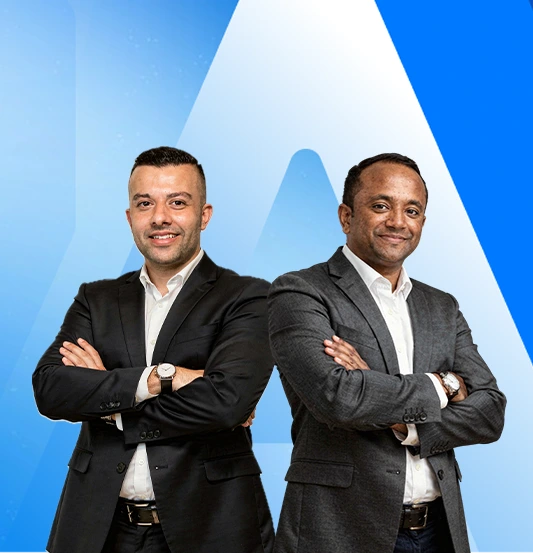
Work directly with Giovanni and Bibin to validate your product
direction, align scope with business goals, and make confident
decisions that reduce risk and accelerate outcomes.
Startups typically need to move fast and scale quickly. They favor rapid prototyping and must handle unpredictable growth with limited resources. Go’s characteristics align well with these goals.
Below are scenarios where a startup would benefit from Go:
1
Building high-performance MVPs
Most MVPs don’t need deep performance tuning, but some do. If your product handles real-time data, heavy APIs, or background processing, starting with Golang helps avoid costly rewrites later.
Golang services are lightweight. A simple HTTP service may use 10-20 MB of memory, compared to 200 MB+ for similar Java workloads or higher operational overhead in Node.js environments. This efficiency reduces cloud infrastructure costs.
Deployment is also simple: compile once, ship the binary, and run. There are fewer dependency conflicts between environments, which speeds up releases and reduces DevOps friction.
2
Planning for rapid user growth
Golang’s concurrency model supports scaling without major architectural changes. When traffic grows from thousands to tens of thousands of concurrent users, the same application can usually handle the load by utilizing additional CPU cores through its built-in scheduler.
Performance also remains stable under higher concurrency. Response times typically degrade less compared to single-threaded environments, reducing the risk of sudden bottlenecks during growth spikes.
This stability helps teams scale infrastructure more predictably, rather than reacting to production incidents under pressure.
3
API-first product models
If you build SaaS platforms, mobile backends, or API-driven products, Golang is a strong fit. The standard library offers reliable HTTP servers, JSON support, and routing, reducing the need for external frameworks.
REST API development is efficient. Authentication, database integration, and business logic require less boilerplate than traditional enterprise stacks, and strong typing reduces runtime errors common in dynamic languages.
This balance of speed and reliability makes Golang well-suited for API-centric architectures.
4
Limited DevOps complexity
Early-stage startups often lack dedicated DevOps resources, so operational simplicity matters. Golang’s single-binary deployment model keeps the pipeline straightforward. You build the application, produce a binary, containerize if needed, and deploy. There’s no runtime version management or complex dependency setup during release.
Containerization is also efficient. With multi-stage builds, Golang Docker images can be as small as 10-20 MB, which speeds up deployments and reduces storage overhead.
If you’re deciding whether to hire Golang developer talent early, these operational advantages can lower engineering complexity as your product scales.
For Enterprises
When Enterprises Should Choose Golang
Enterprises often face massive scale, high reliability requirements, and complex legacy systems. Go shines in modern enterprise scenarios that emphasize performance and modular architecture.
Here are key situations where a large organization might adopt Go:
1
Microservices architecture
Breaking monoliths into microservices increases operational complexity, so each service must be lightweight, quick to deploy, and resource-efficient. Golang fits well in this environment because services compile into small, standalone binaries with minimal runtime overhead.
Its networking support is also strong. The standard library natively handles HTTP/2, gRPC, and WebSockets. This simplifies communication across distributed systems without heavy external dependencies.
Service isolation is easier because each microservice has explicit dependencies packaged in its binary. This reduces version conflicts and simplifies rolling deployments, since there’s no shared runtime environment to coordinate across services.
2
High-concurrency systems
Real-time platforms, messaging systems, and transaction-heavy applications demand reliable performance under high concurrency. Golang is designed for these scenarios by default.
Its efficient I/O handling and low context-switching overhead let applications manage thousands of concurrent operations, including large database workloads and real-time transactions, without complex tuning. The built-in scheduler automatically uses multiple CPU cores as demand grows.
For enterprises handling payments, IoT communication, or real-time analytics, Golang offers a strong architectural foundation for sustained scale.
3
Cloud-native transformation initiatives
Many core cloud-native tools, including Kubernetes and Docker components, are written in Golang because the language aligns well with containerized environments.
Container-first deployments are efficient. Golang applications start quickly, handle shutdown signals properly, and integrate with orchestration platforms without complex scripts or workarounds.
This also supports smoother Kubernetes adoption. Backend services built in Golang typically work well with probes, resource limits, and autoscaling. It reduces migration complexity compared to environments that require runtime tuning or performance adjustments.
4
Backend modernization projects
Modernizing legacy systems often means maintaining performance while reducing operational complexity. Golang supports this by delivering equal or better performance with simpler deployment and maintenance.
It can also resolve bottlenecks without extra infrastructure. For example, legacy Java services that use several GB of RAM can often be replaced with Golang services that use a few hundred MB while handling similar workloads. This resource efficiency lowers cloud and operational costs at enterprise scale.
When evaluating Golang development services for modernization, the combination of performance, operational simplicity, and talent availability creates a compelling case.
Honest Caveats
When Golang May NOT Be the Right Choice
Golang solves specific problems well, but forcing it into every scenario creates unnecessary friction. Consider avoiding it in these situations:
1
1. Heavy UI-driven applications: Go has virtually no native GUI frameworks. If your product is a desktop application with rich user interface requirements, Go lacks mature tools for complex UIs. Languages like C#, Java, or JavaScript, along with their frameworks, are usually a better fit for GUI-heavy projects.
2
2. Small prototype scripts: If you need a one-off script or lightweight prototype, such as a quick automation script, a dynamic language like Python or Node.js is often faster. Go requires compiling and strict typing, which can slow initial experimentation.
3
3. Teams deeply specialized in another ecosystem: If your engineering organization has a decade of Java expertise, extensive internal libraries, and established patterns, migrating to Golang needs justification beyond “it’s faster.” Performance gains must offset productivity loss during transition and the cost of rebuilding internal tooling.
4
4. Projects requiring a rich, mature ecosystem: Go’s ecosystem is growing but still smaller than some older languages. If your project relies on a specialized library, such as a machine-learning framework, an advanced GUI toolkit, or a niche enterprise API, that library might not yet exist in Go.
You might have to build or bind components yourself. If rich third-party support is critical, consider that Java or Python has a more mature package ecosystem.
Head-to-Head Comparison
Golang vs Other Popular Backend Technologies
The real question isn’t “Is Golang good?” It’s “Is Golang better than what we’re using now?” Here’s where it wins and where it doesn’t.
VS
Golang vs Node.js
Performance characteristics differ fundamentally: Node.js excels at I/O-bound workloads but can struggle with CPU-intensive tasks because of its single-threaded event loop. Golang handles both efficiently with lightweight goroutines.
Concurrency models are the main difference: Node.js uses promises and async/await to prevent blocking. Golang has built-in concurrency, letting developers write synchronous-looking code that runs in parallel.
Use case differences are clear: Node.js fits I/O-heavy applications, API layers, and teams invested in JavaScript. Golang suits systems needing parallel processing, consistent performance under load, and efficient resource use.
Golang vs Java
Memory footprint creates operational differences: Java applications require JVM heap allocation and often have a larger baseline memory footprint because of runtime overhead. Go applications start small and scale memory as needed, resulting in more predictable resource consumption.
Complexity levels differ. Java’s enterprise frameworks offer many capabilities but add abstraction layers, configuration overhead, and dependency injection complexity. Golang stays closer to the metal; what you write is largely what runs.
Enterprise suitability depends on context: Java offers decades of tooling maturity and ecosystem depth. Golang provides simpler operations, faster iteration for certain workloads, and improved efficiency. For new systems without legacy Java dependencies, Golang delivers higher developer productivity and lower operational overhead.
Both are viable for AI custom software development services, but the choice depends on team expertise, existing infrastructure, and specific performance requirements.
Long-Term Wins
Key Benefits of Choosing Golang for Long-Term Scalability
When long-term growth is at stake, Go offers several compelling benefits:
01
1. Predictable performance under increasing load: Go’s compiled binaries and simple runtime deliver consistent behavior across workloads. Teams are less likely to face unexpected slowdowns or large GC pauses, and Go services sustain high throughput while keeping latency and CPU usage stable.
02
2. Lower resource usage reduces costs at scale: Go programs often use less memory and CPU than comparable services in many languages. This efficiency is significant when running across large clusters, containers, or cloud environments.
03
3. Maintainability and developer efficiency through simplicity: Go’s minimal syntax and strict conventions encourage straightforward codebases. Tools like gofmt enforce consistent formatting, and explicit error handling reduces hidden behavior. As a result, onboarding, code reviews, and long-term maintenance are faster, helping teams stay productive over years of development.
04
4. Faster compile times keep development cycles short: Large applications compile in seconds. Over time, this short feedback loop helps developers stay focused and reduces productivity loss from frequent rebuilds.
Real Results
How We Helped Top US Brands in Build Winning Mobile Apps
Healthcare
60%
reduction in operational workload
HIPAA
ready secure architecture
35%
faster patient communication workflows
Real Estate
3x
faster property lead response time
45%
increase in qualified inquiries
30%
improvement in agent productivity
On-Demand Services
50%
faster service booking completion
2×
increase in customer retention
40%
reduction in scheduling delays
Automobile (AI Car Selling Platform)
70%
faster vehicle listing process
35%
higher buyer engagement
25%
improvement in conversion rates
Healthcare
60%
reduction in operational workload
HIPAA
ready secure architecture
35%
faster patient communication workflows
Real Estate
3×
faster property lead response time
45%
increase in qualified inquiries
30%
improvement in agent productivity
On-Demand Services
50%
faster service booking completion
2×
increase in customer retention
40%
reduction in scheduling delays
Automobile (AI Car Selling Platform)
70%
faster vehicle listing process
35%
higher buyer engagement
25%
improvement in conversion rates
Decision Framework
How to Decide If Golang Fits Your Software Roadmap
Use these prompts as a quick decision framework:
Expected traffic scale: If your service must handle tens of thousands of requests per second or fully use multi-core servers, Go’s performance and concurrency model give it an edge.
Microservices architecture: If you plan a microservices approach or cloud-native infrastructure like Kubernetes or Docker, Go’s fast startup and small binaries simplify deployment and scalability.
Concurrency needs: Does your application need heavy parallel processing, such as concurrent API requests, data processing jobs, or real-time streaming? Go’s goroutines make concurrency easy and efficient.
Team expertise & DevOps maturity: Do you already have experienced Go developers or a DevOps culture comfortable with containers? Or is your team stronger in another stack, like Java or JS? Use your team’s skills as a tie-breaker. If you have robust CI/CD pipelines and container platforms, Go integrates smoothly. If not, consider the learning curve.
Long-term scalability plan: Consider the future. If your product roadmap involves large user bases or global expansion, Go’s stable performance and low resource footprint can pay dividends. If the project is small and short-lived, you might prioritize rapid development in a more familiar language.
Choosing Golang is a Strategic Architecture Decision
Your technology stack will shape your product’s future.
For high-performance backend systems, Golang is a strong candidate: it is a “powerhouse” for scalable backends, while alternatives like Node.js or Java excel at rapid prototyping or offer a mature ecosystem. The key is to align your business objectives, scalability requirements, and team capabilities.
If you’re evaluating Go for your next project, remember that long-term scalability and performance goals should drive the decision. Go offers clear advantages in speed, efficiency, and maintainability when your roadmap anticipates high concurrency and growth. Also, make sure its ecosystem and development model fit your team and application needs.
Wrap-Up
Final Thoughts
If you’re evaluating Golang backend development for your next software initiative, aligning performance goals with long-term scalability is critical. The language won’t solve architectural problems or compensate for poor system design, but it provides a solid foundation when the use case matches its capabilities.
Engaging an experienced software development company can provide the technical perspective needed to evaluate whether Golang fits your broader roadmap.
Estimate Your MVP Development Cost in Seconds
Discover your project budget with our interactive AI-powered app
cost calculator.
Client Testimonials that Reflect Our
Expertise & Dedication
“From every single moment, from the beginning till the end, they were there for me. They were very systematic and methodical in every single step and …”
IMAN KHAWAJA
Owner - ISRA
65%
Increase in Monthly Bookings within 6 Months
42%
Reduction in Appointment No-Shows
“They delivered everything on time and it was of great quality. They go above and beyond to meet yourrequirements and deliver the product you are looking for….”
David Chabukashvili
Founder - L-Card App
120%
Increase in User Sign-Ups in First Quarter
55%
Boost in Networking Conversions
“They are very knowledgeable in the sense that they have built so many of these types of applications that they..”
Larry Siebel
Founder -CAR-UP App
70%
Increase in Online Service Bookings
50%
Reduction in Service Scheduling Conflicts
“From every single moment, from the beginning till the end, they were there for me. They were very systematic and methodical in every single step and …”
Roger J Clappe
CEO - WhipFlip
3X
Faster Vehicle Listing to Offer Time
48%
Increase in Lead-to-Sale Conversion Rate
“The NewAgeSysIT team has been instrumental from day one. They didn’t just build the app — they helped shape the vision, solve critical challenges, and turn our idea into a platform that’s already making a real impact.”
Lazaro Reyes
Founder — Town Connect Network
70%
Increase in Community Member Engagement
55%
Faster Feature Implementation Cycles
“They were flexible, responsive, and delivered everything on time. The milestone process gave me complete confidence, and getting approved on both app stores on the first submission was incredible.”
Chris O’Rourke
Founder — Guaranty Tip Sheet
10K+
App Downloads Across iOS & Android
4.8★
Average User Rating on App Stores
“From every single moment, from the beginning till the end, they were there for me. They were very systematic and methodical in every single step and …”
IMAN KHAWAJA
Owner - ISRA
65%
Increase in Monthly Bookings within 6 Months
42%
Reduction in Appointment No-Shows
“They delivered everything on time and it was of great quality. They go above and beyond to meet yourrequirements and deliver the product you are looking for….”
David Chabukashvili
Founder - L-Card App
120%
Increase in User Sign-Ups in First Quarter
55%
Boost in Networking Conversions
“They are very knowledgeable in the sense that they have built so many of these types of applications that they..”
Larry Siebel
Founder -CAR-UP App
70%
Increase in Online Service Bookings
50%
Reduction in Service Scheduling Conflicts
“From every single moment, from the beginning till the end, they were there for me. They were very systematic and methodical in every single step and …”
Roger J Clappe
CEO - WhipFlip
3X
Faster Vehicle Listing to Offer Time
48%
Increase in Lead-to-Sale Conversion Rate
“The NewAgeSysIT team has been instrumental from day one. They didn’t just build the app — they helped shape the vision, solve critical challenges, and turn our idea into a platform that’s already making a real impact.”
Lazaro Reyes
Founder — Town Connect Network
70%
Increase in Community Member Engagement
55%
Faster Feature Implementation Cycles
“They were flexible, responsive, and delivered everything on time. The milestone process gave me complete confidence, and getting approved on both app stores on the first submission was incredible.”
Chris O’Rourke
Founder — Guaranty Tip Sheet
10K+
App Downloads Across iOS & Android
4.8★
Average User Rating on App Stores
FAQs
Frequently Asked Questions
What makes Golang different from other backend languages?
Go compiles directly to a single machine-code binary with no runtime dependencies, uses lightweight goroutines and channels for concurrency, and keeps the language intentionally minimal with one standard formatting tool and a comprehensive standard library. It runs at near-native speed and typically uses less memory than Node.js or Java.
When should a startup choose Golang?
Go suits startups building high-performance MVPs (real-time data, heavy APIs, or background processing), planning for rapid user growth, or shipping API-first products like SaaS platforms and mobile backends. Its single-binary deployment keeps DevOps simple, and a basic Go HTTP service can run on just 10-20 MB of memory, which lowers cloud costs.
When should an enterprise choose Golang?
Go fits enterprise microservices architectures, high-concurrency systems such as payments, IoT, and real-time analytics, cloud-native transformation initiatives built on Kubernetes and Docker, and backend modernization projects where memory-heavy legacy services can be replaced to cut operational costs.
When is Golang not the right choice?
Go is not always the best fit. Consider another option for:
•Heavy UI-driven desktop apps, since Go has no mature native GUI frameworks
•Quick one-off scripts or prototypes, where Python or Node.js is faster to experiment with
•Teams deeply specialized in another ecosystem, such as Java
•Projects that rely on a specialized library, like a machine-learning framework, that may not yet exist in Go
How does Golang compare to Node.js?
Node.js excels at I/O-bound workloads but can struggle with CPU-intensive tasks due to its single-threaded event loop, while Go handles both efficiently with goroutines. Node.js relies on promises and async/await; Go has built-in concurrency that lets you write synchronous-looking code that runs in parallel. Node.js suits I/O-heavy apps and JavaScript teams, while Go suits systems needing parallel processing and consistent performance under load.
How does Golang compare to Java?
Java applications usually need JVM heap allocation and a larger baseline memory footprint, while Go starts small and scales memory as needed for more predictable consumption. Java offers decades of tooling maturity and ecosystem depth, but Go provides simpler operations and faster iteration. For new systems without legacy Java dependencies, Go often delivers higher productivity and lower operational overhead.
Is Golang a good fit for microservices?
Yes. Go services compile into small, standalone binaries with minimal runtime overhead, and the standard library natively supports HTTP/2, gRPC, and WebSockets. Each microservice packages its own dependencies, which reduces version conflicts and simplifies rolling deployments.
Does Golang reduce cloud and infrastructure costs?
Often, yes. Go programs generally use less memory and CPU than comparable services in other languages. A simple service may run in 10-20 MB, and legacy Java services using several GB of RAM can sometimes be replaced by Go services using a few hundred MB. With multi-stage Docker builds, images can be as small as 10-20 MB, lowering storage and compute costs at scale.
How do I decide if Golang fits my software roadmap?
Weigh your expected traffic scale, whether you are adopting microservices or cloud-native infrastructure, your concurrency needs, and your team’s expertise and DevOps maturity. Go is strongest when your roadmap anticipates high concurrency and growth; for small, short-lived projects, a more familiar stack may be the better choice.
Let's Build Your
Next Big Thing
— Together!
We grow strong with a 100% in-house team, 30+ years of industry
expertise, and proven results. From concept to launch, we deliver
innovation with precision and reliability.
Your idea is 100% protected by our non-disclosure agreement