


With busy schedules and struggles to maintain a work-life balance, life certainly feels hectic in the present world. While there are many reasons to quote, such as notifications, late-night screen time, and the urge among people to stay busy, all these reasons point to the fact that people need to find modern ways to relax and refine their energy. This is the primary reason why wellness apps are in high demand among the general public. Recent statistics indicate that the wellness industry is projected to reach a value exceeding $7 trillion globally by 2026.
Now, as a business that looks to build a wellness app, how can you make use of this surge in adoption of wellness apps? If you are a personal coach, a gym trainer, a yoga instructor, or a business owner with an idea for a wellness app, then this guide can help you with the basics and best practices to adopt while developing your own wellness app. Before we begin, here’s a super-short and crispy summary of what we’ve covered in the wellness app guide.
- Wellness app development is booming, with the global wellness applications market projected to grow at a 14.9% CAGR from 2025 to 2030.
- Wellness apps span multiple categories—fitness, nutrition, mental health, meditation, and sleep tracking—each with its own must-have features and user expectations.
- Successful wellness apps prioritize core features such as goal setting, habit reminders, personalized plans, wearable device integrations, and rich educational content to keep users engaged.
- A solid development process includes market research, discovery, UX/UI design, development, rigorous QA/testing, app store launch, and ongoing post-launch support.
- Security and compliance are non-negotiable, with frameworks like HIPAA, GDPR, CCPA/CPRA, ISO 27001, SOC 2 Type II, COPPA, HealthKit, and Google Fit shaping how data is handled.
- AI plays a central role in modern wellness apps by enabling personalized plans, predictive analytics, smart coaching, conversational mental health support, and higher user engagement.
- Partnering with an experienced wellness app development company helps you avoid common failure points (weak UX, no personalization, poor monetization, weak marketing) and build a scalable, compliant, and revenue-ready product.
You might have got an idea of what we will cover in the blog. The journey of creating a wellness app, especially if it’s your first time, can seem challenging, with many questions on your mind, including how to build one. Before we delve into the topic in detail, let us gain a basic understanding of wellness apps.
What are Wellness Apps?
Maintaining physical and mental health can seem like a daunting task in today’s world. This is where wellness mobile and web applications excel. With valuable tools and features that help maintain mindfulness and mental well-being, these apps serve as a catalyst for building healthy habits and achieving health goals. Whether it’s guided meditation, online mental detox challenges, sleep cycle tracking, or mood journaling, these features are helping users achieve greater balance in their lives. When users strive for a balanced diet, need a relaxed pace of life, or wish to improve their fitness or address their nutritional needs, these apps serve as a means to provide the guidance they need.
To boost the user experience by offering insights and resources that support healthier lifestyles.
To help individuals monitor their habits, set more ambitious goals, and track their progress.
To include features such as reminders for educational content, healthy behaviors, and community support, for users to stay on track.
To work as a user-friendly personal coach who rightly guides users on their wellness journey.
Evolving Trends in the Wellness Segment
The future of wellness app development is likely to undergo numerous shifts due to the introduction and rapid evolution of AI-based technologies and techniques in the field. Let us get familiarized with the key trends that mold the next generation of wellness app development:
AI Personalization
With AI in wellness app development, applications can assess sleep, diet, and stress levels to provide personalized insights.
VR Fitness
Workouts using AI trainers in virtual reality to provide engaging and interactive training sessions.
Mental Health Focus
Stress and sleep monitoring, meditation libraries, and modern health features.
Social & Gamification Features
Social challenges, rewards, and leaderboards that let users lead an active lifestyle.
Voice & Gesture Recognition
The hands-free fitness monitoring system helps users to exercise at their own pace and track their progress.
Geolocation & Hyperlocal Features
Fitness recommendations and suggestions tailored to your location or specific challenges.
Wearable Technology Integration
Transformed the way health is tracked. Accompanied by an app that enables quick and real-time data on workout progress.
Wellness App Development: Key Statistics You Should Know
71%
According to Statista reports, 71% of Millennials and Gen Z users utilize at least one wellness application daily, indicating that this routine has been integrated into their lifestyles through the use of apps.
14.9% CAGR
The global wellness applications market was valued at USD 11.27 billion in 2024 and is anticipated to grow at a CAGR of 14.9% from 2025 to 2030.
3.6B
In 2024, health and wellness apps witnessed 3.6 billion app downloads worldwide, representing a 6% increase from the previous year.
28%
Apple Fitness+ has captured nearly 28% of the fitness market share due to the prominence of the Apple Watch.
In addition to holding the largest market share in the fitness industry, Apple maintains a high user base through features and the introduction of new technologies. It includes 12 workout types, such as Strength, Yoga, and Meditation. Every week, the app adds new sessions ranging from 5 to 45 minutes. Besides holding 28% market share according to Business of Apps, Apple Fitness+ also offers personalized recommendations and custom plans that fit your favourite activities.
Share your idea, and let’s build the best app ever!
Types of Wellness Apps: Categorization & Features Included
Wellness applications are mobile applications designed to help users improve their physical health, mental health, and overall well-being. The primary objective of a wellness app is to enable users to build highly balanced and healthier lives by providing them with the necessary tools and resources to achieve a balance between health and wellness goals. Here’s a glance at the different types of wellness apps:
Fitness Apps
These mobile applications are designed to let users enhance their physical fitness and fulfil their fitness goals. As people have come to recognize the importance of exercise and a healthy lifestyle, the demand for fitness apps has increased significantly. As per statistics, the global fitness app market size is projected to hit $33.58 billion by 2023, exhibiting a CAGR of 13.59% over the period of 2025-2033. Women’s wellness apps have also been introduced, aiming at specialized workout plans for women.
Let’s delve into the common features users are interested in for fitness app development:
Fitness App Features
Pro Tip
To gain a competitive edge, also consider features such as personalized recommendations and tips tailored to users’ fitness goals, personal preferences, and shared access to like-minded fitness enthusiasts.
Fitbit, MyFitnessPal, BetterMe, and FitOn are examples of some of the popular fitness applications. Another example of a Fitness app is Rehab, a custom app developed to provide users with the best possible fitness development experience. The app also offered workouts, meal plans, fitness guidance, and video tutorials through a user-friendly fitness platform.
How Rehab became a well-known user-friendly fitness platform!
Want to know more about the journey of Rehab, the app designed for fitness enthusiasts?
Nutrition Apps
According to a recent study, more than 160 million Americans are on a diet at any given time, highlighting the importance of having nutrition apps. Nutrition apps aim at helping users monitor their food consumption and track their nutrient intake. With a healthy diet, weight loss is easier; hence, nutrition apps are one of the most in-demand categories of wellness applications.
Let’s dive into the core features users prefer for nutrition app development:
Nutrition App Features
Pro Tip
You can also include standout features in your application, such as multi-device synchronization, community join features, and blogging to share evolving food and nutrition information, news, and health tips.
Lose It!, Lifesum, MyFitnessPal, and Noom are popular examples of nutrition apps with various focuses, including calorie counting, weight loss, macro counting, exercise, and more.
Mental Health Apps
These applications help users manage and boost their well-being and mental health. Mental health app development has become increasingly relevant and profound, leading more people to turn to these applications for support and assistance. According to the World Health Organization (WHO), more than one billion people in the world live with a mental health condition.
Let’s dive into the core features users prefer for mental health app development:
Mental Health App Features
Pro Tip
You can make the application more appealing and pleasing by implementing telehealth features and adding more features to boost doctor-patient collaboration.
Calm, Headspace, BetterHelp, and Talkspace are popular examples of mental health support platforms. Heyy app is another example of a mental health app aimed at providing a supportive environment for people struggling with mental concerns, anxiety, depression, and other mental disorders.
How Heyy App Became The Best-Rated Mental Health Support Platform
If you wish to build a mental health app, consider reading a similar journey that has already achieved its goal!
Meditation & Mindfulness Apps
There are approximately 275 million people worldwide who practice meditation, with 37.9 million from the United States. Meditation has become a working tool to boost mental health, creativity, and concentration. This is why the demand for meditation apps has surged. Meditation and mindfulness apps, along with exercises, help users stimulate their wellness.
Every app is different and based on individual concepts, but here are the features that each app should offer to provide the ideal user experience.
Pro Tip
To make a meditation app unique, focus on building highly personalized experiences with AI that adapt sessions according to the user’s daily patterns, stress, and mood. Additionally, utilize Gen 3D soundscapes or AR calm spaces to stay refreshed at all times.
Insight Timer, Ten Percent Happier, Smiling Mind, and Simple Habit are examples of well-known meditation applications. Zen For Teens is yet another example of a meditation app designed to be visually appealing and help users with meditation resources. You can learn more about this user-engaging meditation app by reading the detailed case study.
Sleep Tracking Apps
Based on the estimates, 50 to 70 million people have continuous sleep disorders. Users have primarily relied on sleep apps to help them monitor and assess their sleep patterns. Certain applications also offer relaxing sounds that benefit users by promoting sleep, tutorials for evening activities such as meditation and yoga, and training sessions with sleep experts. Sleep-tracking applications can be beneficial in improving sleep quality.
Let’s take a look at the important features of a sleep-tracking app:
Sleep Cycle, Pillow, SleepScore, and SnoreLab are examples of the well-known sleep tracking applications.
Must-Have Features in a Wellness App to Consider
When starting your wellness app development project, begin by defining clear goals for the app. Taking this knowledge into account, you can not only identify the type, but also the functionality of the app. Here is a list of wellness app features that can help you get started building your app.
| Feature | Application |
|---|---|
| Goal setting | Track the wellness and fitness goals |
| Notifications and reminders | A feature that helps in healthy habit formation |
| Personalized plans | Create wellness plans tailored to the interests, health data, and needs of each user. |
| Tracking and reporting | Activity trackers, sleep, and nutrition trackers to keep a record. |
| Social features | Features for community support and motivation. |
| Educational content | Include articles, tutorials, videos, and tips on health and wellness topics to enhance the app. |
| Integration with wearables | Integrating the app with fitness bands and smartwatches to gather user health data and advise users on app interaction. |
Core Benefits of Developing a Wellness App
When you invest your time and money in wellness app development, it is never just about going with a trend. Instead, it involves solving real and chronic issues in the healthcare sector, including workplace or lifestyle changes. Headspace is a well-known mental health app that promotes mindfulness and stress management. Megan Jones Bell, the Chief Strategy and Science Officer of Headspace, advocates for leaders to offer mental health benefits at work, stating that it is just as important as physical health in contributing to employee well-being and overall happiness. Now, let us understand why wellness applications are high in demand:
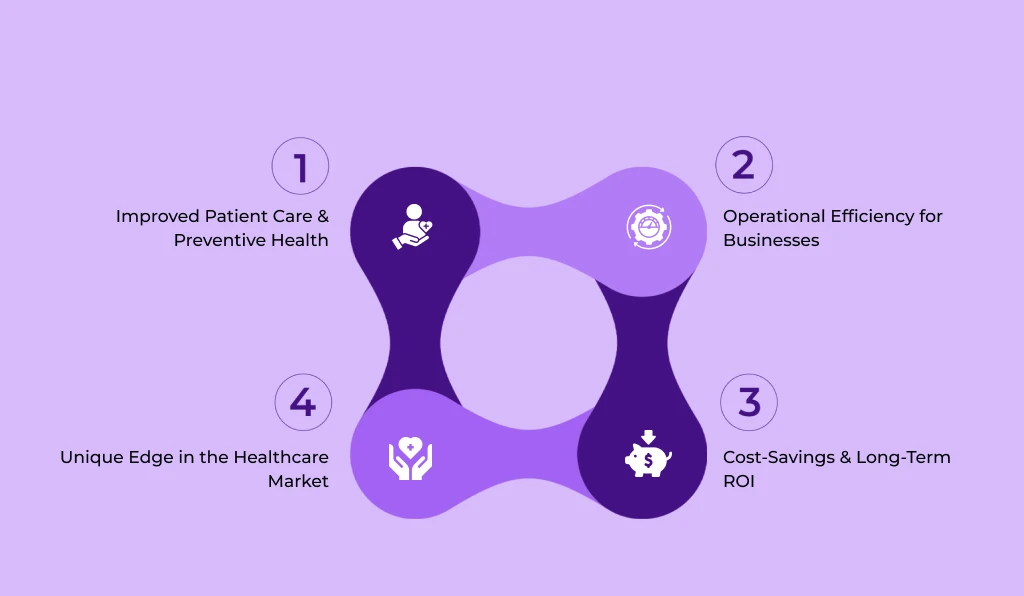
Improved Patient Care & Preventive Health
Wellness apps facilitate early detection and regular health monitoring, thereby minimizing the need for hospital visits. This helps providers to intervene before the conditions get complex. For individuals who need to manage serious illness or mental health issues, real-time information and custom recommendations highly enhance adherence to the healthcare plans.
Operational Efficiency for Businesses
Wellness initiatives within organizations and businesses also greatly benefit from these applications. This could take the form of automating health tracking, aggregating employee data, and providing actionable insights, among other options. It helps refine HR operations and promote a healthier lifestyle, thereby minimizing insurance costs and sick days.
Cost-Savings & Long-Term ROI
Healthcare providers and organizations that offer wellness applications can minimize the patient readmission rates, streamline resource allocation, and reduce administrative burden. Users value applications that avoid expensive medical interventions and offer proactive care.
Unique Edge in the Healthcare Market
Businesses that develop reliable wellness applications tap into an increasingly large user base that prioritizes self-care. Some of the best wellness apps in the world include Headspace and Calm for sleep and meditation, BetterHelp and Talkspace for mental health therapy, and MyFitnessPal for fitness/nutrition monitoring. Other examples include Apple Health and Fitbit. Noom is a popular example of a weight loss app. Many applications are witnessing similar growth, as the demand for specialized wellness applications is increasing.
Wellness App Development Process: A Step-By-Step Approach
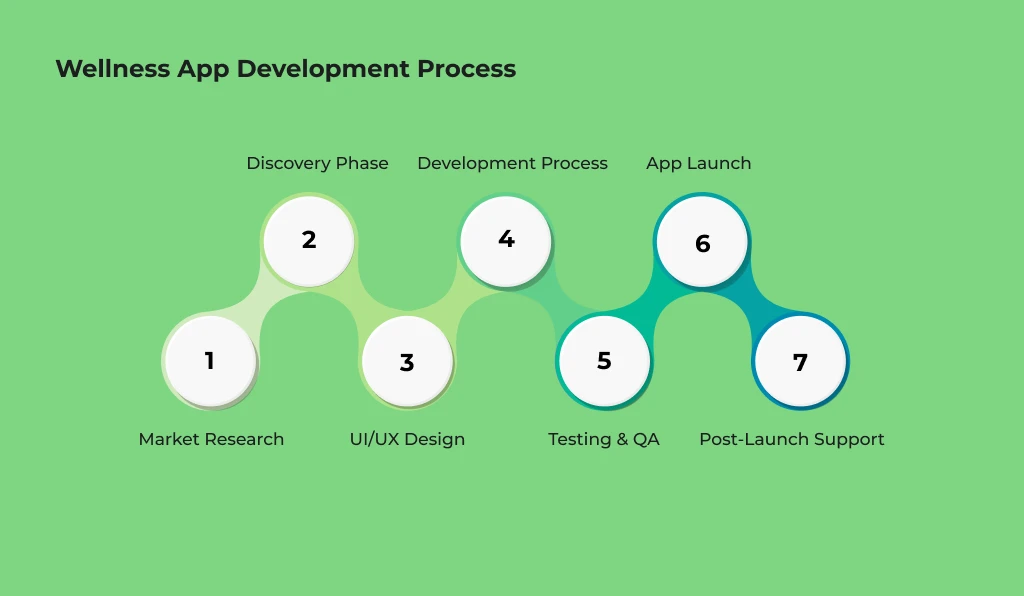
Wellness software development is a multi-step process that demands detailed planning and a great understanding of the project goals. With an in-depth plan of action, you can carry out wellness app development through a structured approach to help your idea be transformed into a successful wellness app. Here’s how to build a wellness app in detail:
Market Research
Before carrying out any activities that focus on building your health and wellness application, you need to study the market well. Initially, such efforts can help you understand the existing market trends and requirements. You can thus determine the solutions that are readily accessible to users and the features that are in demand. Based on the results of your research, you can derive a valuable idea for your business app that effectively addresses the needs of your target users.
Discovery Phase
Once the market research is complete, partner with a wellness application development company to outline the work terms, including the responsibilities of both parties. In this case, you need to share your requirements with the development team so that the experts can plan the whole development. They outline the core milestones and the timelines required to complete the project. The team then attempts to gather information to ensure that they accurately understand your requirements. The development team will also assist you in finding the tools and technologies best suited for building your software. The choice should depend on factors such as features, integrations, advancements, and the simplicity of using this tool alongside the existing stack.
Let’s have a look at the most prevalent technology stack for wellness app development:
| Specification | Technologies |
|---|---|
| Frontend | Flutter or React Native (Scales iOS and Android development) |
| Backend | NodeJS, Python (Django) (offers scalability) |
| Databases | PostgreSQL, MongoDB |
| Security Layers | End-to-end encryption, OAuth 2.0, secure data storage |
| Wearable Integrations | Apple HealthKit, Google Fit (real-time health data sync) |
UI/UX Design
In wellness app development, you need to not only make the solution visually pleasing but also easy to use. This is why designers will learn the concept and the functionality of the product, plan to share their idea with you, and provide you with the ideal solution.
Development Process
This phase is conventionally the most time-consuming. It includes a series of iterations that ensures developers build a solution aligned with the customers’ expectations. It is also important to test the solution appropriately. Certain types of tests are conducted along with development. Additionally, certain tests, such as regression tests, are executed once everything is ready. Finally, the Android or iOS app development is implemented by the development team.
Testing & QA
Software testing and quality assurance act as the most inevitable components of the development process. A great development team will always implement a series of tests of various types while developing your product to detect and fix every bug. While all the changes are introduced, now it’s time to do regression testing. It can reveal if everything works as it was expected initially.
App Launch
Once the iOS or Android app development is completed, tested, and secure against threats, you can make it accessible to potential users. When discussing mobile applications, they should be published on the Play Store or the App Store, where users can find and download them. To ensure that the app is placed there, you need to ensure that it completely meets the requirements set forth by the platforms.
Post-Launch Support
It is also essential to regularly monitor app performance and address detected vulnerabilities in a timely manner. Additionally, you should consistently gather and analyze users’ feedback to understand their thoughts about your solutions and identify methods to enhance them.
What is the Cost to Develop a Wellness App?
The cost of wellness software development should be evaluated based on specific elements. When you partner with a wellness application development company, you need to provide a set of aspects you wish to consider in your application. After analysing these elements, our app development team will share estimates with you.
What are the factors you should consider while developing your own wellness application?
It’s quite obvious that developing complex solutions with modern AI or VR-powered features can cost more than creating simple apps with limited functionality.

Estimate Your App Development
Cost in Seconds
Discover your project budget with our interactive AI-powered app cost calculator.
How to Build a Wellness App? Best Practices to Follow
Developing a wellness app is a complex yet exciting process, considering its market demand and the revenue it can generate. Let’s now move ahead to a list of the best tips that can help you improve the quality of your solutions.
Focus Highly on Security & Data Privacy in Wellness Apps
Pay attention to the data security approaches and data protection techniques. Ensure that wellness app privacy compliance standards, such as HIPAA, GDPR, and ISO 27001, are adhered to. You can also focus on two-factor authentication, access control tools, and data encryption as the widely implemented protection measures.
Emphasize MVP for Health Apps
A Minimum Viable Product, i.e; MVP, is the simplest version of an app, featuring basic functionalities. By launching the app and making it accessible to the end users, you can gather their feedback. Based on the users’ opinion, you can decide whether to proceed with developing a full-scale solution based on your initial idea or if any improvements are needed. With the launch of MVP development, you can eliminate crucial financial risks associated with launching a solution that doesn’t serve better to the target audience.
UX/UI Design Principles for Wellness Apps
Designing a wellness app needs an intuitive and supportive experience. UI needs to minimize cognitive load, assist users gently throughout their wellness journey, and foster trust with consistent, transparent, and empathetic micro-interactions. A soothing and minimalist design, combined with smart personalization, creates an experience that users wish to return to every day.
- Utilize minimal layouts and soothing colors to create a comfortable user experience.
- Adopt a simple yet intuitive navigation system with minimal clutter.
- Include gentle micro-interactions, such as streaks and progress, to motivate.
- Deliver personalized content according to the user’s goals.
- Focus on readability and accessibility.
Plan the Project Realization
With better planning of project realization, you can prepare better for various scenarios. The objectives, phases, and peculiarities of the project, particularly in areas such as wellness mobile app development, should be clearly defined for those involved in the process. You need to consider the potential pitfalls you might encounter during development and implementation, as well as the methods to address them.
Allocate Budget for Marketing Purposes
You should invest in advertising and marketing activities, since the wellness app market is highly competitive and dynamic. There are various options to promote your application, and you shouldn’t ignore them. For instance, social media promotion, cooperation with influencers, contextual ads, etc.
Wish to Calculate How Much Your Wellness App Will Cost?
We can help you determine the cost of your wellness application and provide assistance in quickly building your dream solution.
Monetization Strategies You Can Adopt for Wellness Apps
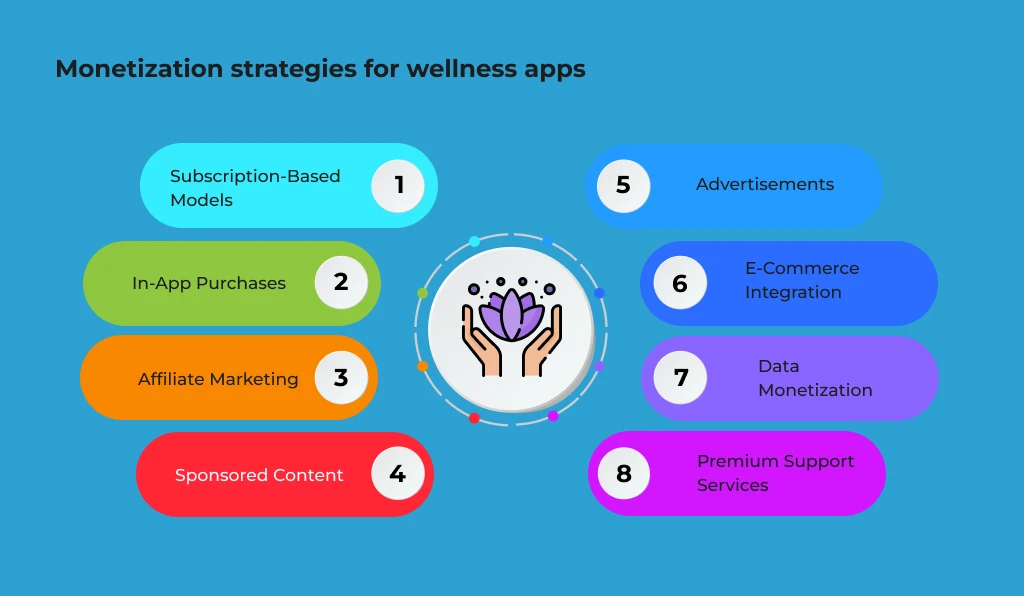
Developing a wellness mobile application that guides users through their health journeys and generates sustainable revenue is crucial. Here are the monetization strategies customized for wellness apps.
Subscription-Based Models
A subscription model helps users to access premium features, including advanced analytics, personalized coaching, and exclusive content. By offering tier-based subscription plans (monthly, quarterly, and yearly), we can cater to diverse user preferences and enhance retention rates. For example, a custom wellness solution that emphasizes mental health might offer free basic meditation sessions with advanced digital therapeutics content available through a subscription.
In-App Purchases
Helping users purchase additional features or content within the application can enhance their experience and generate revenue. This could involve buying workout plans, virtual goods, and nutrition guides. With a wellness mobile app that offers custom fitness programs, you can sell focused workout routines or diet plans as visible in in-app purchases.
Affiliate Marketing
Collaborating with brands to promote their products within your application can be a great revenue stream. Integrating affiliate links to wellness products or fitness equipment can help you earn commissions on the overall sales generated through the app. For example, your wellness app can recommend protein supplements or yoga mats and make a commission for every purchase a user makes.
Sponsored Content & Partnerships
Partnering with brands for collaborations or sponsored content can offer mutual benefits. A wellness app could help by featuring branded wellness challenges or co-hosting events with companies that focus on health, improving user engagement while increasing revenue.
Advertisements
Integration of advertisements within your application can help you earn income without imposing direct charges on users. However, you need to ensure that the app displays relevant ads to enhance the user experience. A custom wellness application that focuses on improving sleep might display ads for sleep support or relaxation products.
E-Commerce Integration
Selling wellness products directly through your application can help users find a single source for all their health needs. This can include selling fitness equipment, wellness devices, supplements, and more. Using a wellness app, you can sell a variety of products, such as health and nutritional supplements, yoga bands, sleep masks, herbal teas, and other related items.
Data Monetization
You can gather the user consent and use the anonymous data for research and development of the health and wellness niche. You can also sell this data to third parties or improve your app’s features. For instance, sleep tracking patterns can be used to sell anonymous data to researchers studying sleep disorders.
Premium Support Services
Providing personalized support, such as access to nutritionists or personal trainers, can be an additional feature that enhances the user experience. A wellness mobile app can offer direct end-to-end coaching sessions in a premium subscription.
With these monetization methods, developers can build a wellness mobile app that supports users’ health goals and also balances financial sustainability. You need to adopt strategies that align with the app’s mission and user requirements for lasting success.
Top Compliance Requirements For Wellness App Development
A health and wellness app is complete only when it truly adheres to and complies with the relevant compliance obligations. Understanding the compliance guidelines and recognizing the risk profiles are essential to keep the app compliant and best-suited for the users. Let us take a closer look at the compliance requirements.
| Compliance | Region | When it Applies | What it Covers |
|---|---|---|---|
| HIPAA | USA | App manages health-related data, telehealth chats, symptoms, and wearable metrics | Secures PHI, needs encryption, secure access, and stringent data privacy |
| GDPR | Europe | Application gathers personal data from EU users | Consent, right to delete data, transparency, and data minimization |
| CCPA/CPRA | USA | Serves California users and uses behavioral/tracking data | Data transparency, Do not sell my data, consumer rights |
| ISO 27001 | Global | Stores sensitive user data or uses cloud infrastructure | Global best practices for secure data management and data storage |
| SOC 2 TYPE II | Global | App works as a SaaS platform or stores wellness data in the cloud | Security, confidentiality, integrity, availability |
| COPPA | USA | For kids under 13 or if the app collects child data | Parental consent, child data protection, no profiling |
| HealthKit/Google Fit | Global | Application integrates with Google Fit or HealthKit | Stringent controls on the way health data is used, stored, shared, or monetized |
Role of AI in Wellness App Development
AI has become a trend in wellness and health apps lately. AI technology transforms them from basic trackers to smart companions that users can rely on, while also helping businesses analyze user input and contribute to individual needs. AI-based mHealth apps are ideal for wellness, offering features such as custom health plans, early disease detection, and continuous support. One such example is AI-powered chatbots. In this wellness app guide, let’s take a detailed look at the role of AI in wellness app development:
Personalized wellness plans
AI utilizes users’ data to create custom workout routines, diet plans, and mindfulness strategies.
Data-driven coaching
Apps utilize user biometrics and patterns to provide in-depth insights, monitor progress, and adjust goals to remain highly realistic.
Real-time feedback
AI can offer quick feedback on exercise form or various activities, automatically regulating the intensity of a routine.
Predictive health analytics
By tracking patterns in data, AI can help find early warning signs of potential health issues and prompt preventive measures.
Mental health support
AI-driven chatbots can give support with conversational interfaces with CBT for stress management.
Auto-reminders
AI automates motivational messages and reminders, helping users stay consistent with their health habits.
High user engagement
With an accurate and personalized experience, AI helps improve user satisfaction and align with wellness objectives.
Why Most Wellness Apps Fail (Checklist You Shouldn’t Skip)
Lack of a Clear Value Proposition
Don’t
Adding a usual wellness app with generic features
Do this Instead
Give 1-2 promises (example, stress-free hours and simple workouts in 10 min/day) and use this in your campaigns and marketing.
Misleading and Confusing UX
Don’t
Too many options with core actions hidden
Do this Instead
Make one key action obvious, like habit logging, mood tracking, and making navigation easier.
Zero Personalization
Don’t
Same content, reminders, and alerts for every user.
Do this Instead
Customized and personalized plans, alerts, and content based on the user’s goals and user behavior.
Weak Engagement
Don’t
One-time experience with no reason to return.
Do this Instead
Challenges, streaks, and community groups to collaborate, engage, and share progress.
Poor Monetization Strategy
Don’t
Early paywall, lack of upgrade path, and multiple ads.
Do this Instead
Freemium + subscription model with great benefits and smooth upgrade.
Ignoring Data Security & Compliance
Don’t
Wellness data is considered generic app data.
Do this Instead
Adopt strict compliance practices (HIPAA/GDPR), encrypt sensitive information, follow secure auth, and stay transparent about privacy.
No Platform Integration
Don’t
Users manually entering everything.
Do this Instead
Integrate with Google Fit, HealthKit, wearables, and calendars to gather insights and enable auto-tracking.
No Iteration
Don’t
Launching the application and updating it barely.
Do this Instead
Have new content, bug fixes, and UX refinements. (Watch user reviews, feedback, and analytics).
Weak Marketing
Don’t
‘Build it and users will come’ mindset.
Do this Instead
Focus on a niche (corporate wellness platform, sleep optimization, stress management), and align the ads, content based on it.