Guaranteed Expert Consultation Within 1 Hour. Click Here!
Guaranteed Expert Consultation Within 1 Hour. Click Here!

Guaranteed Expert Consultation Within 1 Hour. Click Here!
Guaranteed Expert Consultation Within 1 Hour. Click Here!
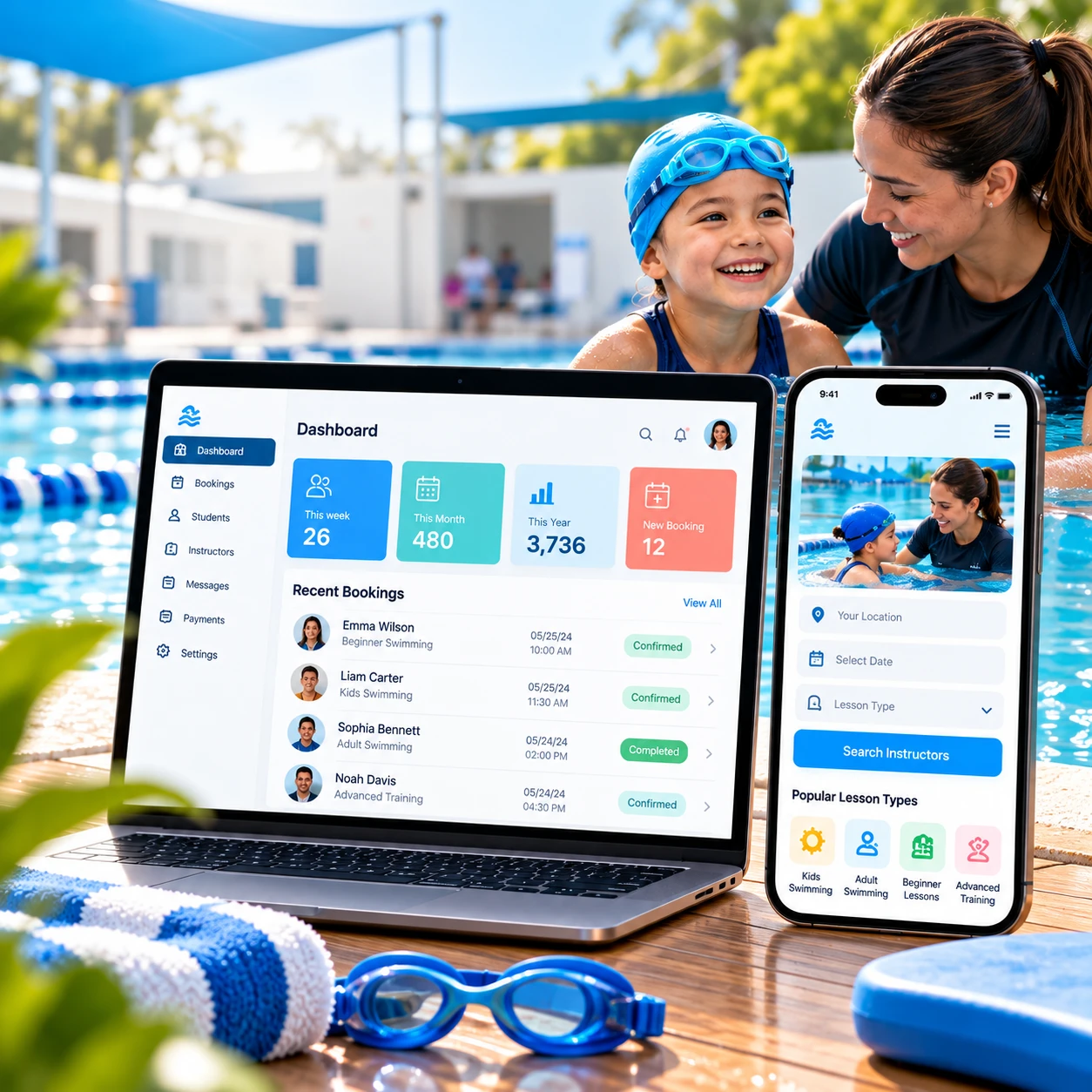
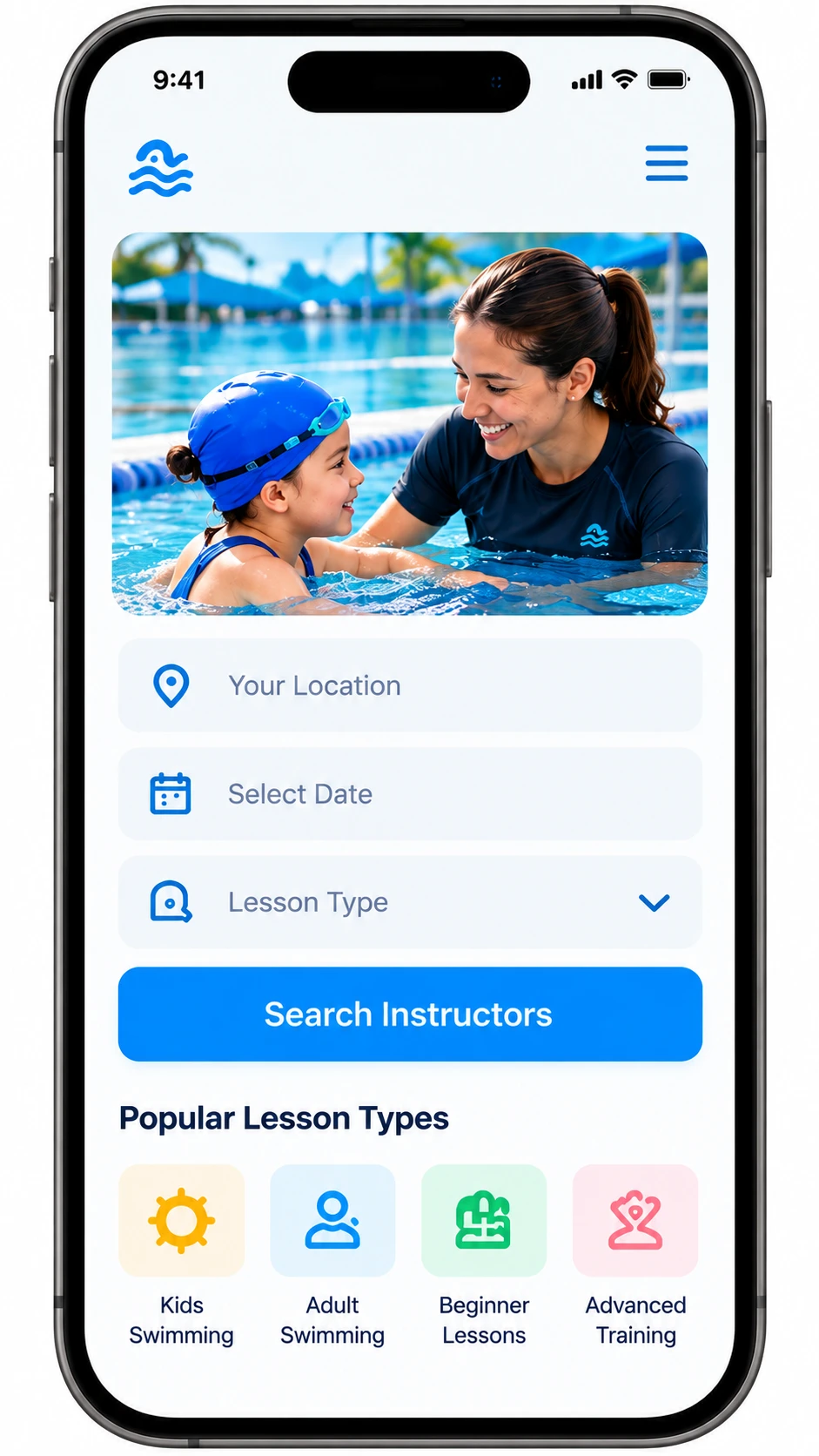
NewAgeSysIT built Honu, a marketplace that connects swimmers and their parents with swimming instructors across mobile and web. Learners search by location, specialisation, experience, packages offered and ratings, book against an instructor's live availability, pay for multi-lesson packages in app, and message their coach directly. More than 1,200 learners and over 200 instructors have joined the platform, and 80% of users go on to book recurring lesson packages rather than single sessions.
Instructors
200+ onboarded
Recurring Packages
Users who book again
80%
Of users book recurring lesson packages
200+
Instructors onboarded to the platform
1,200+
Active learners, growing month on month
Honu was founded by Zachary Davis to fix how swimming lessons get arranged. Before the platform, that market ran almost entirely on referrals: a parent asked around, checked a local Facebook group, and booked whoever came recommended, with no way to compare one instructor against another on experience, price or availability.
Independent coaches had the mirror image of the same problem. Good at teaching, no route to new students beyond the people they already knew, and booking admin running on messages and memory.
The platform carries three groups: learners and their parents, instructors, and administrators, across React Native applications and an admin dashboard. The stated ambition is to expand beyond swimming into other coaching disciplines and international markets.
Honu sits in the same fitness and sports coaching app development practice we run across training and instruction products, where the recurring problem is connecting independent coaches with the people looking for them.
Swimming instruction is organised almost entirely through referrals, local social media groups and manual scheduling. A parent looking for lessons has no reliable way to compare instructors on experience, specialisation, price or availability, and usually ends up picking whoever someone they know recommends. Independent coaches have the mirror image of the same problem: they are good at teaching and have no route to new students beyond the people they already know, while their booking admin runs on messages and memory.
A booking screen showing slots that are no longer free is worse than no booking screen at all, because it produces double bookings and a conversation nobody wants to have. Keeping instructor availability synchronised in real time across the learner app, the instructor app and the admin dashboard was the central technical problem in the build. Instructors control their own calendar, and what a learner sees when they open an instructor's profile is that calendar rather than a cached approximation of it.
Swimming is taught in courses rather than one-off sessions, so the payment model had to handle multi-lesson packages: a learner buys a block, then draws sessions down from it as they schedule them. That is more involved than charging for a single booking. The platform has to hold a balance of remaining sessions against a purchase, apply each scheduled lesson to it correctly, and stay clear to the learner about what they have left. Getting that wrong creates billing disputes in a market where trust is the whole product.
Learners want to search, compare and book. Instructors want to control their calendar, manage bookings and build a reputation. Administrators want oversight of users, sessions and payments across the whole platform. All three act on the same underlying booking record and want almost nothing in common from the interface around it, so the three journeys were designed separately over a shared data model rather than as one interface with permissions applied on top.

Build the payment model around how the service is actually sold. Swimming is taught in courses, so Honu sells lesson packages that learners draw sessions from, and 80% of users book recurring packages as a result. A single-session checkout would have produced a very different number.
Availability should be owned by the person who has to honour it. Instructors maintain their own calendar and that calendar is what learners see, which is what stopped double bookings rather than any amount of conflict handling after the fact.
In a marketplace where a parent is choosing who teaches their child, the platform's job is to give them more to decide with: listed credentials and experience, teaching approach, reviews from previous students, and an administrator approving accounts before they appear. The choice stays with the parent, better informed.
A package balance is state, not a transaction. Holding remaining sessions against a purchase, and drawing each booking down from it clearly, is what keeps a multi-lesson product from generating billing disputes.
Three user types on one booking record need three designs, not one design with permissions. Learners optimise for search and comparison, instructors for calendar control and reputation, administrators for oversight.
If you are building a marketplace where people book recurring sessions with a professional, NewAgeSysIT has delivered this at production scale with 200 instructors and 1,200 learners on the platform.

Get expert guidance before you invest in AI software development. Work directly with Giovanni and Bibin to validate your technology direction, align AI with business goals, and make confident decisions that reduce risk and accelerate outcomes.
Request a Strategic Consultation
Honu was built as one of the two sided marketplace platforms we specialise in, where supply and demand each get their own experience over a shared booking record. A learner searching, an instructor accepting and an admin reviewing a payment are all acting on the same object, seen three different ways. Building it as a marketplace rather than a booking tool is what lets reputation accumulate: reviews, ratings and session history attach to an instructor's profile and carry forward, instead of resetting with every new student.
Learners filter instructors by location, experience, teaching specialisation, packages offered, ratings and availability. Each instructor profile carries a detailed bio, their teaching approach, the credentials and experience they have listed, pricing, and reviews from students they have taught. Instructor accounts are reviewed and approved by an administrator before they can appear in search and take bookings.
Instructors maintain their own availability, and real time availability and scheduling sync pushes that straight into what learners see when they browse. A learner picks a slot, the instructor confirms, and both sides get an instant confirmation. Instructors can confirm, reschedule and track upcoming sessions from their own view. Because availability is owned by the person who has to turn up for it, the booking screen and the instructor's actual week do not drift apart, which is what removed double bookings.
The lesson package and recurring booking system lets instructors define packages rather than only single sessions, and learners buy a block and schedule against it. Payment runs securely inside the app, with receipts and transparent pricing on every transaction. Selling instruction as packages rather than single sessions puts Honu closer to lesson and course booking platforms than to a simple appointment app, and the drawdown mechanic reflects that. This is the mechanic behind the 80% recurring booking figure: the product is built around the way swimming is actually taught, in courses, so buying a course is the default path rather than an upsell.
Built-in messaging lets learners and instructors coordinate before a lesson and follow up afterwards, with the conversation staying inside the platform rather than moving to personal phone numbers. For a parent arranging lessons for a child, being able to ask a question and get an answer without handing over their mobile number is part of what makes the platform feel safe to use.
Administrators approve, suspend and monitor user accounts on both sides of the marketplace, track transactions and instructor payouts, and handle support queries. The dashboard was delivered through web application development rather than squeezed into the mobile apps, because an operator reviewing a week of payouts is not doing that on a phone. This is the layer that keeps quality manageable as the instructor base grows, and it is what lets the client run the platform day to day without needing a developer.
React Native mobile app development delivered both the learner and instructor applications for iOS and Android from a single codebase, with a web dashboard for administrators, over a Node.js backend and cloud-hosted infrastructure built to carry additional coaching disciplines without re-engineering the foundation.
Take the free assessment right here and get an instant 100-point validation score plus a stage-by-stage diagnostic of exactly what to strengthen first.

Honu has 200 instructors, live calendars that do not double book, and eight in ten users buying packages rather than single lessons.
Recurring Package Booking
80% of users
Instructors Onboarded
200+

Discover your project budget with our interactive AI-powered app cost calculator.
| Layer | Technology |
|---|---|
| Mobile Applications | React Native, iOS and Android |
| Language | JavaScript / TypeScript |
| Web Frontend | React.js |
| Backend Framework | ⚠️ CONFIRM FRAMEWORK |
| Backend Runtime | Node.js |
| Database | MongoDB, plus ⚠️ CONFIRM SECOND DATABASE |
| API Architecture | REST APIs |
| Payments | Secure payment gateway supporting multi-lesson package purchases |
| Notifications | Push notifications and email services |
| Messaging | In-app messaging between learners and instructors |
| Cloud | AWS |
Availability sync is the layer worth naming, because it is what the double-booking problem was actually solved with.
| Phase | Key Output |
|---|---|
| Discovery and Planning | Marketplace scope across three roles, package and payment model defined, instructor onboarding and approval flow agreed |
| UI/UX Design | Separate learner and instructor journeys designed over one booking model, plus the admin dashboard |
| Development | React Native apps, availability sync, package purchase and drawdown logic, in-app messaging, admin dashboard |
| Deployment | App store release, instructor onboarding, cloud infrastructure |
The structural decision was to design the three journeys separately over one shared booking record rather than as one interface with permissions applied. A learner comparing instructors, an instructor protecting their week and an administrator reviewing payouts have almost no screens in common. UI/UX design ran on that basis, and the package drawdown model was settled during discovery rather than after, because what a purchase has to hold determines what every booking afterwards reads from.
| Role | Responsibilities |
|---|---|
| N × Project Lead | Client sessions, marketplace scope, milestone tracking |
| N × React Native Engineer | Learner and instructor apps, booking flow, messaging |
| N × Backend Engineer | Availability sync, package purchase and drawdown, payment integration, approval workflow |
| N × Frontend Engineer | Admin dashboard |
| N × UI/UX Designer | Three role journeys, instructor profile and search experience |
| N × QA Engineer | Cross-role testing, double booking edge cases, package balance and payment validation |
The hard testing on a build like this is not the features, it is the edge cases: two learners reaching for the same slot, a package balance that has to stay right through a reschedule, a payout that has to reconcile. Teams can be extended with that profile through our IT staff augmentation services, which place experienced engineers into an existing product team under the client's own sprint direction.
80% of Honu users book recurring lesson packages rather than single sessions. The platform has onboarded more than 1,200 learners and over 200 instructors, with learner numbers growing month on month.
| Segment | Before | After | What Changed |
|---|---|---|---|
| Learners and parents | Referrals and social media groups | Filtered search across location, experience, specialisation, packages and ratings | Comparing instructors became possible for the first time |
| Learners, booking | Phone and message coordination | Live availability with instant confirmation | Slots shown are slots that are genuinely free |
| Instructors | Reach limited to existing contacts | 200+ onboarded with profiles, availability and reputation tools | A route to students beyond word of mouth |
| Instructors, admin | Scheduling and payment chased manually | Bookings, packages and payouts handled in platform | Less time on administration, more on teaching |
| Metric | Before | After | Change |
|---|---|---|---|
| Recurring package booking | Not offered | 80% of users | The product matches how swimming is actually taught, in courses |
| Active learners | 0 at launch | 1,200+ and growing monthly | Two-sided liquidity reached on both sides |
| Instructors onboarded | 0 at launch | 200+ | Supply side depth, which is the harder half of a marketplace |
| Payment transparency | Cash and informal arrangements | In-app payment with receipts and session tracking | A record both sides can refer back to |
Coaching, training and instruction platforms for independent professionals and studios.
Two-sided marketplaces with matching, in-app payment and two-way ratings.
Related case study, a two-sided marketplace connecting families with care providers.
We grow strong with a 100% in-house team, 30+ years of industry expertise, and proven results. From concept to launch, we deliver innovation with precision and reliability.
Your idea is 100% protected by our non-disclosure agreement
Guaranteed expert consultation within 1 hour
Call directly: 1-609-919-9816
Get a free project estimate in under 60 minutes.
