| TL; DR Businesses that track and adopt evolving mobile app development trends gain agility, boost efficiency, and stay competitive in the digital market. Apps now process data locally, enhancing privacy and personalization. AI features such as image recognition, predictive analytics, and sentiment detection are transforming the UX. With mobile development trends like 5G and edge computing, real-time AR/VR experiences, IoT orchestration, and low-latency applications are becoming the new standard. Frameworks like Flutter (used by 1M+ developers, powering 30% of iOS apps) enable multi-experience apps across phones, cars, wearables, and AR glasses. Emerging technologies, like IoT, Wearables, & Beacons, are enhancing automation, personalization, and in-store engagement. From foldable device apps to super apps, mobile wallets, chatbots, and on-demand platforms — all focus on convenience, personalization, and multi-functionality. By focusing on research, user experience, data security, scalability, and continuous updates, you can build future-ready apps that thrive as technologies evolve. |
Undoubtedly, the mobile app development segment keeps growing. Technological innovation, changing consumer demands, and other factors have directly impacted mobile application development. Delving into mobile app development trends is the key to building success in the current market. Businesses need to understand and keep up with these changing mobile app trends to best serve their clients.
This is the same rule for content creators and producers to bring their brand to a higher level through mobile app development. Are you ready for future changes in mobile app development? How would you stay up to date with the changing mobile app trends? In this blog, we can provide detailed information on the recent mobile app development trends and best practices to help you plan your mobile app.
Why Should Businesses Keep an Eye on Mobile App Development Trends?
App development is really important for businesses to thrive and keep reaching a wide range of users. Since it crafts value and empowers lives through technology, apps enhance the user experience and redefine how we drive the world.According to recent reports, Android holds 75.18% of the global mobile operating system market share, while iOS holds 24.44%. A reliable service provider offering the best Android and iOS app development services is ideal for maintaining a strong market share and helping numerous users engage with each other.
Mobile apps can help a company generate more profit. These enable process automation, increase communication, and enhance business adaptability or agility. Businesses that employ modern technological tools are likely to be highly successful compared to those that rely on conventional methods.
The tech space is evolving continuously. It is very important to keep up with the growing trends in mobile development to stand out and ensure your business runs flawlessly. Businesses that fall behind in app development often end up with redundant processes that reduce efficiency. Over time, these might lose market share to competitors that stay highly equipped and agile. The need to be competitive in this rapidly changing market is one of the core reasons to stay ahead of the app development curve.
Latest Mobile App Development Trends Impacting Businesses to Watch Out For
The mobile app development services market continues to make new decisions, introduce innovations, and integrate new mobile app development technologies to drive transformation. These mobile app trends are usually evident due to technological advancements that favor highly productive processes and techniques to deliver high-end business results.
Businesses that keep up with changing mobile development trends are better positioned to develop apps that optimally cater to their needs and the industrial demands. Let’s take a look at the latest mobile app development trends to check out:
1. On-Device Intelligence
Think about opening an application that already understands your context, mood, and next move, without hitting the cloud. This is exactly what on-device intelligence pushes us to do. AI is no longer a virtual service; it now lives on your phone, adapts locally, and prioritizes privacy by default. In 2025, HP partnered with Reincubate to build a custom AI solution that improved on-device AI features.
This partnership ensured the delivery of AI-driven, personalized experiences directly on devices, empowering the U.S.’s position as a pioneer in on-device AI innovation. Through local data processing, the solution enables real-time, privacy-specific interactions while minimizing reliance on cloud infrastructure. According to a Cornell University study, 176 AI-driven applications found that user experience highly depends on intelligent interaction design.
The mobile app development industry has been gaining prominence with the advent of artificial intelligence and machine learning. While we talk about AI, Alexa, or Siri comes to mind. CoreML developments serve as examples of enhancing the flexibility and performance of advanced models, specifically in diffusion and large language models (LLMs). The AI features you can implement into a mobile application include:
- Face detection
- Image recognition
- Text and image classification
- Speech recognition
- Sentiment recognition
- Predictive maintenance
The way a mobile app development company develops applications is changing. The applications adjust recommendations, layouts, and user-specific flows in real-time. Privacy is a key aspect of the development team from scratch. Once data is processed on the device, sensitive data remains under the user’s control. This shift maintains security, eases compliance burdens, and builds the trust that lets people open the same application day after day.
2. Latest Connectivity
5G is one of the hottest mobile app technology trends taking new shapes in markets, and 6G is already underway. Edge computing is yet another technology that adds to the layer, driving workloads closer to users and reducing delays to almost zero. The consequence is a real-time experience that feels the best. AR shopping that positions a chair right in your living room, travel applications that instantly deliver live translation overlays, or games that work with console-level effectiveness on handheld equipment.
Edge computing brings processing closer to users, minimizing latency to almost zero. For instance, real-time AR streams, IoT orchestration, interactive gaming, etc., without lags. Think of a guided AR overlay that instantly appears when you look at the painting, with textures shifting as you look. It is the experience that can bring about a revolution in the future.
3. Cross-Platform & Multi-Experience Frameworks
Your applications will not be confined just to phones. They can extend to car dashboards, watches, TVs, and AR glasses, etc. Frameworks are evolving to support this transition. Flutter has about 1 million active developers (monthly) and powers approximately 30% of iOS applications. Cloud-native computing enables high-performance modules to work safely in embedded systems, browsers, and mobile devices. Multimodal applications will also become the trend.
Applications will flow fluidly across devices, switching between gesture, voice, touch, haptics, and gaze as context dictates. A glance can pause a watch alert, the AR glasses can process voice commands, etc. Cross-platform development is no longer a compromise; it is now the default approach for iOS app development.
4. AR/VR/MR
Extended Reality is becoming the infrastructure for how we will thrive in the digital age, particularly in sectors like health, education, and commerce. The global AR/VR market already generates almost US$32.1 billion annually, and this is expected to almost double by 2028.
Retailers that use AR/AI show a 40% growth in conversions and about 20% growth in average order value when compared to those who don’t go for AR/AI, according to the recent findings. Applications such as Sephora’s Virtual Artist and IKEA Place already reveal how mobile devices can connect physical and digital shopping. Education and training are witnessing the same momentum.
With mixed-reality classrooms and virtual labs, students can conduct chemistry experiments and perform surgeries with no risk. AR is used in healthcare applications to layer instructions over text, and doctors can experiment with virtual consultations in mixed reality spaces.
5. Privacy & Security
Apps are becoming more advanced and innovative, and increasingly immersive. This is why a place for privacy and security is becoming a necessity while discussing the trends in mobile application development. AI transparency, the capability to define the decision-making process, and model provenance will be required per app store policies.
Another trend is data sovereignty, which involves being compliant with regulations, including the GDPR in Europe, Brazil’s LGPD, the CCPA, COPPA, and HIPAA in the U.S., etc.
6. IoT App Integration
The rise in mobile penetration has opened numerous opportunities for IoT (Internet of Things). People have become accustomed to leveraging technology to enhance their lives. IoT refers to the evolving network of devices connected to the Internet, enabling consumers to enjoy convenience and automated control. A right example of the rise in IoT and mobile application development is smart home technology.
Mobile applications can be used to control a home thermostat from a remote location, connect to a home security network, and lock and unlock doors, among other things. Mobile apps can also be used to connect the refrigerators and other household equipment. The IoT market revenue is projected to increase at an annual rate of 16.32% from 2025 to 2030. Industrial IoT is a dominant player with a projected market volume of 7.12 billion USD in 2025.
7. Apps for Foldable Devices
Touch screens have become dominant in the marketplace. Foldable devices have also started to make a comeback. These smartphones fold to expand or compress the screen size as the user prefers. For instance, a user can call while the device is closed, then unfold it to view a video on a larger screen.
From an app development perspective, both content creators and resellers should account for these devices during app development or upgrades. The vision is that the app should effortlessly adapt its display as the screen folds or unfolds.
Apps for foldable devices make use of larger screens and often use split-screen layouts to multitask and offer unique features, such as stylus support for note-taking. The leading applications for this are Microsoft Office, Outlook, navigation apps such as Maps, media apps like Netflix and YouTube, and note-taking apps such as Samsung Notes and Evernote.
Android’s ecosystem is quickly evolving to adapt to the foldable devices; for instance, Samsung’s Galaxy Z Fold series and Android 14’s resizable window APIs are in favor of these changing trends. Partnering with an Android app development services company can let you build stunning Android apps for foldable devices.
8. Wearable Technology
Wearable devices have been trending as one of the most innovative mobile app technology trends for years and have made a breakthrough in the market. Fitness bands, smartwatches, and trackers have been evolving all along. However, wearable devices have yet to reach their full potential. While we don’t see significant year-over-year growth, it’s steady.
This is the best technology for mobile app development, evolved and will continue changing the way mobile applications are developed. The global wearable app development services market is projected to hit USD 12.8 billion by 2032.
9. Beacon Technology
A large range of industries have been leveraging the beacon technology. Beacons can incorporate advanced functionality into almost any mobile application. Mobile app beacons were created in 2013, and over the last few years, certain advancements have been made to the technology. According to recent Statista reports, the beacon technology market is growing at a CAGR of 59.8% and is estimated to reach 56.6 billion USD by 2026. Let’s consider how beacons work with mobile applications.
If you are a mobile application reseller building apps for retailers, your clients can install them in their stores, which link to a user’s mobile phone via Bluetooth when the app is on their device. While users pass by the beacon, they can be quickly notified of sales or discounts on the store’s products.
Beacons help track customer behaviour in stores. They can know whether a user spends considerable time in a specific aisle. The application can automatically activate a push notification to push the sale at a later date related to the products. Beacon technology is also advantageous for proximity marketing. It eventually boosts the in-app customer experience.
10. Mobile Commerce
Mobile commerce continues to trend forward toward an optimistic future. Businesses are leveraging mobile applications to grow their revenue. The space holds immense potential to hold large retailers, personal brands, and individual content creators. Mobile commerce functionality is a core feature for mobile application resellers to exhibit during client pitches.
11. Mobile Wallets and Mobile Payments
The way users pay with mobile devices has been evolving with mobile wallets like Apple Pay, Samsung Pay, and Google Pay. Mobile wallets have advanced enough that payments can be made easily through connected or wearable devices. Wallet integration has become a standard feature for every application that processes transactions. The CAGR of digital wallet transactions in e-commerce is estimated to reach 18% from 2024-2030.
12. Chatbots
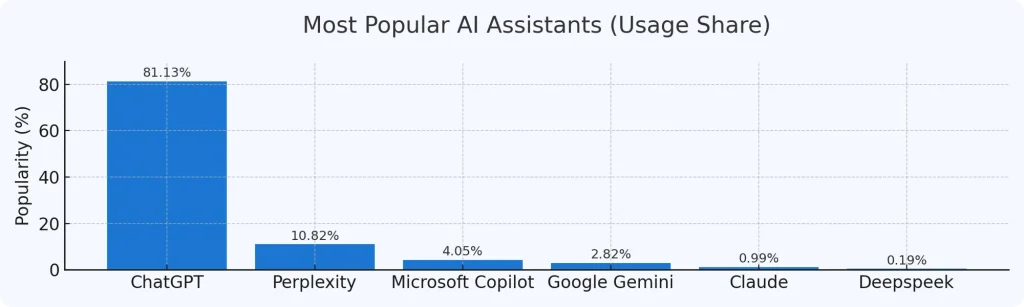
Chatbots have been ruling the space for over a decade. Chatbots have become dominant over the years and have advanced significantly, serving as the standard for customer support. According to recent Statcounter reports, ChatGPT has seized 81% of the worldwide market share, while Perplexity comes in second with 10.8%. As chatbots are driven by AI, the responses are becoming increasingly human-like.
13. Predictive Analytics
This is another mobile app development trend that revolutionizes the mobile app segment. By leveraging AI, machine learning, data modeling, and data mining, predictive analytics can help forecast events. Tech giants have been utilizing predictive analytics for years. One such example is Netflix. It offers movie recommendations and TV show recommendations based on users’ previous viewing history. The idea is that two users will have the same in-app experience. The product preferences and suggestions will be presented differently based on each user’s behaviour history and actions.
14. On-Demand Apps
This technology has been trending recently, with apps such as Uber and Airbnb taking space. Here are some examples of apps that revolutionize the on-demand industry:
- Doctors On-Demand
- Laundry
- Food Delivery
- Virtual Tutors and Coaches
- Maintenance Services
- House Cleaning
- Fitness On-Demand
- Barber & Beauty Salon
- Pet Care
On-demand apps have seamless opportunities. On-demand applications are popular among brands because they offer efficiency, edge, and convenience, with features such as cost-effective processes, quick service, and the ability to collect customer data. The models help businesses understand customer needs, extend their reach, and develop a credible customer base through a personalized, flexible experience.
15. Cloud Computing Integration
Cloud technology has influenced mobile app development in numerous ways. With cloud storage technology, you can improve mobile app performance for users. Applications can store data and manage complex processes in the cloud rather than storing data directly on users’ devices. This doesn’t just streamline development; it also provides a cost-effective option. If your company is thinking of building business or internal workforce applications, you should consider cloud computing trends.
16. Low Code/No-Code Development
Every business strives for two ingredients such as simplicity and speed. Low-code or no-code development is a novel approach that doesn’t require in-depth coding expertise to build mobile applications quickly and cost-effectively. This method significantly reduces development time, making it ideal for rapid prototyping and iteration. It enables business stakeholders and non-developers to participate directly in app development, thereby enhancing the final product. Zapier, Microsoft Power Apps, and Mendix are a few of the well-known platforms that ensure the visual design of mobile applications.
17. Super Apps
Known and evolved from Asia, super apps (for instance, WeChat, Gojek, etc) combine various services into a single platform. The application includes payments, bookings, shopping, messaging, and a lot more. In the near future, Western markets are expected to realize the full potential of super apps, as big brands consolidate services into a single app to enhance user engagement. Businesses should focus on effortless integration and interoperability. This will be an opportunity and a challenge for every mobile app development company aiming to develop scalable solutions.
18. Voice-Enabled Interfaces
VUIs, or Voice-Enabled Interfaces, are yet to take new shapes soon. Using AI-driven voice assistants like Alexa and Siri, users can gain more voice-driven controls in applications. VUIs enhance convenience and accessibility by making cab booking easier, setting reminders, and enabling searches, among other things. Applications that don’t consider voice integration are likely to fall behind. An ideal mobile app development approach will prioritize multimodal interfaces —such as voice, gesture, and touch-based inputs — to improve the UX.
19. Vertical Micro-Apps and Modular Apps
In addition to the bigger platforms, niche applications also perform well. Micro applications are laser-focused, and modular applications let users include plugins or features as required. This lets individuals have greater choice over the purpose of technology. Businesses win by developing modular applications and ecosystems that scale with the users’ requirements.
20. Offline & Edge-First Apps
There will be no worries about connectivity gaps breaking the user experience in the future. Wi-Fi cuts out, leaving you with only one bar of signal, and all of these lead to your app becoming useless. This is slowly taking change. With edge computing and local processing, your apps no longer need to be reliant on constant connectivity. These applications can run more efficiently and perform more smoothly.
By adopting an offline-first approach, your users won’t even notice when the network slows down. Once the users are online, hybrid sync enables them to keep everything in line. With privacy-compliant, edge-native applications, you can maintain a sweet spot for industries where the deal breakers are speed, trust, and reliability.
Mobile App Development Best Practices
Just designing or developing an app for the sake of it is not the purpose. There are standard principles and practices to adopt throughout the mobile app development lifecycle. To get the best out of your mobile app, follow these app development best practices:
Research and Set Objectives
Before you begin app development, you should conduct research to define your needs, identify your users, and analyze your options. Evaluating the answers to these questions against your business’s objectives could be a great move.
Emphasize User Experience (UX)
Your top priority in mobile app development should be your users. Regardless of how amazing your app is, it is only beneficial if the target users find it highly usable and convenient. Keep focus on animations, personalizations, and micro-interactions that enhance usability rather than cluttering your application with undesired features.
Keep Security Standards High
Security is mandatory for all applications. It is essential to leverage modern cybersecurity measures, including encryption and two-factor authentication, to prevent unauthorized access.
Plan for Updates
Once the app is deployed, take feedback and scale the current iteration of your product. Choose the best mobile app development technology to develop your application. Obtaining consistent feedback and ensuring app updates help you fix errors, maintain optimal functionality, and introduce innovative features, keeping the application novel, modern, and highly relevant.
Final Thoughts
The future of mobile app development assures effective transformations in your business. Businesses need to adapt quickly to risks by adopting emerging mobile app development technologies such as 5G, AI, AR/VR, and IoT, and seizing the digital marketplace. Whether you’re a business launching your application or an enterprise updating your systems, staying ahead of the market and understanding mobile app trends is essential. Partnering with a leading app development company ensures your app is more than just functional, making it future-ready.
You don’t have to include every trend in the applications you develop. However, careful consideration of all upcoming mobile app technology trends is vital to understanding where your business stands. This understanding helps you see how the market shifts, so you can adapt accordingly for the future of app development. With NewAgeSysIT, you can get the best app development services to build apps reliably and swiftly adapt to any changes that come your way. To learn more about how we work and the services we provide, while adhering to mobile app development trends, connect with us!
FAQ
1. What are the top mobile app development trends to watch in 2026?
You can expect advancements in AI-driven personalization, 5G-enhanced experiences, AR/VR integrations, cross-platform frameworks, voice and gesture interfaces, on-device intelligence, and many more.
2. How to future-proof mobile apps?
To make your mobile applications future-oriented, build them with modular code, scalable architecture, and cloud-native infrastructure. You should also regularly update it to ensure OS compatibility, integrate AI and automation, and maintain security and compliance for the future of app development.
3. Are mobile app developers still in demand?
Yes, as businesses move more into the digital sphere, demand for expert app developers, particularly in IoT, AI, React Native, and Flutter, continues to rise as they focus on mobile-first customer experiences.
4. Can you tell what the latest trends in mobile app development we should watch out for?
The latest trends in app development include super apps, AI-driven automation, wearable integration, low-code development, voice-enabled integrations, AR/VR/MR, AI-driven intelligence, chatbots, and more.
5. What is the next big thing in app development?
The near future of mobile app development would welcome AI-native applications, which are platforms that can recognize users, understand their needs, and use the predictions to automate processes. This technology, combined with 5G data processing and IoT connectivity, is poised for a new shift.
6. How is AI changing mobile apps?
AI enables intelligent recommendations, chatbots, predictive analytics, image and voice processing, and workflow automation, thereby improving business efficiency and the overall user experience.
7. What are the benefits of 5G for mobile application development?
5G helps with real-time processing, ultra-low latency, and quick data transfer, helping with high-end streaming experiences, IoT, and AR/VR, which helps businesses develop performance-centric and futuristic apps.