
Welcome to Blogs
Discover actionable insights, in-depth research, and expert perspectives, all in one place.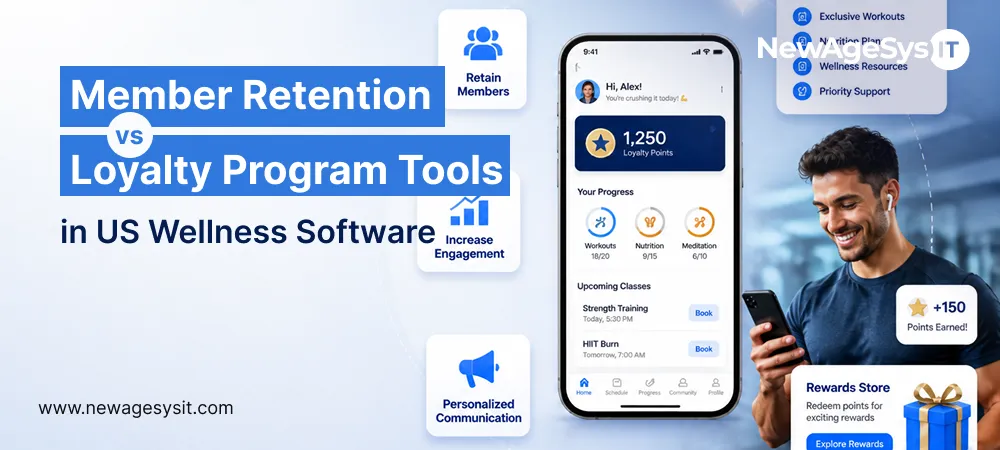
Wellness 6 min read
Member Retention & Loyalty Program Tools in US Wellness Software

Client retention is the highest-ROI investment a US spa, yoga studio, or wellness center can make, and wellness member retention software USA businesses rely on is what makes retention strategy executable at scale.
Acquiring a new client costs 5 to 7 times more than retaining an existing one. Profitability typically begins at the second or third visit. Those two economic realities make retention technology the most financially impactful software decision in the wellness stack.
Wellness client churn is rarely visible until it is too late. Clients do not cancel memberships or file complaints. They simply stop booking. A wellness center that improves annual client retention from 60% to 70% increases its Year 3 active client count by 25% without acquiring a single new client.
Member retention and loyalty tools are the revenue protection layer of the broader US wellness software landscape covered in Wellness Software & CRM for USA Spas, Clinics & Wellness Centers.
Businesses investing in wellness mobile and web app development services and wellness software and CRM development services build retention infrastructure designed specifically around the wellness client lifecycle.
Lapsed Client Identification and Re-Engagement
Most wellness businesses discover lapsed clients too late, after the relationship has already gone cold and re-engagement costs more than retention would have.
Purpose-built wellness retention tools identify at-risk clients early and trigger intervention before the window closes.
Last-visit tracking flags clients who have not visited in 30, 45, and 60 days, surfacing them daily to front desk staff and provider teams for proactive outreach before the pattern becomes permanent.
Automated lapsed client sequences trigger SMS and email messages at defined intervals after the last visit.
Messages that reference ‘your last deep tissue with James’ or ‘it has been 6 weeks since your Brazilian blowout with Maria’ consistently outperform generic ‘we miss you’ campaigns in wellness contexts.
Lapsed client win-back offers deliver targeted promotions calibrated to each client’s historical spending level and service preferences, at 30, 60, and 90 days post-last-visit.
Win-back campaign analytics track which messages, timing intervals, and offers successfully convert lapsed clients, enabling continuous optimization of re-engagement strategy.
Retention automation is most effective when built on CRM client data, covered in Wellness CRM: Must-Have Features for US Spas, Yoga Studios & Holistic Health Centers.
Businesses building these re-engagement capabilities through custom mobile app development services ensure lapsed client sequences reach clients seamlessly across both web and mobile interfaces.
Wellness Membership Programs: The Recurring Revenue Engine
Membership programs are the single most effective revenue stabilization tool in the US wellness business model.
Monthly recurring billing smooths cash flow, increases annual client value, and creates the behavioral commitment that makes switching to a competitor significantly less likely.
Membership tier design defines specific benefits at each level (monthly treatment allocation, retail discounts, priority booking access, and complimentary add-ons), creating clear value propositions at different price points.
Automated membership billing handles monthly or annual charges on client-defined dates.
Failed payment management handles declined cards through automated retry sequences, dunning email workflows, and membership suspension after defined retry attempts.
This reduces the manual billing overhead that derails small wellness operations.
Rollover and banked visit management defines whether unused monthly visits expire, roll over, or bank for future use, with client-facing balance visibility in the member portal.
Member-only benefits delivery (priority booking windows, exclusive new treatment access, member appreciation events) creates the exclusive experience that makes membership valuable beyond the financial discount.
Membership pauses and cancellation workflow handles structured pause requests with defined limits and automatic reactivation.
Cancellation workflow includes exit survey collection and immediate win-back sequence initiation.
Businesses building membership program capabilities through android development ensure billing, member portals, and benefit delivery work seamlessly across all Android devices.
Loyalty Points and Rewards Programs
Wellness businesses that have structured loyalty programs consistently report higher annual client retention rates than those without.
The program pays for itself in retained service revenue and reduces the likelihood that clients try competitors.
Points Earning Structure
Points earned per dollar spent on services, retail products, and gift card purchases, with bonus points for referrals, milestone visits, and membership upgrades.
Configurable earn rates assign different point values to different service categories. Premium treatments earn more points to incentivize higher-value service selection.
Points Redemption
Points redeemable for service upgrades, retail products, add-on treatments, or future appointment credits, rewards that keep spending within the wellness center.
Minimum redemption thresholds and points expiration balance program generosity with business economics.
Referral Program Tools
Unique referral codes or links for each client track referrals automatically from invitation through new client first appointment and reward fulfillment.
Dual-sided referral rewards (both referrers and new clients receive benefits) maximize referral program participation in wellness contexts.
Businesses building loyalty program capabilities through ios development ensure points tracking and redemption works seamlessly across Apple device ecosystems.
Client Feedback and Satisfaction Management
Client feedback tools close the gap between what wellness businesses assume about service quality and what clients actually experience.
Without structured feedback collection, at-risk clients leave silently and the first signal is a negative Google review.
Post-appointment satisfaction surveys deliver automatically 24 hours after each appointment, capturing service quality, provider performance, and overall experience while the visit is fresh.
Net Promoter Score tracking measures client sentiment at defined intervals, identifying promoters for referral program activation and detractors for service recovery before they post negative reviews publicly.
Provider-specific feedback attributes rating and comment data to individual providers, enabling performance coaching, incentive calculation, and recognition conversations grounded in client data rather than manager observation.
Google Review prompting delivers automated invitations to satisfied clients, building the wellness center’s online reputation through the clients most likely to share positive experiences.
Complaint and feedback resolution workflow routes negative feedback to management, tracks resolution, and follows up with the affected client, converting service failures into recovered relationships.
Businesses building these feedback capabilities through custom software development services ensure satisfaction management tools are designed around wellness-specific client relationship workflows.
Milestone Recognition and Relationship Marketing
The wellness businesses that build the strongest client loyalty are not just delivering good treatments. They are demonstrating that they know and value each client as an individual.
Milestone recognition and relationship marketing tools make that demonstration systematic.
Appointment milestone recognition acknowledges clients automatically at their 5th, 10th, 25th, and 50th appointment, and at service-specific milestones like the 1-year anniversary with a specific provider.
Birthday and anniversary marketing delivers personalized wellness offers on client birthdays and on the anniversary of their first visit, the recognition that strengthens emotional connection to the wellness brand.
Seasonal re-engagement campaigns target all or segmented clients based on seasonal wellness services (spring detox, summer glow, holiday relaxation), driving bookings during typically slower periods.
Life event acknowledgment records client life events from provider notes (wedding, new baby, bereavement) and triggers appropriate communication. This is the human touch that elevates transactional service to genuine care.
Booking data feeds lapsed client identification for retention campaigns, covered in Appointment & Booking Management Software: Key Features for US Wellness Centers.
Conclusion
US wellness businesses that invest in systematic retention tools (lapsed client re-engagement, membership programs, loyalty points, and satisfaction management) reduce client churn and grow lifetime value.
This builds the loyal community that differentiates thriving wellness brands from commodity service providers.
Retention technology pays for itself faster than any acquisition investment. The economics are clear and the tools to execute are available.
Learn more about how a wellness software and CRM development company can support your retention strategy.
If your wellness business is looking to improve client retention, implementing lapsed client analytics and automated re-engagement communication is the right starting point.
A structured membership platform before focusing on acquisition spend produces better financial returns in the competitive US wellness market
Core Development
Keep exploring the custom services.

AI Software Development
Custom AI Software Development
Build intelligent, production-ready software from machine-learning models to AI-driven automation designed around your business goals.
Learn more
Mobile App Development
Custom Mobile Application Development
Native and cross-platform mobile apps that are fast, secure, and built to scale across iOS and Android.
Learn more
Web App Development
Custom Web Application Development
Scalable, secure web applications, from customer portals to complex dashboards, tailored to how your business actually works.
Learn more



