
Welcome to Blogs
Discover actionable insights, in-depth research, and expert perspectives, all in one place.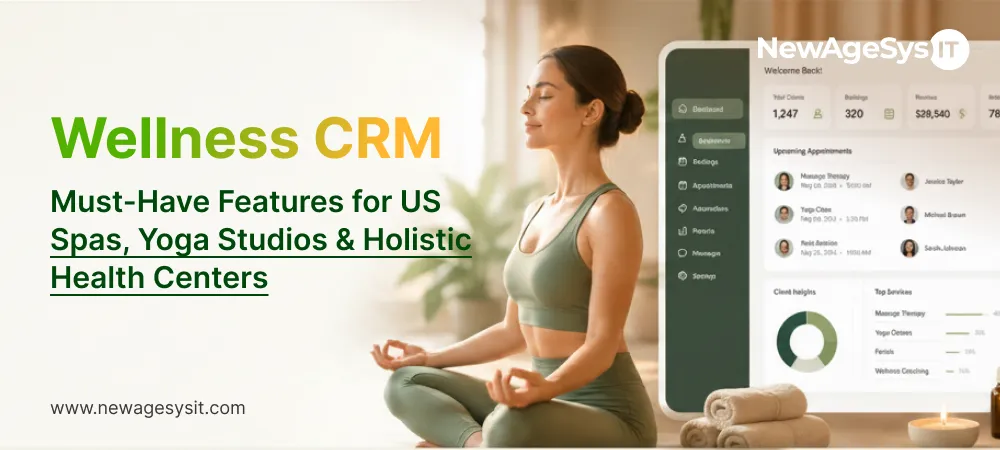
Wellness 11 min read
Wellness CRM: Must-Have Features for US Spas, Yoga Studios & Holistic Health Centers

For US spas, yoga studios, and wellness centers, selecting the right wellness CRM features USA businesses rely on goes far beyond basic contact management.
A purpose-built wellness CRM is the single most impactful technology investment a wellness business can make, connecting client relationships, appointments, treatment history, billing, and retention into one operational hub.
Generic CRM platforms consistently fall short. Wellness businesses adapting them commonly report needing 20 to 30 custom fields and workflows just to approximate wellness functionality.
Critical gaps remain in intake health history management, treatment note storage, and HIPAA-appropriate access controls even after those workarounds are in place.
The administrative burden is commonly cited as costing front desk teams 30 to 50% of their productive time.
Wellness CRM is the client relationship core of the broader US wellness software landscape covered in Wellness Software & CRM for USA Spas, Clinics & Wellness Centers. Businesses investing in wellness mobile and web app development services and wellness software and CRM development services build platforms designed specifically around the wellness client lifecycle.
These platforms are not adapted from generic tools that were never built for this industry.
Client Profile and Relationship Management
A wellness client profile is nothing like a generic contact record. Where a standard CRM stores a name, email, and company, a purpose-built spa CRM software stores the complete picture that makes personalized service possible at every visit.
Every wellness client profile must include contact information plus treatment preferences, contraindications and allergen flags, preferred provider, health intake history, and past treatment notes.
It must also include retail purchase history, package and membership status, and referral source.
This is the data that allows every provider to deliver a personalized experience without asking the same questions at every visit.
Health intake data requires particular care. Health history forms, medical conditions, medications, and treatment contraindications may constitute protected health information for HIPAA-applicable wellness businesses.
The wellness center CRM USA businesses rely on must support role-based access controls, audit logging, and appropriate data handling architecture for this data.
Qualified healthcare legal counsel should determine HIPAA applicability for each specific business model.
Relationship notes capture what providers learn about clients over time. A note that reads ‘celebrating anniversary next month’ or ‘has a wedding in 6 weeks’ gives every staff member the context to make a client feel known, not just booked.
Household and family linking connects spouse, partner, and family member profiles, so billing, booking, and service planning work across the whole household without manual coordination.
Referral source tracking records which client, marketing channel, or partner referred each new client. This is the attribution data that informs every future acquisition decision.
Businesses building these client profile capabilities into their platforms through custom mobile app development services ensure that every client data point is accessible across both web and mobile interfaces.
Lead and Prospect Management for US Wellness Businesses
Most wellness businesses lose potential clients in the gap between the first inquiry and the first appointment. That gap exists because generic tools were not built to manage it.
Purpose-built wellness lead management captures inquiries from every source: website forms, social media DMs, phone call logs, walk-in registrations, and gift card purchasers. Source tracking follows each lead through to the first appointment and beyond.
Wellness businesses offering complimentary consultations (medical spas, naturopathic clinics, integrative health centers) need automated consultation scheduling with intake form delivery built directly into the conversion pathway.
When a prospect does not book immediately, automated follow-up sequences keep the conversation alive.
A message that reads “We noticed you were interested in our massage packages. Here is what our clients say…” delivers social proof at the right moment without requiring any manual staff action.
Offer and promotion tracking records which promotional offers each prospect received, what they responded to, and what converted. This is the intelligence that sharpens future acquisition campaigns.
Lead-to-client conversion tracking measures time from inquiry to first appointment, conversion rate by source, and average inquiry-to-revenue value. These are the holistic health CRM metrics that optimize acquisition strategy over time.
Multi-source lead capture, automated consultation scheduling, follow-up sequences, and conversion tracking work best when delivered through a mobile-first experience.
Businesses building android development capabilities into their wellness platform ensure lead capture and follow-up sequences reach clients on the devices they use most.
Package, Membership, and Billing Management
Wellness businesses operate billing models that generic platforms were never designed to handle.
Treatment packages, tiered memberships, gift cards, and third-party vouchers each require distinct tracking, enforcement, and reconciliation logic, all connected to the client profile in real time.
Treatment Package Management
Multi-service packages (5-session massage series, 10-facial packages, combination treatment bundles) require session credit tracking, expiration date enforcement, and low-balance alerts.
Package redemption at checkout must be a single-tap action for staff, with real-time remaining balance display and automatic client notification when packages are running low.
Membership Billing
Monthly membership tiers define specific benefits (monthly treatment allocation, retail discounts, priority booking access) with automated billing on client-defined dates.
Failed payment management handles declined cards through automated retry sequences, dunning email workflows, and membership suspension after defined retry attempts.
Freeze and cancellation workflows with exit survey collection complete the membership lifecycle management that spa client management demands.
Gift Card and Voucher Management
Gift card issuance, balance tracking, and redemption must work across all locations with expiration date enforcement where legally permitted.
Third-party voucher redemption (Groupon, ClassPass, corporate wellness programs) requires usage limit tracking and per-client redemption controls that prevent abuse while honoring legitimate purchases.
Businesses building iOS development capabilities into their wellness platform ensure package redemption, membership billing, and gift card management are fully functional across Apple devices.
Retail POS integration logs every product purchase against the client profile, creating a complete spend picture and enabling automated product repurchase reminders that strengthen retail attachment.
Staff and Provider Management Features
A wellness business runs on its providers. The CRM must support the full operational layer of staff and provider management, from scheduling and performance tracking to commission calculation and treatment note ownership.
Provider profiles capture each team member’s certifications, treatment specializations, contraindication awareness, and client relationship ownership.
This directory informs booking recommendations and ensures clients are matched with qualified providers for every service they request.
Commission and gratuity tracking calculates service and retail compensation automatically per provider, reducing the payroll administrative overhead that manually managed spreadsheets consistently create.
Provider performance reporting surfaces revenue per provider, client retention rate, rebooking rate, and retail attachment rate. These are the operational metrics that inform performance conversations and incentive program design.
Provider scheduling manages individual availability calendars, block time for non-client activities, and scheduling rule enforcement, including minimum booking notice and buffer time between appointments.
Treatment note ownership ensures notes remain with the treating provider, with appropriate access restrictions that protect both client privacy and facility liability.
Businesses building these capabilities through custom software development services ensure provider management tools are designed around wellness-specific workflows from the ground up.
Communication and Automation Features
The strongest wellness client relationships are built between visits, not just during them.
Purpose-built communication and automation tools keep clients engaged, reduce no-shows, and drive rebooking without requiring manual staff effort for every touchpoint.
Appointment confirmation and reminder automation deliver SMS and email confirmation immediately after booking, a reminder 48 hours before, and a day-of reminder.
This sequence consistently reduces no-shows and the provider time and room capacity they waste.
Post-appointment follow-up sends an automated satisfaction prompt with a rebooking invitation, timed to capture client momentum while the wellness experience is still fresh.
Lapsed client re-engagement triggers personalized sequences at 30, 60, and 90 days after the last visit, referencing the client’s last treatment and provider relationship rather than sending generic outreach.
Birthday and anniversary recognition delivers automated wellness offers on client birthdays and treatment anniversaries, the personal acknowledgment that strengthens long-term emotional connection to the wellness brand.
Retail repurchase reminders notify clients when their product purchase timeline suggests they may be running low, the revenue-generating touchpoint that strengthens retail attachment organically.
Reporting and Business Intelligence
Data without context is noise. Purpose-built wellness CRM reporting surfaces the specific metrics that wellness business owners and operators actually need to make informed decisions, not generic dashboards built for retail or professional services.
Revenue reporting covers total revenue, revenue by service category, retail revenue, package revenue, and revenue per client. These are the financial KPIs that drive pricing, staffing, and service menu decisions.
Client metrics track active clients, new clients, lapsed clients, rebooking rate, and client lifetime value. These are the health indicators of the entire client base.
Provider performance reporting surfaces revenue per provider, utilization rate, retail attachment rate, and client retention by provider. These are the operational data points that inform compensation and staffing decisions.
Marketing attribution tracks each new client from their original lead source through to their first appointment, connecting marketing spend directly to client revenue. This is the data that tells a wellness business which acquisition channels are actually working.
Package and membership analytics track active packages, expiring packages, membership tier distribution, and membership churn rate.
Final Thoughts
A purpose-built wellness CRM delivers significantly more value than adapting a generic platform for wellness workflows. US spas, yoga studios, and holistic health centers that invest in wellness-specific CRM consistently convert more first-time visitors to repeat clients, retain members longer, and reduce administrative overhead, directly impacting profitability.
The right CRM is not just a database. It is the operational foundation that every other wellness technology decision builds on. If your spa, wellness center, or yoga studio is evaluating CRM options, selecting or building a platform designed specifically for the US wellness client lifecycle consistently outperforms adapting a generic CRM with custom workarounds
FAQ
Why do wellness businesses using a generic CRM end up needing 20 to 30 custom fields just to make it work?
Because generic CRM platforms were built for standard contact management, not for the specific data a wellness business actually needs to track, like contraindication flags, treatment history, and package balances. Even after building out 20 to 30 custom fields and workflows to approximate that functionality, critical gaps tend to remain in intake health history management, treatment note storage, and HIPAA-appropriate access controls, which is part of why the administrative burden is commonly cited as costing front desk teams 30 to 50% of their productive time.
What should a complete wellness client profile actually include, beyond name and contact info?
Treatment preferences, contraindication and allergen flags, preferred provider, health intake history, and past treatment notes, plus retail purchase history, package and membership status, and referral source. That full picture is what lets any provider deliver a personalized experience without asking the client the same questions at every single visit.
Do wellness client intake records count as protected health information under HIPAA?
It depends on the business, and it’s worth getting a real answer rather than assuming either way: health history forms, medical conditions, medications, and treatment contraindications may constitute protected health information for wellness businesses where HIPAA applies, which means that data needs role-based access controls, audit logging, and appropriate data handling architecture. Qualified healthcare legal counsel should determine HIPAA applicability for your specific business model, since it isn’t the same answer for every spa or wellness center.
How does automated lead follow-up actually help convert prospects who don’t book immediately?
It keeps the conversation alive without any manual staff action, for example, a message referencing a specific interest along with social proof from other clients, sent automatically at the right moment instead of the lead just going cold. This matters because inquiries come in from a lot of different sources, website forms, social media DMs, phone call logs, walk-ins, and gift card purchasers, and most of the client loss happens specifically in the gap between that first inquiry and the first booked appointment.
What’s the difference between treatment package management and membership billing in a wellness CRM?
Treatment packages, like a 5-session massage series, need session credit tracking, expiration date enforcement, and low-balance alerts, with redemption designed as a single-tap action for staff at checkout. Membership billing is a different model entirely: monthly tiers with defined benefits like treatment allocation or priority booking, automated billing on client-defined dates, failed payment handling through retries and dunning emails, and freeze or cancellation workflows that include exit survey collection.
Why does third-party voucher redemption, like Groupon or ClassPass, need special handling in a wellness CRM?
Because it needs usage limit tracking and per-client redemption controls that a standard package or membership doesn’t require, specifically to prevent abuse of the voucher while still honoring every legitimate purchase. Without that logic built in, a business either ends up overexposed to voucher abuse or has to police redemptions manually at the front desk.
What automated communication touchpoints should a wellness CRM handle without manual staff effort?
Appointment confirmation immediately after booking, a reminder 48 hours out, and a day-of reminder, which together are what actually reduce no-shows. Beyond the appointment itself, a post-appointment follow-up with a rebooking invitation, lapsed client re-engagement at 30, 60, and 90 days that references the client’s actual last treatment and provider rather than generic outreach, birthday and anniversary recognition, and retail repurchase reminders timed to when a client’s product is likely running low.
How does provider performance reporting actually help with staffing and compensation decisions?
By surfacing revenue per provider, client retention rate, rebooking rate, and retail attachment rate side by side, instead of those numbers living in separate spreadsheets or not being tracked at all. Those are the specific metrics that inform real performance conversations and incentive program design, rather than compensation decisions being based on gut feeling about who seems busy.
What reporting metrics actually matter for a wellness business, beyond basic revenue totals?
Five categories: revenue reporting broken out by service category, retail, package, and per client; client metrics like active, new, and lapsed clients, rebooking rate, and client lifetime value; provider performance covering revenue, utilization, and retail attachment per provider; marketing attribution that connects each new client back to their original lead source and eventual revenue; and package or membership analytics tracking active and expiring packages, tier distribution, and churn rate.
Core Development
Keep exploring the custom services.

AI Software Development
Custom AI Software Development
Build intelligent, production-ready software from machine-learning models to AI-driven automation designed around your business goals.
Learn more
Mobile App Development
Custom Mobile Application Development
Native and cross-platform mobile apps that are fast, secure, and built to scale across iOS and Android.
Learn more
Web App Development
Custom Web Application Development
Scalable, secure web applications, from customer portals to complex dashboards, tailored to how your business actually works.
Learn more



