
Welcome to Blogs
Discover actionable insights, in-depth research, and expert perspectives, all in one place.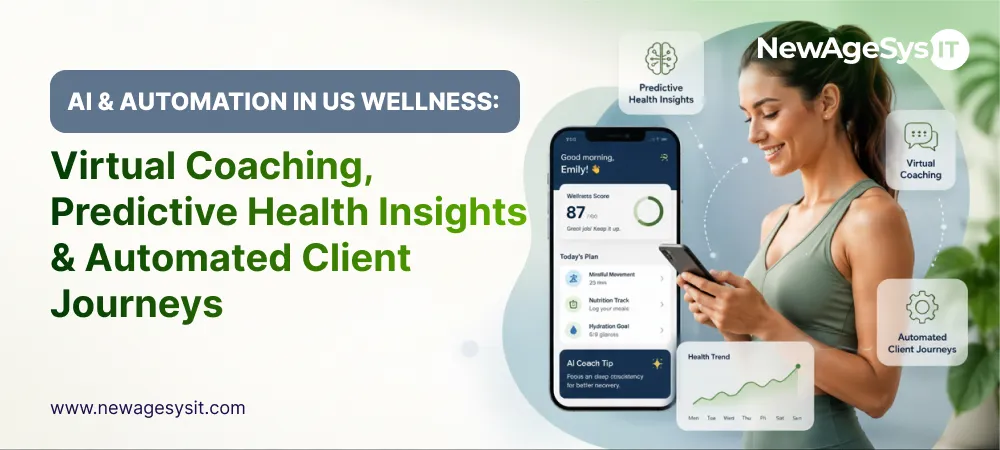
Wellness 6 min read
AI & Automation in US Wellness: Virtual Coaching, Predictive Health Insights & Automated Client Journeys

| This article is part of our series on Digital Transformation in US Wellness: AI, Automation & Scalable WellTech Innovation. |
AI automation in US wellness has crossed the threshold from early-adopter technology to competitive expectation. Platforms like Noom AI, Wysa, and Apple Fitness+ have established AI wellness coaching as a consumer baseline. Spas and wellness centers without AI-powered experiences now feel static by comparison.
For physical wellness businesses, AI’s highest ROI application is retention. Identifying clients at risk of lapsing before the pattern becomes a cancellation enables proactive intervention. That is where AI creates measurable business value.
The right technology foundation is custom wellness mobile and web app development purpose-built for the client lifecycle, wearable data layers, and retention automation that generic SaaS cannot replicate.
One principle applies throughout. AI wellness coaching is not a replacement for qualified practitioner or healthcare professional guidance. Appropriate clinical disclaimers are required at every interaction.
AI Virtual Wellness Coaching
AI virtual wellness coaching moves wellness businesses away from generic programs. Every client receives an individualized experience based on their specific goals, health history, lifestyle factors, and wearable data.
- Personalized wellness plan generation uses ML models to create wellness protocols that reflect each client’s current reality. Stress levels, sleep patterns, activity history, and recovery data all inform the plan. This is practitioner-quality guidance delivered at a scale no human team can match. Building these AI coaching layers on top of a purpose-built wellness software and CRM development services platform ensures client history, wearable data, and program records are all in one connected architecture.
- Adaptive protocol progression adjusts recommendations based on client completion data, mood logs, and wearable recovery metrics. Clients who are not progressing get a different path. Not a generic reminder.
- Wearable-informed coaching takes this further. Oura Ring readiness scores, Whoop recovery data, and Apple Watch HRV trends feed directly into daily coaching recommendations. The protocol adapts to how the client is actually recovering.
- Multi-dimensional wellness planning balances sleep, nutrition, mindfulness, movement, and stress management simultaneously. Single-dimension apps cannot replicate this level of personalization.
One important boundary applies: AI wellness plans must respect evidence-based principles. Plans that conflict with established sleep hygiene, nutrition science, or behavioral change timelines create real client risk.
Predictive Health Insights for US Wellness Businesses
Predictive analytics gives US wellness businesses the ability to act before problems become cancellations. The applications span the entire client lifecycle.
- Client lapse prediction is the highest-value application. ML models analyze visit frequency trends, booking pattern changes, communication engagement, and program completion rates. Wellness staff surface at-risk clients 30 to 60 days before the pattern becomes a cancellation. That window makes proactive intervention possible.
- Wellness plateau prediction identifies when a client’s sleep quality, mood trends, or self-reported energy is stalling. Practitioners can adapt protocols before the client loses motivation and disengages.
- New client retention prediction flags high early lapse risk based on onboarding behavior patterns. Early intervention before the wellness relationship is fully established significantly improves long-term retention.
- Wellness outcome modeling correlates program adherence with measurable health metric improvements. This gives wellness businesses concrete data to demonstrate program ROI to clients and corporate wellness sponsors.
- Staff performance analytics adds another layer. Correlating practitioner assignment patterns with retention and wellness outcome data helps wellness operators make better scheduling and staffing decisions.
Automated Client Journey Management
The best automated wellness messages are the ones that feel personally written. Personalization depth and authentic brand voice make the difference between automation that builds relationships and automation that feels transactional.
New Client Onboarding Automation
New client automation begins at booking confirmation. A personalized welcome message, wellness onboarding questionnaire, first appointment preparation, and practitioner introduction all happen automatically before the first visit. Delivering these touchpoints through custom mobile app development keeps the entire onboarding sequence inside the branded app experience not fragmented across email, SMS, and third-party booking confirmations
The post-first-visit sequence is equally important. An experience check-in, rebooking prompt, and wellness program introduction sent within 48 hours converts first-time visitors into repeat clients more effectively than any manual follow-up process.
Lapsed Client Re-Engagement
Triggered re-engagement at 30, 60, and 90 days post-last visit references the client’s actual treatment history and practitioner. A message like “It has been six weeks since your last session with Sarah. Your wellness journey continues whenever you are ready” consistently outperforms generic re-engagement messaging.
Wellness Milestone and Retention Communication
Automated milestone recognition marks 10th visits, one-year anniversaries, program completions, and health metric improvements. Seasonal wellness program invitations tied to spring, summer, autumn, and winter themes drive bookings during traditionally slower periods.
AI-Powered Operational Efficiency for Wellness Businesses
AI operational efficiency applications reduce overhead without compromising the service quality that defines premium wellness brands.
- Intelligent scheduling optimization analyzes historical booking data to optimize practitioner schedules, room utilization, and service timing. Gaps reduce. Practitioner capacity improves. Service quality stays consistent.
- Predictive inventory management forecasts retail product demand based on treatment schedules, seasonal trends, and client purchase history. Overstocking and out-of-stock situations both become less frequent.
- AI-generated wellness content reduces the content creation burden on practitioners. Weekly newsletters, treatment benefit descriptions, and personalized wellness tips are generated automatically. Practitioners focus on healing. Not marketing.
- Dynamic pricing and waitlist management fill scheduling gaps without manual staff intervention. AI-informed pricing suggestions for peak times and last-minute availability keep utilization high across the week.
Health Data Compliance for Wellness AI
AI systems in wellness touch sensitive health data at every level. Compliance requirements are non-negotiable and must be built into the architecture from the start.
- Apple HealthKit data governance prohibits advertising use and third-party sharing without explicit user consent. Wellness AI that ingests HealthKit data must comply with these restrictions at the integration level.
- CCPA obligations apply to client health intake data, wellness assessment responses, and mood logs used as AI inputs. These may constitute sensitive personal information. Appropriate consent for AI personalization use is required.
- HIPAA-applicable wellness AI must implement the same technical safeguards that apply to PHI storage. For wellness platforms building these safeguards into AI processing pipelines, custom software development with HIPAA-aware data architecture is the only approach that treats compliance as infrastructure rather than an overlay. AI processing of protected health information carries the same obligations as storing it.
- Mental health AI content requires specific guardrails. Wellness AI must not provide clinical diagnosis, treatment prescriptions, or crisis management responses. These boundaries are not optional.
Final Thoughts
AI and automation deliver real competitive advantage in US wellness. Virtual coaching, predictive insights, and automated client journeys all contribute to stronger retention and better client outcomes. But implementation quality matters.
Wellness science accuracy, appropriate clinical disclaimers, and compliant health data handling are not optional layers.
Wellness platforms that get these factors right consistently outperform those that deploy AI without these foundations.
Grounding AI investments in evidence-based principles and compliant architecture from the start produces the most effective and legally defensible wellness AI experience.
Wellness platforms that work with a US wellness app development company experienced in AI coaching architecture, wearable data governance, and retention automation build these foundations correctly from the start, rather than retrofitting compliance and personalization after launch.
Core Development
Keep exploring the custom services.

AI Software Development
Custom AI Software Development
Build intelligent, production-ready software from machine-learning models to AI-driven automation designed around your business goals.
Learn more
Mobile App Development
Custom Mobile Application Development
Native and cross-platform mobile apps that are fast, secure, and built to scale across iOS and Android.
Learn more
Web App Development
Custom Web Application Development
Scalable, secure web applications, from customer portals to complex dashboards, tailored to how your business actually works.
Learn more



