Guaranteed Expert Consultation Within 1 Hour. Click Here!

Guaranteed Expert Consultation Within 1 Hour. Click Here!

Custom AI/ML Development Services in New Jersey, USA

Launch secure, high-performance iOS & Android apps built to grow your business — delivered by a proven & dedicated US-based development team.

500+

Apps
Delivered

15+

Years
Experience

NDA Badge
USA-Based

Project Management

Built for Startups. Trusted by Enterprises.
Designed to Scale from Day One.

Get a quick expert response within 1 hour.

Name is required.

Please enter a valid email address.

Phone number is required.

Please describe your project idea.

Your idea is fully secured under our NDA & Confidentiality policy.

Trusted by startups and enterprises across multiple industries.

5 Star on Clutch
30+
Years Experience
100+
Projects Delivered
#1
App Developer NJ, FL, NY
AI/ML & Data Engineering

Custom AI/ML Development

Custom AI/ML development is the engineering of machine learning models and AI systems. These systems are built on an organization's own proprietary data. The scope covers custom ML model training, fine-tuning, LLM integration, generative AI, computer vision, NLP, predictive analytics, and MLOps infrastructure.

OpenAI API wrappers, Azure AI pre-built models, and Salesforce Einstein features are vendor-configured products. They are not custom AI systems. Model development, training, fine-tuning, RAG architecture, AI agent development, and MLOps pipelines are all within scope. AI consulting alone and third-party tool configuration are not.

Companies building autonomous systems will find that scope covered under AI Product and Agent Development Services. organizations carrying legacy infrastructure into an AI programme should address that layer first.

Legacy Software and Application Modernization Services covers that work. AI-powered conversational interfaces come under AI Chatbot Development Services. Where the requirement is platform integration rather than model engineering, AI Integration and Adoption Services addresses that scope.

The Practice

Six service categories

The practice spans six service categories. These are custom ML model development and training, LLM and generative AI development, and computer vision and image recognition systems. NLP and conversational AI, predictive analytics and forecasting platforms, MLOps and AI infrastructure engineering follow.

Who Buys

Four buyer profiles

Enterprise companies embedding AI into their core product engage this practice. SaaS startups building AI-native features do as well. Operations teams replacing manual workflows with ML automation represent a third buyer profile. Engineering organizations needing specialist AI/ML capacity round out the group.

ML automation reduces manual processing costs. AI-powered product features generate new revenue lines. Proprietary model ownership creates competitive differentiation. Vendor API dependencies cannot replicate that differentiation. Operational data that previously went unanalysed becomes forward-looking business intelligence.

NewAgeSysIT is a custom AI and ML development company serving the US market. The firm builds production systems on AWS SageMaker, Azure Machine Learning, and Google Vertex AI. PyTorch, TensorFlow, Hugging Face, and LangChain anchor the development stack. OpenAI, Anthropic Claude, and Google Gemini are integrated where specific use cases require them.

Got Problems? Let Us Help You With the Right Solution

Definition

What is AI/ML Development?

The Practice

Custom AI/ML development produces machine learning models the organization owns and controls. AI adoption configures tools built on a vendor's data and infrastructure. The two disciplines produce different assets, different compliance postures, and different competitive outcomes.

Not Adoption

Connecting an OpenAI API key is an AI adoption task. Enabling Salesforce Einstein features is an AI adoption task. Deploying a pre-built Azure Cognitive Services endpoint falls in the same category. Custom AI/ML development engineers the model architecture, training pipeline, and inference infrastructure from the organization's own data.

Decision Drivers

Four reasons organizations build custom instead of adopting

01 Problem 01

The generic model gap

OpenAI GPT-4o, Anthropic Claude 3.5 Sonnet, and Google Gemini 1.5 Pro train on general internet data. They carry no knowledge of proprietary transaction records or customer behaviour patterns. A fintech fraud detection model trained on proprietary transaction patterns outperforms any generic fraud API.


02 Problem 02

Data privacy and sovereignty

Financial services firms under SOC 2 cannot send financial transactions to a third-party LLM endpoint. Healthcare organizations under HIPAA cannot send patient records. Government contractors under FedRAMP face the same restriction. A custom model deployed on AWS GovCloud or Azure Government processes sensitive data without third-party exposure.

03 Problem 03

Inference cost at scale

At 10 million API calls per month, OpenAI GPT-4o Turbo costs approximately $30,000 monthly. A fine-tuned smaller model on AWS SageMaker serves the same task at a fraction of that cost.

04 Problem 04

Proprietary competitive advantage

A recommendation engine trained on proprietary data cannot be replicated by competitors on the same platform. A churn prediction model or demand forecasting algorithm carries the same protection. Custom AI/ML development on Vertex AI or Azure Machine Learning produces ML model IP. Third-party API dependencies cannot replicate it.

At production scale, custom model deployment converts per-token API costs into fixed infrastructure costs. In regulated industries, it removes the compliance exposure that third-party LLM endpoints create. The trained model is a licensable IP asset with standalone commercial value.

Comparison

Custom AI/ML Development vs Off-the-Shelf AI Tools

Off-the-shelf AI platforms solve common AI tasks within generic training data boundaries. Custom AI/ML development solves what they cannot. It improves domain-specific precision using proprietary data. Compliant deployment remains within the organization's infrastructure. Vendor configurations cannot produce the resulting proprietary model IP. The decision turns on three factors including data ownership, regulatory environment, and required model precision on proprietary inputs. This is a product and data architecture decision, not a preference between vendors.

Dimension Off-the-Shelf AI Tool Custom AI/ML Development
Model ownershipNone. Vendor owns weightsFull. Client owns trained weights
Data privacyData sent to third-party serversData stays within client's VPC
Inference cost at scalePer-token pricing, vendor-controlledFixed infrastructure cost, client-controlled
Precision on proprietary dataGeneric. Trained on public dataDomain-specific. Trained on client's data
Compliance capabilityRequires legal review for regulated dataDeployable on AWS GovCloud / Azure Government
IP valueNo licensable IP assetProprietary model is a licensable IP asset
Office

Estimate Your App Development
Cost in Seconds

Discover your project budget with our interactive AI-powered app cost calculator.

Platform Limitations

Limitations of Off-the-Shelf AI Platforms

Four limitations define where off-the-shelf AI platforms fail organizations at scale.

Generic training data ceiling

OpenAI GPT-4o, Google Gemini 1.5 Pro, and Anthropic Claude 3.5 Sonnet train on publicly available internet data. They carry no knowledge of proprietary customer patterns or transaction histories. RAG partially addresses this gap. It does not solve precision prediction tasks requiring full fine-tuning on proprietary data.

Data privacy exposure

Every API call to OpenAI, Anthropic, Google, or Cohere sends data to a third-party server. Organizations under HIPAA or SOC 2 Type II cannot send patient records to an external LLM endpoint. GDPR, CCPA, and FedRAMP apply the same rule to PII and government data.

Token cost at production scale

OpenAI GPT-4o input costs $5 per million tokens. Output costs $15 per million tokens. A feature processing 50 million tokens per month costs $750,000 annually. A fine-tuned smaller model on AWS SageMaker reduces that cost by 70 to 90%.

No model ownership or IP

An organization cannot transfer, sell, or license an OpenAI-dependent AI feature. A custom-trained model is a licensable IP asset with standalone commercial value.

When To Go Custom

When organizations Need Custom AI/ML Development

Four scenarios identify when custom AI/ML development is the operationally right decision.

1

Core competitive differentiator

A fraud detection model for a fintech must be trained on proprietary transaction data. A churn prediction model for a SaaS company requires the same. A retailer's demand forecasting algorithm depends on proprietary sales and inventory patterns. Off-the-shelf AI tools process the same inputs as every competitor using those platforms.

2

Data privacy and compliance obligations

Healthcare companies under HIPAA cannot send patient records to third-party AI endpoints. Financial services firms under SOC 2 and PCI DSS face the same restriction. Government contractors under FedRAMP require deployment within their own cloud infrastructure. Custom model deployment on AWS GovCloud or Azure Government satisfies these requirements.

3

High-volume manual process replacement

Document processing, invoice classification, quality control inspection, and support ticket routing involve millions of operations monthly. Custom ML models trained on the organization's own data achieve 95 to 99% accuracy on domain-specific tasks. PyTorch and Hugging Face anchor the development stack. Generic AI APIs achieve 70 to 85% accuracy on the same proprietary data.

4

SaaS products require inference cost and latency control

Building on a third-party AI API means cost, latency, and uptime are vendor-controlled. A custom model on AWS SageMaker or Google Vertex AI gives the product team full control. Cost structure, latency profile, and uptime SLA all scale with the product.

Buyer Audiences

Who Needs Custom AI/ML Development Services?

Custom AI/ML development serves four US buyer profiles. Each carries model precision requirements, data privacy obligations, or automation use cases that off-the-shelf AI platforms address inadequately.

NewAgeSysIT delivers custom AI/ML development across all.

Profile · 01
01

Enterprise Companies Replacing Manual Processes with AI Automation

Large enterprises automate document processing, invoice classification, anomaly detection, predictive maintenance, and support routing with custom ML systems.

A model that automates 80% of a manual document review process produces measurable cost reduction per quarter. That figure is quantifiable at the enterprise budgeting stage.

The buyer profile spans US financial services, insurance, logistics, manufacturing, and healthcare. Decision makers include VPs of Operations, Chief Digital Officers, and enterprise IT leaders.

Profile · 02
02

SaaS Companies Adding AI Features to Their Product

SaaS companies embed recommendation engines, churn prediction, intelligent search, and personalisation layers into their product. A company training its own recommendation model on user behaviour data owns a proprietary ML asset.

A company calling an OpenAI API for the same task owns nothing. Pricing changes shift the feature margin. Deprecation removes the feature entirely. Buyers are CPOs, CTOs, and VPs of Product at US SaaS companies from Series A through Series C.

Profile · 03
03

Regulated Industry Companies with Data Privacy Requirements

For healthcare organizations under HIPAA, financial services firms under SOC 2 and PCI DSS, and government contractors under FedRAMP, the AI architecture decision is not strategic. It is regulatory. Third-party LLM API calls are not an option.

A custom LLM fine-tuned on clinical notes and deployed on AWS GovCloud keeps patient data internal. A fraud detection model on a private VPC processes financial transactions without reaching OpenAI, Google, or Anthropic servers.

CISOs, VPs of Compliance, CTOs, and Chief Data Officers lead these decisions. Their organizations span US healthcare systems, insurers, and government technology vendors.

Profile · 04
04

Companies Building AI as a Core Product or Platform

AI-first startups and companies building AI as the primary product require full model training infrastructure. A training pipeline, feature store, model registry, A/B testing infrastructure, and monitoring system are all required.

Calling a third-party API is the feature dependency on a vendor's pricing and roadmap. Buyers are founders, CTOs, and Chief AI Officers in legal tech, healthtech, fintech, proptech, and enterprise productivity.

Speak With Our AI Software Consultant Partners

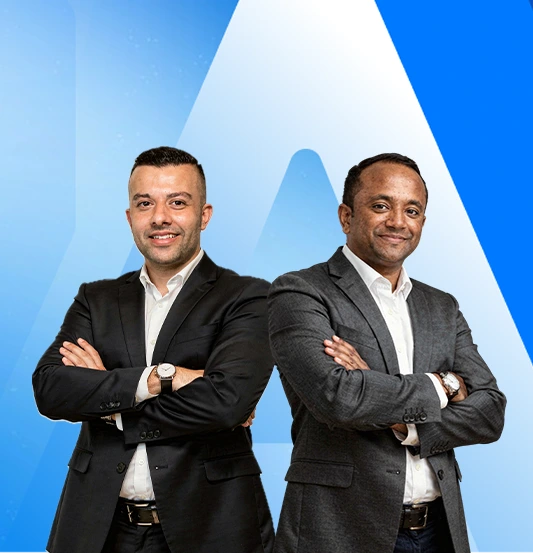
Get expert guidance before you invest in AI software development. Work directly with Giovanni and Bibin to validate your technology direction, align AI with business goals, and make confident decisions that reduce risk and accelerate outcomes.

Request a Strategic Consultation
Consultant Partners
Six Service Tracks

AI/ML Development Services We Provide

NewAgeSysIT delivers custom AI/ML development across all the service tracks. Each track builds production AI systems from the data pipeline through to inference infrastructure. These are custom ML model development and training, LLM and generative AI development, and computer vision and image recognition. NLP and conversational AI, predictive analytics and forecasting, MLOps and AI infrastructure engineering complete the list.

These services engineer custom AI and ML systems from the data pipeline through to production inference infrastructure. They are not AI tool selection consulting or third-party API integration work. Where the requirement is platform configuration rather than model engineering, AI Integration and Adoption Services covers that scope.

Track · 01
Flagship

Custom ML Model Development and Training

End-to-end custom ML model development covers data pipeline engineering, feature engineering, and model architecture selection. Training infrastructure setup, hyperparameter optimisation, model evaluation, and production deployment follow.

A churn prediction model trained on engagement, billing, and support ticket data achieves 90 to 95% accuracy. The same company using a generic customer health score API achieves 60 to 70% on the same data. Classification models address churn, fraud, and document classification.

Regression models handle demand forecasting, pricing optimization, and risk scoring. Clustering, time-series, and recommendation systems are part of the engagement. The stack draws on PyTorch, TensorFlow, scikit-learn, XGBoost, and LightGBM. Deployment infrastructure spans AWS SageMaker, Vertex AI, and Azure Machine Learning. MLflow and Weights and Biases support experiment tracking and monitoring.

Track · 02

LLM and Generative AI Development

Custom LLM development covers fine-tuning on proprietary data and RAG architecture implementation. LLM application development with LangChain or LlamaIndex and private deployment for data-sovereign use cases are included.

Fine-tuning Llama 3, Mistral 7B, or Mixtral 8x7B on proprietary documents delivers domain-specific precision. A general-purpose GPT-4o prompt cannot reach that level. A legal technology company fine-tuning Llama 3 on its contract database gets a contract review assistant.

A general-purpose GPT-4o implementation cannot reliably match it. PEFT fine-tuning using LoRA and QLoRA runs on Llama 3, Mistral, Mixtral, and Falcon. RAG architecture relies on Pinecone or Weaviate. LangChain and LlamaIndex handle orchestration. Private LLM deployment runs on AWS SageMaker or Azure ML.

Track · 03

Computer Vision and Image Recognition Development

Custom computer vision systems address object detection, image classification, and semantic segmentation. OCR, document intelligence, video analytics, and manufacturing defect detection are part of the engagement. Pre-built vision APIs train on generic image datasets.

A custom model trained on the organization's proprietary image data reaches precision levels that Google Vision API or AWS Rekognition cannot match on domain-specific inputs. This applies to product defects, medical imaging, satellite imagery, and document layouts.

YOLO and Detectron2 handle object detection. ResNet and EfficientNet address classification. U-Net supports segmentation. AWS Textract and custom CNN models handle OCR. The stack draws on PyTorch, OpenCV, and CUDA.

Track · 04

NLP and Conversational AI Development

Custom NLP systems address text classification, named entity recognition, sentiment analysis, and document summarisation. Intent detection and conversational AI beyond standard chatbot platforms are part of the engagement. Generic NLU platforms are not trained on clinical or legal vocabulary.

A custom NER model trained on clinical notes extracts diagnoses, medications, and dosages with 97% precision. Dialogflow achieves 60 to 70% on the same text. Text classification supports routing and content moderation. NER targets contracts and clinical documents.

Conversational AI is built with LangChain and Rasa. The stack draws on BERT, RoBERTa, spaCy, AWS Comprehend, Hugging Face Transformers, OpenAI, and Anthropic Claude. AI Chatbot Development Services focuses on chatbot design and deployment rather than custom NLP model development.

Track · 05

Predictive Analytics and Forecasting Platform Development

Custom predictive analytics platforms convert historical operational data into forward-looking business intelligence. Demand forecasting, churn prediction, revenue forecasting, fraud scoring, risk modelling, and customer lifetime value prediction are addressed.

BI dashboards show what has happened. A custom predictive model forecasts what happens next. A demand forecasting model trained on sales history, seasonality, and macroeconomic indicators generates SKU-level inventory recommendations. These recommendations arrive 8 to 12 weeks in advance.

Time-series forecasting runs on Prophet, ARIMA, and LSTM. Churn prediction relies on XGBoost and LightGBM. Fraud detection uses isolation forest. Real-time scoring pipelines run on AWS SageMaker or Vertex AI. The stack draws on XGBoost, LightGBM, Prophet, LSTM, Snowflake, Databricks, and Apache Spark.

Track · 06

MLOps and AI Infrastructure Engineering

MLOps engineering covers ML training pipeline automation, model registry, and versioning. CI/CD for ML models, feature store development, model monitoring, and drift detection are part of the engagement. ML models that perform in a Jupyter notebook regularly fail in production.

Without infrastructure to retrain on new data, serve predictions at low latency, and detect performance degradation, they are not production systems. Kubeflow and MLflow handle pipeline orchestration. Feast or Tecton manage feature stores. CI/CD runs on GitHub Actions and ArgoCD. Drift detection draws on Evidently AI or WhyLabs. Inference optimization uses ONNX and TensorRT. Kubernetes-based ML serving runs on AWS EKS or Google GKE.

Want to stand out in the competitive AI-driven market?

You need a strategic partner to build custom ML models, fine-tuned LLMs, and MLOps infrastructure that turn your proprietary data into a competitive advantage you own.

Get our AI/ML Development Services
Production-Grade

Core Capabilities of a Production AI/ML System

A production AI/ML system combines four engineering layers. A data pipeline feeds high-quality training data. A model training and evaluation framework produces accurate and reliable predictions.

An inference infrastructure serves predictions at production latency and scale. A monitoring layer detects model drift before it degrades business outcomes. All must be engineered before an ML model qualifies as a production system.

01
Feature 01

Data Pipeline and Feature Engineering

Data ingestion covers batch ingestion from AWS S3, Google Cloud Storage, and Snowflake. Real-time streaming via Apache Kafka, AWS Kinesis, and Google Pub/Sub for low-latency model scoring.

Data validation uses Great Expectations for automated quality checks on every pipeline run. Schema validation, null value detection, and statistical distribution monitoring.

Feature engineering covers automated feature extraction from transactional, behavioural, and operational data. Feature transformation with scikit-learn pipelines and Apache Spark for large-scale computation.

Feature store is a centralized feature repository using Feast or Tecton that enforces consistent definitions across training and serving environments. Without it, training-serving skew silently degrades model performance in production.

Data versioning uses DVC (Data Version Control) for reproducible training runs with full lineage tracking from raw data to trained model artefact.

Data labelling uses Label Studio or Scale AI integration for supervised learning datasets requiring human annotation.

02
Feature 02

Model Training and Evaluation Framework

Experiment tracking uses MLflow Tracking for logging hyperparameters, metrics, and artefacts. Weights and Biases (W&B) for visual experiment comparison and team collaboration.

Distributed training uses PyTorch Distributed and Horovod for multi-GPU and multi-node training. AWS SageMaker distributed training for scaling to 100-GPU clusters without infrastructure overhead.

Hyperparameter optimisation uses Optuna and Ray Tune for automated hyperparameter search. Bayesian optimization for efficient search over large hyperparameter spaces.

Model evaluation covers precision, recall, F1, and ROC-AUC for classification. RMSE, MAE, MAPE for regression and forecasting. BLEU, ROUGE, and human evaluation protocols for LLM outputs.

Model explainability uses SHAP for feature importance and prediction explanation. LIME for local model interpretability. Both are required for regulated industry deployments under EU AI Act and US financial services model risk management guidelines.

Model registry uses MLflow Model Registry or AWS SageMaker Model Registry for versioning, staging, and production promotion workflows.

03
Feature 03

Inference Infrastructure and Serving

Real-time serving uses AWS SageMaker real-time endpoints, Google Vertex AI endpoints, and Azure ML online endpoints for low-latency prediction APIs. FastAPI inference servers for custom deployment architectures.

Batch inference uses AWS SageMaker batch transform and Apache Spark batch scoring for high-volume offline prediction workloads.

Model optimisation uses ONNX for cross-platform deployment. TensorRT for NVIDIA GPU inference. Model quantisation (INT8, FP16) for cost-efficient inference without material precision loss.

LLM serving uses vLLM for high-throughput inference with PagedAttention. Hugging Face TGI for production LLM endpoints. Triton Inference Server for multi-model serving on shared GPU infrastructure.

API layer covers RESTful inference APIs with FastAPI. gRPC for low-latency serving in microservices architectures. Rate limiting, authentication, and caching via AWS API Gateway or Kong.

Auto-scaling uses Kubernetes Horizontal Pod Autoscaler for inference infrastructure. AWS SageMaker auto-scaling for managed endpoint cost optimisation.

04
Feature 04

Model Monitoring and Governance

Data drift detection uses Evidently AI and WhyLabs to monitor statistical distribution shifts between training and production data. When drift thresholds are exceeded, retraining pipelines trigger automatically.

Model performance monitoring tracks prediction accuracy against ground truth labels. Business metric correlation monitoring verifies that predictions translate to intended outcomes. These include conversion rate, cost reduction, and error rate.

Concept drift monitoring detects when the relationship between inputs and target outputs changes due to market, product, or behavioural shifts. Essential for financial models, recommendation systems, and fraud detection.

Bias and fairness monitoring applies demographic parity, equal opportunity, and disparate impact metrics to AI systems in hiring, lending, and healthcare. These are governed under US ECOA and emerging AI fairness regulations.

Model governance maintains an audit trail for training decisions, data sources, and deployment authorisations. Required for SOC 2 Type II AI governance controls and EU AI Act high-risk AI system documentation.

Retraining automation uses Kubeflow Pipelines or AWS SageMaker Pipelines to trigger retraining when drift thresholds are exceeded.

Real Results

How We Helped Top US Brands in Build Winning Mobile Apps

Applied Intelligence

Generative AI and LLM Engineering for Enterprise

Standard ChatGPT API integrations do not meet enterprise production requirements. Enterprise LLM deployment is not a ChatGPT integration. It requires four production-grade capabilities. Domain-specific fine-tuning grounds the model in proprietary data.

RAG architecture ensures responses reflect current organizational knowledge. Private deployment keeps sensitive data within the organization's own infrastructure. A structured evaluation framework measures output quality at scale.

LLM Fine-Tuning on Proprietary Data

Fine-tuning Llama 3 70B, Mistral 7B, or Mixtral 8x7B on proprietary document collections uses PEFT methods. These include LoRA and QLoRA. Fine-tuning reduces hallucination on domain-specific terminology by 40 to 60%. This is a significant improvement over prompting a general-purpose LLM.

RAG Architecture for Grounded Responses

Retrieval-Augmented Generation connects LLM inference to a vector database. The database holds the organization's proprietary documents, product knowledge, and operational data. Pinecone, Weaviate, and pgvector are the supported options. RAG grounds LLM responses in current, proprietary information rather than the base model's training data cutoff.

Multi-Agent AI Systems

LangChain and LlamaIndex agent frameworks orchestrate multiple LLM calls, tool use, and external API integrations. The result is automated multi-step workflows. organizations building autonomous AI agent systems will find that scope covered under AI Product and Agent Development Services.

Private LLM Deployment

Llama 3, Mistral, and Mixtral are deployed within the organization's own VPC. Supported platforms include AWS SageMaker, Azure Machine Learning, and Google Vertex AI. No data reaches a third-party server. This architecture satisfies HIPAA, FedRAMP, and SOC 2 compliance requirements for LLM applications.

LLM Evaluation and Quality Assurance

Custom evaluation frameworks use RAGAS for RAG pipeline evaluation and G-Eval for output quality scoring. Structured human evaluation protocols are applied alongside automated scoring. LLM evaluation is the critical gap in most enterprise AI deployments. Teams ship LLM features without measuring factual accuracy, hallucination rate, or output consistency at scale.

Every enterprise LLM deployment combines fine-tuning, RAG, private hosting, and structured evaluation, engineered into the architecture rather than bolted on as a ChatGPT integration.

Curious to Know How Much Your AI/ML Development Costs?

With our latest cost calculator, you can get the estimated AI/ML development cost for your project before you get started.

Calculate How Much Your Dream App Costs
API Connectivity

AI/ML System Integrations and API Architecture

Custom AI/ML systems connect to enterprise data sources, business applications, cloud AI platforms, vector databases, and observability tooling. The integration layer is engineered around the organization's existing data stack rather than forcing a migration to a vendor's environment.

01
01

Data Source Integrations

Snowflake, Databricks Delta Lake, and AWS Redshift supply structured training data. MongoDB and PostgreSQL handle transactional data. AWS S3 and Google Cloud Storage hold unstructured data. Apache Kafka and AWS Kinesis stream real-time data for online model scoring.

02
02

Business Application Integrations

Salesforce CRM supports AI-powered lead scoring and churn prediction. HubSpot connects to marketing campaign optimization models. Stripe receives fraud detection on payment transactions. Workday and SAP support HR analytics and workforce prediction models. Shopify and Magento connect to e-commerce demand forecasting and recommendation engines.

03
03

Cloud AI Platform Integrations

AWS SageMaker handles model training, hosting, and pipeline orchestration. Google Vertex AI supports AutoML, custom training, and Gemini API integration. Azure Machine Learning supports enterprise ML workflows with Azure Active Directory identity management. Hugging Face Hub provides open-source model access and deployment.

04
04

Vector Database and Search Integrations

Pinecone handles managed vector search in RAG applications. Weaviate supports open-source vector database deployment. pgvector enables PostgreSQL-native vector search. Elasticsearch supports hybrid keyword and vector search. Qdrant supports high-performance vector search for low-latency retrieval requirements.

05
05

Observability and Monitoring Integrations

Datadog monitors ML inference latency and error rates. Grafana and Prometheus track models serving infrastructure metrics. Evidently AI monitors data drift and model performance. LangSmith handles LLM tracing, evaluation, and prompt management in LangChain applications.

All AI/ML system integrations are built via RESTful APIs, gRPC, or event-driven architectures. The model serving layer remains platform-agnostic and extensible as the organization's data stack evolves.

Technology Stack

Technology Stack for AI/ML Development

NewAgeSysIT builds custom AI/ML systems on production-grade technology stacks. Stack selection follows model training performance, inference latency, MLOps automation capability, and the integration density that enterprise AI deployments require.

Layer Technologies
ML FrameworksPyTorch · TensorFlow · scikit-learn · XGBoost · LightGBM · JAX
LLM and GenAILlama 3 · Mistral · Mixtral · Falcon · OpenAI API · Anthropic Claude API · Google Gemini API
LLM OrchestrationLangChain · LlamaIndex · Haystack · Semantic Kernel · CrewAI
Vector DatabasesPinecone · Weaviate · pgvector · Qdrant · Elasticsearch · Chroma
ML PlatformsAWS SageMaker · Google Vertex AI · Azure Machine Learning · Databricks
MLOps and PipelinesMLflow · Kubeflow · Airflow · AWS SageMaker Pipelines · Vertex AI Pipelines · ZenML
Feature StoreFeast · Tecton · AWS SageMaker Feature Store · Hopsworks
Model ServingvLLM · Triton Inference Server · Hugging Face TGI · BentoML · TorchServe · FastAPI
Model OptimisationONNX · TensorRT · NVIDIA CUDA · Flash Attention · bitsandbytes
Data InfrastructureSnowflake · Databricks Delta Lake · Apache Kafka · AWS Kinesis · dbt · Apache Spark
MonitoringEvidently AI · WhyLabs · LangSmith · Datadog · Grafana · Prometheus · Arize
Experiment TrackingMLflow Tracking · Weights and Biases · Neptune.ai · ClearML
Cloud InfrastructureAWS (SageMaker, EKS, S3, GovCloud) · Google Cloud (Vertex AI, GKE) · Azure (AML, AKS)
DevOps and CI/CDGitHub Actions · ArgoCD · Terraform · Docker · Kubernetes · Helm
Compliance and SecurityAWS GovCloud · Azure Government · HIPAA BAA · SOC 2 Type II · FedRAMP · NIST 800-53

All AI/ML systems are deployed on AWS, Google Cloud, or Azure. VPC isolation is standard. IAM-based access control and automated retraining pipelines are standard. Infrastructure is provisioned via Terraform with GitHub Actions CI/CD pipelines for model training and deployment. Stack selection follows the organization's existing data infrastructure, model type, compliance environment, and inference latency requirements.

Security & Compliance

Security and Compliance in AI/ML Systems

AI/ML systems process proprietary training data, customer PII, and financial transaction records. In regulated sectors, clinical data and government information are also in scope. Each category carries obligations under HIPAA, SOC 2, FedRAMP, GDPR, CCPA, and the EU AI Act.

Compliance must be designed into the model training architecture and data pipeline from the outset. It cannot be retrofitted as post-deployment access controls.

Training Data Security

AES-256 encryption at rest covers all training datasets in AWS S3, Google Cloud Storage, and Azure Blob Storage. TLS 1.3 applies to all data in transit. VPC isolation keeps training infrastructure off the public internet during model training runs.

Model Access and API Security

AWS IAM, Google Cloud IAM, and Azure RBAC control access to training pipelines, model registry, and inference endpoints. API key management and rate limiting govern inference API access. JWT authentication secures internal model serving APIs.

HIPAA and Healthcare AI Compliance

PHI is processed exclusively within HIPAA-eligible AWS GovCloud or Azure Government infrastructure. Business Associate Agreements are in place with all cloud providers. Model training on de-identified clinical data follows HIPAA Safe Harbour or Expert Determination standards.

EU AI Act Compliance

EU AI Act Article 6 requires high-risk AI system documentation for employment, credit, healthcare, and law enforcement applications. Conformity assessment, technical documentation, and post-market monitoring requirements are scoped into every project from Stage 1.

Model Governance and Audit Trail

A complete audit log covers training decisions, data sources, and deployment authorisations. SOC 2 Type II AI governance controls are implemented as part of MLOps delivery. Model card documentation follows the Google Model Cards standard.

All NewAgeSysIT AI/ML systems undergo adversarial robustness testing before production deployment. Prompt injection testing is conducted for LLM systems. An OWASP ML Top 10 security assessment is completed before any production release.

Development Process · 7 Stages

AI/ML Development Process: Discovery to Production

NewAgeSysIT follows a data-first, compliance-integrated AI/ML development process. Model architecture decisions, data privacy requirements, and compliance obligations are defined in Stage 1. No model enters production without passing a defined evaluation threshold and a security assessment.

01
Discovery Stage 01

Stage 1: AI/ML Problem Definition and Data Assessment

The business problem is defined as an ML problem type. Options are classification, regression, ranking, generation, or clustering. The team assesses data availability, quality, labelling requirements, and compliance constraints. Success metrics are defined as the precision threshold at which the model delivers business value. Deliverables are the ML Problem Definition Document, data assessment report, compliance checklist, and evaluation criteria. Tools used are Jira and Jupyter.

02
Architecture Stage 02

Stage 2: Data Pipeline Engineering and Feature Development

The data ingestion pipeline is built from source systems to the ML training environment. Source systems include Snowflake, AWS S3, and Kafka. Features are engineered and data validation is implemented with Great Expectations. A feature store using Feast or Tecton is deployed for training and serving consistency. For LLM projects, the document ingestion and chunking pipeline is built in this stage. The deliverable is a production data pipeline with automated quality checks.

03
Design Stage 03

Stage 3: Model Development and Experiment Tracking

Baseline models are developed and hyperparameter optimization runs with Optuna or Ray Tune. All experiments are tracked in MLflow or Weights and Biases. For LLM fine-tuning, PEFT runs using LoRA or QLoRA on quantised base models. For RAG, the retrieval pipeline is built and evaluated with RAGAS. The deliverable is the best-performing model artefact with documented evaluation results against defined success metrics.

04
Build Stage 04

Stage 4: Model Evaluation, Explainability, and Bias Assessment

The model is evaluated on a held-out test set against precision, recall, F1, and business metric thresholds. SHAP explainability reports are generated for regulated deployments. Bias assessment runs for models affecting protected demographic groups under ECOA and EU AI Act requirements. Prompt injection testing is conducted for LLM systems. The deliverable is a model evaluation report with pass or fail against deployment criteria.

05
Build Stage 05

Stage 5: Model Serving Infrastructure and API Development

The model is deployed to staging on AWS SageMaker, Vertex AI, or Azure ML. The inference API is built with FastAPI or gRPC. ONNX, TensorRT, and quantisation are applied to meet latency targets. For LLM serving, deployment uses vLLM or Triton Inference Server. Integration with business applications is validated via Postman. Latency, throughput, and cost targets are confirmed before production promotion.

06
Test Stage 06

Stage 6: MLOps Pipeline, Monitoring Setup, and Security Assessment

The automated retraining pipeline is deployed using Kubeflow or AWS SageMaker Pipelines. Evidently AI drift alerts serve as the trigger mechanism. Model performance and drift detection dashboards go live in Datadog or Grafana. The OWASP ML Top 10 security assessment is completed at this stage. All findings are resolved before production deployment proceeds.

Launch Stage 07 · Final

Stage 7: Production Deployment, Handover, and Post-Launch Support

The model is deployed with a zero-downtime model swap strategy. Model documentation, data pipeline documentation, and an MLOps runbook are delivered to the client's engineering team. SLA-backed post-launch support covers model monitoring, retraining pipeline maintenance, model version updates, and feature iteration. Infrastructure auto-scales as prediction volume grows.

Why Choose NewAgeSysIT

Why Choose NewAgeSysIT for AI/ML Development in The United States?

AI/ML system quality is determined at the data pipeline and model architecture stage. It is not determined at the prompt engineering stage. NewAgeSysIT builds production AI and ML systems for US enterprises and technology companies whose requirements OpenAI API wrappers and generic AI consulting cannot meet.

Five differentiators define the NewAgeSysIT engagement.

01

Full-Stack AI/ML Engineering

NewAgeSysIT delivers the complete AI/ML engineering stack. Data pipeline, feature engineering, model training, evaluation, serving infrastructure, and MLOps automation are all in scope. The deliverable is a production inference system. It is not a strategy document.

02

LLM and Generative AI Depth

The firm fine-tunes Llama 3, Mistral, and Mixtral on proprietary datasets. RAG architecture is built with Pinecone or Weaviate. Multi-agent system development uses LangChain and LlamaIndex. Private LLM deployment runs on AWS SageMaker and Vertex AI for data-sovereign applications.

03

Regulated Industry AI Capability

HIPAA-compliant AI development runs on AWS GovCloud. SOC 2 Type II governance controls are standard. FedRAMP-aligned model deployment is available for government technology applications. EU AI Act conformity assessment documentation is scoped in for high-risk AI systems.

04

MLOps from Day One

Every custom ML model is delivered with an automated retraining pipeline, model monitoring, and drift detection. A documented MLOps runbook is included at handover. ML models that degrade silently in production without detection are not production AI systems.

05

Full Client IP Ownership

Custom-trained model weights, training pipelines, feature engineering code, and MLOps infrastructure transfer to the client at project completion. There is no ongoing licensing dependency on NewAgeSysIT tooling after handover.

NewAgeSysIT has delivered custom AI/ML systems across US financial services, healthcare, SaaS, and enterprise technology. Delivered models have achieved accuracy benchmarks of 90 to 97% on domain-specific classification tasks. Client engineering teams consistently rate the firm's MLOps delivery and documentation as production-ready at handover.

Let's Build Your AI/ML System

Ready to Own Your Models and Data?

From custom ML models and fine-tuned LLMs to RAG architecture and production MLOps, NewAgeSysIT engineers AI systems around your exact data pipeline and compliance framework. Tell us about your use case and we'll map the fastest path to production.

  • Proprietary model IP
  • Full IP ownership
  • Compliant deployment
Estimate Your AI/ML Project Cost

Free 30-minute consultation No obligation Response within 1 business day

Engagement Models

Flexible Engagement Models for AI/ML Development

NewAgeSysIT offers three engagement models for custom AI/ML development. The managed project model covers complete delivery for enterprises without in-house ML engineering. Staff augmentation places specialist ML engineers into existing teams for defined projects. AI architecture consulting serves technical leaders evaluating investment before committing development budgets.

All three models include documented model evaluation criteria, MLOps delivery, and compliance documentation. Full client IP ownership of all trained model artefacts is standard at project completion.

01 · Managed Project

End-to-End AI/ML Development (Managed Project)

NewAgeSysIT provides a complete cross-functional AI engineering team. Roles include ML Engineer, Data Engineer, MLOps Engineer, AI Researcher, and QA Engineer. The client defines the business problem and success criteria. NewAgeSysIT owns model development, evaluation, serving infrastructure, and MLOps pipeline delivery. Ideal for enterprises and SaaS companies without in-house ML capability.

Deliverables include trained model artefacts, data pipeline, inference API, and MLOps retraining pipeline. A model monitoring dashboard and full IP transfer are included at handover.

MOST POPULAR
02 · Staff Augmentation

Dedicated AI/ML Engineering Team (Staff Augmentation)

NewAgeSysIT ML engineers integrate directly into the client's engineering team and sprint workflow. NewAgeSysIT handles all employment overhead including recruitment, HR, benefits, and payroll. The client directs daily sprint priorities. Ideal for SaaS companies and enterprise AI teams with an existing VP of Engineering or Head of Data Science. Specialist ML capacity is available on demand.

Roles include ML Engineer, LLM Engineer, Data Engineer, and MLOps Engineer.

03 · Strategy Consulting

AI Strategy and Architecture Consulting

For engineering and product leaders investing in AI, NewAgeSysIT provides a senior ML architect or fractional Chief AI Officer. The engagement defines build versus buy decisions, model architecture selection, data requirements, and compliance framework. MLOps infrastructure design and AI vendor evaluation are also covered.

Deliverables include the AI/ML Technical Strategy Document, model architecture blueprint, and data readiness assessment. A compliance framework and MLOps infrastructure design specification are also delivered. Ideal for CTOs, VPs of Engineering, Chief Data Officers, and boards requiring AI governance documentation.

Pricing & Scope

AI/ML Development Cost in the United States

Custom AI/ML development costs in the United States vary based on several key factors. These include model type, data complexity, and training infrastructure requirements. Compliance obligations and MLOps scope also influence pricing. Projects at the lower end start around $40,000, covering a focused ML model on a clean dataset. At the higher end, costs can reach $500,000 or more for enterprise generative AI platforms.

Fine-tuned LLMs, RAG architecture, and production MLOps infrastructure sit at the upper end of that range. US engineering leaders and CTOs need cost transparency at the architecture decision stage. This comes before committing to a training infrastructure build.

Cost Variables

Factors Affecting AI/ML Development Cost

8 key variables shape the estimate
01

Model type and complexity

A binary classification model on clean tabular data differs significantly from a custom LLM fine-tuning project in scope. A computer vision system for manufacturing quality control sits at a similar level of complexity.

02

Data readiness

Clean, labelled, and accessible training data reduces scope. Raw, unlabelled, or fragmented data adds data pipeline engineering cost. This cost accumulates before model training even begins.

03

Training infrastructure

GPU compute for large model training on AWS SageMaker or Google Vertex AI is a material cost line. Llama 3 70B fine-tuning on 100GB of proprietary data requires 8x A100 GPU instances. These run for 48 to 96 hours.

04

Compliance requirements

HIPAA, FedRAMP, and SOC 2 AI governance controls add architecture, documentation, and audit overhead to cost and timeline.

05

MLOps scope

Delivering a trained model artefact is a fraction of the cost of a full production system. Automated retraining, monitoring, and drift detection each add engineering scope.

06

LLM serving infrastructure

vLLM or Triton Inference Server deployment for private LLM hosting adds GPU inference cost to ongoing operational expenditure.

07

Evaluation and explainability

SHAP reports and bias assessments for regulated industry deployments add scope beyond standard accuracy metrics.

08

Engagement model

Managed end-to-end delivery, staff augmentation, and consulting-only engagements carry different cost structures for the same technical scope.

Engagement Pricing

Estimated Cost by AI/ML Project Type

Indicative for US engagements
AI/ML Project Type Key Technical Scope Estimated Cost Range
Custom Classification or Regression ModelData pipeline, feature engineering, model training, evaluation, inference API, MLOps$40,000 to $100,000
Predictive Analytics PlatformTime-series forecasting, multiple models, BI integration, retraining$80,000 to $200,000
Computer Vision SystemCustom CNN model, labelled dataset, inference optimisation, edge or cloud deployment$100,000 to $250,000
RAG Application with LLMDocument pipeline, vector database, LLM integration, evaluation framework, API$60,000 to $150,000
LLM Fine-Tuning ProjectBase model selection, PEFT fine-tuning, GPU training infrastructure, evaluation, serving$80,000 to $200,000
Enterprise Generative AI PlatformFine-tuned LLM, RAG, multi-agent orchestration, MLOps, compliance, private deployment$200,000 to $500,000+
MLOps Infrastructure BuildPipeline automation, feature store, model registry, monitoring, CI/CD for ML$60,000 to $150,000

All ranges are indicative for US market engagements. Actual costs are confirmed after Stage 1 ML problem definition and data assessment.

MVP Strategy

AI/ML MVP Strategy for Startups and Enterprise Teams

The recommended approach is to build and validate a single model on a defined use case. This comes before committing to the full MLOps pipeline and multi-model platform. For churn prediction, the MVP is a single gradient boosting model deployed as a REST API. This API integrates with the CRM. For LLM applications, the MVP is a RAG pipeline on a subset of the document collection. It integrates with a single user-facing feature.

The timeline runs 8 to 16 weeks. This depends on data readiness, model complexity, and whether GPU training infrastructure must be built from scratch.

Cost runs from $40,000 to $120,000 for one model, one inference API, and basic monitoring. MLOps automation and multi-model expansion follow in subsequent phases.

MVP speed-to-validation is a competitive priority across the US market. This applies to enterprise pilot programmes and AI-first companies. Andreessen Horowitz (a16z), Google Ventures, and Y Combinator AI cohorts all treat MVP speed-to-validation as a competitive priority.

Start Building

Start Building Your Custom AI/ML System with NewAgeSysIT

Request a Free AI/ML Development Consultation with NewAgeSysIT

US enterprises and SaaS companies relying on OpenAI API calls for domain-specific prediction tasks absorb model performance costs. Those running ML models without MLOps pipelines face data privacy exposure. AI proof-of-concepts that never reach production create competitive disadvantages. A purpose-built custom AI/ML system eliminates all three.

A free 30-minute consultation with a senior NewAgeSysIT ML architect covers model type selection and data readiness assessment. Compliance requirements, MLOps infrastructure design, and an indicative cost estimate are also addressed.

NewAgeSysIT engineers production AI systems. The work begins with the data, not the prompt. Learn more about digital transformation solutions from a leading AI software company in the United States.

Get an AI/ML Estimate

Client Testimonials that Reflect Our Expertise & Dedication

Iman Khawaja

“From every single moment, from the beginning till the end, they were there for me. They were very systematic and methodical in every single step and …”

IMAN KHAWAJA

Owner - ISRA

65%

Increase in Monthly Bookings within 6 Months

42%

Reduction in Appointment No-Shows

David Chabukashvili

“They delivered everything on time and it was of great quality. They go above and beyond to meet yourrequirements and deliver the product you are looking for….”

David Chabukashvili

Founder - L-Card App

120%

Increase in User Sign-Ups in First Quarter

55%

Boost in Networking Conversions

Larry Siebel

“They are very knowledgeable in the sense that they have built so many of these types of applications that they..”

Larry Siebel

Founder -CAR-UP App

70%

Increase in Online Service Bookings

50%

Reduction in Service Scheduling Conflicts

Roger J Clappe

“From every single moment, from the beginning till the end, they were there for me. They were very systematic and methodical in every single step and …”

Roger J Clappe

CEO – WhipFlip

3X

Faster Vehicle Listing to Offer Time

48%

Increase in Lead-to-Sale Conversion Rate

Lazaro Reyes

“The NewAgeSysIT team has been instrumental from day one. They didn’t just build the app — they helped shape the vision, solve critical challenges, and turn our idea into a platform that’s already making a real impact.”

Lazaro Reyes

Founder — Town Connect Network

70%

Increase in Community Member Engagement

55%

Faster Feature Implementation Cycles

Chris O’Rourke

“They were flexible, responsive, and delivered everything on time. The milestone process gave me complete confidence, and getting approved on both app stores on the first submission was incredible.”

Chris O’Rourke

Founder — Guaranty Tip Sheet

10K+

App Downloads Across iOS & Android

4.8★

Average User Rating on App Stores

Frequently Asked Questions

NewAgeSysIT is a custom AI and ML development company serving the US market. We build production AI systems on AWS SageMaker, Azure Machine Learning, and Google Vertex AI for enterprises, SaaS companies, regulated industries, and AI-first startups. PyTorch, TensorFlow, Hugging Face, and LangChain anchor the development stack.

NewAgeSysIT delivers across six service categories: custom ML model development and training, LLM and generative AI development, computer vision and image recognition, NLP and conversational AI, predictive analytics and forecasting, and MLOps and AI infrastructure engineering. Each is available independently or as part of a unified platform.

Off-the-shelf tools train on generic public data, send your data to third-party servers, and produce no licensable IP. A custom model is trained on your proprietary data, deployed within your own VPC, owned outright as model IP, and converts per-token API costs into fixed infrastructure costs at scale.

Custom AI/ML development engineers the model architecture, training pipeline, and inference infrastructure from your own data and produces a model you own. AI adoption configures tools built on a vendor's data and infrastructure, such as connecting an OpenAI API key or enabling Salesforce Einstein. The two produce different assets, compliance postures, and competitive outcomes.

Yes. NewAgeSysIT fine-tunes Llama 3, Mistral 7B, or Mixtral 8x7B on proprietary documents using PEFT methods including LoRA and QLoRA. Fine-tuning reduces hallucination on domain-specific terminology by 40 to 60% over prompting a general-purpose LLM, and private deployment keeps data within your own VPC.

Yes. Retrieval-Augmented Generation connects LLM inference to a vector database holding your proprietary documents, product knowledge, and operational data. Pinecone, Weaviate, and pgvector are supported. RAG grounds responses in current proprietary information rather than the base model's training cutoff, and pipelines are evaluated with RAGAS.

Yes. HIPAA-compliant AI development runs on AWS GovCloud, SOC 2 Type II governance controls are standard, and FedRAMP-aligned deployment is available for government technology. Private LLMs and custom models are deployed within your own VPC so no data reaches OpenAI, Google, or Anthropic servers.

Yes. Every custom ML model ships with an automated retraining pipeline, model monitoring, and drift detection. Kubeflow or AWS SageMaker Pipelines handle retraining, Evidently AI and WhyLabs monitor data and concept drift, and a documented MLOps runbook is delivered at handover.

A focused ML model on a clean dataset starts around $40,000. An enterprise generative AI platform with fine-tuned LLM, RAG, MLOps, and private deployment reaches $500,000 or more. Cost depends on model type, data readiness, training infrastructure, compliance requirements, and MLOps scope.

An AI/ML MVP — one model, one inference API, and basic monitoring — is delivered in 8 to 16 weeks. Timeline depends on data readiness, model complexity, and whether GPU training infrastructure must be built from scratch. MLOps automation and multi-model expansion follow in subsequent phases.

NewAgeSysIT follows a data-first, compliance-integrated seven-stage process: AI/ML problem definition and data assessment, data pipeline engineering, model development with experiment tracking, model evaluation with explainability and bias assessment, serving infrastructure and API development, MLOps pipeline and security assessment, and production deployment with handover.

Yes. Custom computer vision covers object detection, image classification, semantic segmentation, OCR, video analytics, and manufacturing defect detection. YOLO, Detectron2, ResNet, EfficientNet, and U-Net are used, and a model trained on your proprietary images reaches precision Google Vision API or AWS Rekognition cannot match on domain-specific inputs.

NewAgeSysIT integrates Snowflake, Databricks, AWS Redshift, Kafka, and Kinesis for data; Salesforce, HubSpot, Stripe, Workday, SAP, Shopify, and Magento for business applications; AWS SageMaker, Vertex AI, Azure ML, and Hugging Face Hub for cloud AI; and Pinecone, Weaviate, pgvector, Elasticsearch, and Qdrant for vector search.

The stack centers on PyTorch, TensorFlow, scikit-learn, XGBoost, and JAX for ML; Llama 3, Mistral, Mixtral, OpenAI, Anthropic Claude, and Gemini for LLMs; LangChain and LlamaIndex for orchestration; MLflow, Kubeflow, and SageMaker Pipelines for MLOps; vLLM and Triton for serving; and AWS, Google Cloud, or Azure for infrastructure.

AI/ML systems carry obligations under HIPAA, SOC 2, FedRAMP, GDPR, CCPA, and the EU AI Act. Training data is encrypted with AES-256 and TLS 1.3, access is controlled via IAM and RBAC, PHI runs in HIPAA-eligible AWS GovCloud or Azure Government, and every system passes an OWASP ML Top 10 security assessment before release.

Yes. SHAP and LIME provide feature importance and interpretability for regulated deployments under the EU AI Act and US model risk management guidelines. Bias and fairness monitoring applies demographic parity, equal opportunity, and disparate impact metrics for AI in hiring, lending, and healthcare under ECOA and AI fairness regulations.

NewAgeSysIT offers three models: end-to-end managed project delivery, dedicated AI/ML engineering teams through staff augmentation, and AI strategy and architecture consulting. All include documented model evaluation criteria, MLOps delivery, compliance documentation, and full client IP ownership of all trained model artefacts.

Yes. Custom-trained model weights, training pipelines, feature engineering code, and MLOps infrastructure transfer to the client at project completion. There is no ongoing licensing dependency on NewAgeSysIT tooling after handover.

Custom AI/ML development serves enterprises replacing manual processes with automation, SaaS companies adding AI features to their product, regulated-industry companies with data privacy obligations, and companies building AI as a core product. Each carries model precision, data privacy, or automation needs that off-the-shelf AI platforms address inadequately.

A custom AI/ML model is trained on your proprietary data, owned outright as a licensable IP asset, and deployed within your own VPC for full data privacy. It delivers domain-specific precision, fixed inference costs at scale, and compliant deployment on AWS GovCloud or Azure Government that off-the-shelf tools cannot match.

Let's Build Your Next Big Thing — Together!

We grow strong with a 100% in-house team, 30+ years of industry expertise, and proven results. From concept to launch, we deliver innovation with precision and reliability.

Your idea is 100% protected by our non-disclosure agreement

Guaranteed expert consultation within 1 hour

Call directly: 1-609-919-9816

Our HQ
NewAgeSysIT
4390 US-1, Suite 110, Princeton, NJ 08540

Talk to Our Experts Today

Get a free project estimate in under 60 minutes.

🔒 Your idea is protected under NDA & confidentiality policy