

Guaranteed Expert Consultation Within 1 Hour. Click Here!

Guaranteed Expert Consultation Within 1 Hour. Click Here!

React Native Mobile Application Development Services in New Jersey, USA

Launch secure, high-performance iOS & Android apps built to grow your business — delivered by a proven & dedicated US-based development team.

500+

Apps
Delivered

15+

Years
Experience

NDA Badge
USA-Based

Project Management

Built for Startups. Trusted by Enterprises.
Designed to Scale from Day One.

Get a quick expert response within 1 hour.

Name is required.

Please enter a valid email address.

Phone number is required.

Please describe your project idea.

Your idea is fully secured under our NDA & Confidentiality policy.

Trusted by startups and enterprises across multiple industries.

5 Star on Clutch
30+
Years Experience
100+
Projects Delivered
#1
App Developer NJ, FL, NY
Custom React Native Development Services

Our Comprehensive React Native Development Services

Work closely with React Native developers and expert engineers to build performance-centric React Native apps that scale, eliminate roadblocks, and halve development time.

As the top React Native app development company, our React Native experts build, design, and develop React Native applications from scratch or add the framework to your current app. We provide custom-tailored and highly competitive React Native app development services that go hand-in-hand with the changing business needs.

Consumer Apps SaaS Companion Apps Enterprise Apps New Architecture React Native Web

Cross-platform iOS and Android from one TypeScript codebase.

React Native mobile application development is the engineering of cross-platform iOS and Android applications. It uses Meta's React Native framework and JavaScript. Business logic and UI components are shared across both platforms from one codebase.

JSI · Hermes Fabric · TurboModules Expo · Firebase

Near-native performance via the New Architecture.

The New Architecture JSI, Hermes, Fabric, and TurboModules deliver near-native performance. This replaces the overhead of the legacy bridge architecture. React Native is architecturally distinct from Flutter, which uses Dart, and from native Swift or Kotlin development.

Primary Buyer Advantage

Codebase Leverage

The primary buyer advantage is codebase leverage. A JavaScript or React web team builds iOS and Android apps without hiring separate Swift and Kotlin engineers.

Product categories within React Native scope.

Product categories fall within React Native's scope. They include consumer apps, SaaS companion apps, enterprise apps, legacy native app migration, and React Native Web. Expo manages the build and distribution workflow. Firebase provides the backend infrastructure for authentication, analytics, and crash reporting across all five.

Consumer SaaS Companion Enterprise Migration RN Web
4

Commercial outcomes

Four outcomes define the commercial value. One codebase for iOS and Android, shared logic with web teams, faster iteration cycles, and App Store delivery define the commercial value.

Who we serve

NewAgeSysIT is a React Native app development company serving the USA market.

Buyers span four distinct profiles across US startups, SaaS, and enterprise.

01

Startups with JavaScript teams.

02

SaaS companies adding mobile.

03

Enterprises migrating from hybrid tools.

04

CTOs evaluating cross-platform options.

Got Problems? Let Us Help You With the Right Solution

Definition

What is Custom React Native App Development?

The Practice

Custom React Native app development is the engineering of a production iOS and Android application.

It uses Meta's React Native framework, TypeScript, and native module integration. It is architecturally distinct from Expo Go managed workflow without ejection and app templates. No-code tools such as Adalo or Bubble are also excluded from this scope.

The New Architecture is enabled by default. TypeScript runs throughout the codebase. Native modules handle hardware features that JavaScript alone cannot access.

What it is not

Custom React Native development is not a template app with a logo replacement. It is not an Expo Go app requiring Expo's infrastructure to reach the App Store. It is not a WebView wrapper passing HTML through a native shell.

Core Reasons

Core reasons drive buyer selection of React Native over alternatives:

01

Team leverage

Existing JavaScript and React web engineers build and maintain iOS and Android apps. React Native's component model mirrors React web useState, useEffect, and JSX carry over directly. The ramp-up cost from web to mobile is substantially lower than recruiting native engineers.


02

New Architecture performance

JSI replaces the asynchronous bridge with synchronous native calls. Fabric renders UI directly on the native thread. Hermes compiles JavaScript to bytecode at build time. Together, these deliver near-native frame rates on mid-range Android hardware.

03

Code sharing with React web

API clients, data models, and validation functions in TypeScript are shared. They are used across both the React Native and React web apps. Only the UI layer differs between platforms.

04

Meta and Microsoft production use

Meta runs Facebook, Instagram, and Marketplace in React Native. Microsoft runs Outlook Mobile and Xbox Game Pass in React Native. Long-term framework stability is backed by the largest technology companies.

The primary commercial outcomes are faster team ramp-up, lower hiring cost, and a shared codebase with the web product. How React Native compares to Flutter and native development determines whether these outcomes apply to a specific team.

Framework Comparison

React Native vs Flutter vs Native iOS and Android Development

React Native uses JavaScript and React for UI. It bridges to native components and shares code with existing React web teams. Flutter uses Dart and renders via its own Impeller engine, independent of native UI widgets.

Native Swift and Kotlin deliver maximum per-platform performance. However, they require two separate codebases, two engineering teams, and two maintenance tracks. The correct choice is a team expertise and code-sharing decision not a pure performance decision.

For teams with JavaScript expertise, React Native eliminates the need to hire or retrain engineers for iOS and Android.

Dimension React Native Flutter Native iOS/Android
LanguageJavaScript / TypeScriptDartSwift / Kotlin
Team language matchJavaScript and React web teamsDart-proficient teamsPlatform-specialist engineers
Code sharing with webHigh. Shared TypeScript modulesLow. Dart onlyNone
Rendering modelNative UI componentsCustom Impeller enginePlatform UI frameworks
Native module accessVia TurboModules and NativeModulesVia platform channelsDirect
Community sizeLarge. Meta-backedLarge. Google-backedPlatform-native
React Native Fit

When React Native Is the Right Choice

Teams with existing React or JavaScript web engineers

React Native shares component patterns, state management libraries Redux, Zustand, React Query and business logic with the React web codebase. No new language learning is required for iOS and Android development.

SaaS products adding mobile to an existing web platform

The web product's API client, authentication flow, and TypeScript modules import directly into the React Native codebase. Only the UI components are rebuilt for mobile.

Apps requiring frequent over-the-air updates

Expo Updates and Microsoft CodePush deliver JavaScript bundle updates without an App Store review cycle. Bug fixes and UI changes ship in minutes.

Products targeting a broad device range

React Native's JavaScript runtime supports iOS 13 and Android API 21 and above. The app reaches a wider installed base than Flutter's minimum SDK requirements.

Flutter / Native Fit

When Flutter or Native Development Is the Right Choice

Teams with no JavaScript expertise preferring compiled languages

Dart and Swift/Kotlin are compiled languages with stricter type systems. TypeScript adds types to JavaScript but does not eliminate runtime JavaScript behaviour.

Games and apps require custom rendering pipelines

Flutter's Impeller engine renders every pixel independently of native UI widgets. React Native renders native components, which limits frame-level GPU control for custom graphics.

Apps requiring deep platform-specific API integration

ARKit on iOS and custom Android hardware SDKs integrate more directly in native Swift and Kotlin. React Native's native module bridge adds engineering overhead for these scenarios.

High-fidelity 3D and animation-intensive apps

React Native's Reanimated library handles most UI animations. Complex 3D rendering requires native or Flutter integration. Unreal Engine and Unity do not integrate into React Native for game-quality visuals.

NewAgeSysIT delivers React Native, Flutter, and native development across all four scenarios.

Office

Estimate Your App Development
Cost in Seconds

Discover your project budget with our interactive AI-powered app cost calculator.

Buyer Profiles

Who Needs Custom React Native App Development Services?

Custom React Native development serves four distinct US buyer profiles. Each has a specific product requirement. React Native's JavaScript codebase delivers a faster and lower-cost path to iOS and Android. NewAgeSysIT delivers React Native development across all four profiles below.

Profile 01

Startups with JavaScript or React Web Teams

Seed and Series A startups with React web products need iOS and Android coverage. These are the primary React Native buyers. Existing JavaScript engineers build the mobile app using Expo, Firebase, Stripe, and React Query without new native hiring. A React web team ships an App Store and Google Play-ready React Native app in 10 to 16 weeks. Hiring separate iOS and Android engineers adds 3 to 5 months before the first sprint begins. This is the primary consideration for founders, CTOs, and product managers. It applies when choosing between React Native and Flutter for a first mobile product.

Profile 02

SaaS Companies Adding Mobile to Their Platform

Established SaaS companies with React web products need mobile apps for iOS and Android parity. Mobile primarily serves as a retention channel for existing web product users. The React Native application shares API clients, authentication logic, and TypeScript modules with the existing web codebase. The existing REST API client, whether built with Axios or React Query, carries over directly into the mobile stack. Authentication, validation, Stripe billing, and Firebase Analytics integrations also remain reusable. Only the UI components differ. This model targets VP of Product and CTOs at US SaaS companies. The use case is adding mobile to an existing platform.

Profile 03

Enterprises Migrating from Cordova, Ionic, or Legacy React Native Codebases

Enterprise companies with Cordova, Ionic, PhoneGap, or pre-New Architecture React Native apps face App Store failures. Accumulating technical debt is the second consequence. The migration target is React Native with the New Architecture enabled, TypeScript throughout, and native modules replacing WebView bridges. Apple's App Store enforces minimum performance standards for WebView-based apps. Cordova and Ionic apps rendering HTML in a WebView fail benchmarks that native and React Native apps pass. IT directors and CTOs at organisations with declining App Store ratings are the primary audience for this migration track.

Profile 04

Product Companies Scaling React Native with the New Architecture

Product companies on the old bridge architecture need New Architecture migration covering JSI, Hermes, Fabric, and TurboModules. Meta officially deprecated the old bridge in React Native 0.75. Apps on React Native 0.68 or earlier face increasing incompatibility with new native modules. New Architecture migration is not optional for apps targeting iOS 17 and Android 14 device capabilities. Lead Mobile Engineers and CTOs managing React Native apps with more than 50,000 active users on the old bridge are the primary audience. This service track specifically targets teams operating at that scale.

Speak With Our AI Software Consultant Partners

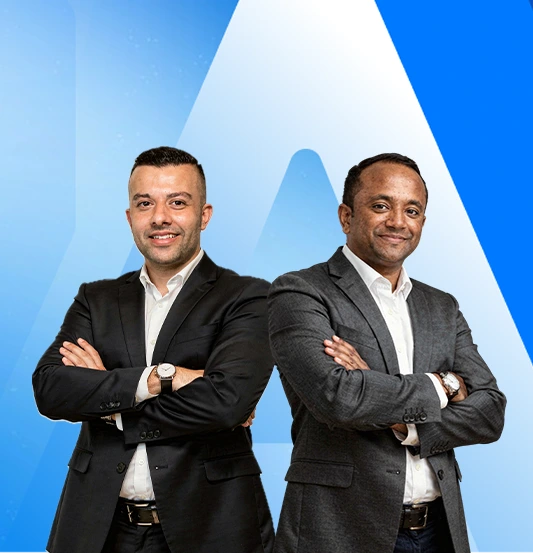
Get expert guidance before you invest in AI software development. Work directly with Giovanni and Bibin to validate your technology direction, align AI with business goals, and make confident decisions that reduce risk and accelerate outcomes.

Request a Strategic Consultation
Consultant Partners

Recognized For Excellence

Service Tracks · 6 Options

React Native App Development Services Provided

Six React Native service tracks are available. These are consumer apps, SaaS companion apps, enterprise apps, Cordova migration, New Architecture migration, and React Native Web. All six tracks use TypeScript and the New Architecture. These services build production React Native apps not Expo Go app generation, template customisation, or hybrid WebView development. All six tracks are available independently or as part of a full product build.

Flagship Track 01

Consumer iOS and Android React Native App Development

Consumer iOS and Android React Native apps are built full-cycle. The process covers navigation, state management, API integration, Firebase setup, and push notifications. Navigation is handled via Expo Router or React Navigation. State management uses Redux Toolkit or Zustand.

Consumer React Native apps require production-quality performance across a wide device range. React Native 0.75 enables the New Architecture, including JSI and Fabric, by default.

All navigation animations use native drivers. Heavy computation is offloaded via Reanimated 3 worklets to prevent UI thread blocking.

Stack

TypeScript strict mode, Expo Router or React Navigation v6, Redux Toolkit or Zustand, TanStack Query, Firebase Auth, and Fastlane.

Track 02

SaaS Companion Mobile App Development

SaaS companion apps are built as the mobile surface of an existing web product not as a separate codebase. REST or GraphQL integration, enterprise auth via Auth0, Clerk, or MSAL, and deep linking are covered. The API client, authentication logic, data models, and validation schemas via Zod or Yup are shared TypeScript modules. The mobile app is the mobile surface of the same product, not a separate codebase.

Stack

monorepo setup with Nx or Turborepo, Auth0 or Clerk SDK, and Microsoft CodePush for OTA updates. Deep linking is configured via Expo Router. Apple Business Manager handles enterprise distribution.

Track 03

Enterprise React Native App Development

Enterprise React Native apps require MDM integration, enterprise SSO, offline-first architecture, and corporate security enforcement. Scope covers Jamf Pro and Intune Managed App Configuration, certificate pinning, and biometric authentication. Certificate pinning via a custom native module prevents man-in-the-middle attacks. Managed App Configuration allows IT administrators to pre-configure app settings via Jamf Pro or Intune.

NativeModules implement enterprise-specific native features not covered by community packages.

Stack

MSAL, Okta, or AppAuth for enterprise SSO, biometric auth, and MDM policy enforcement. Certificate pinning uses a TurboModule wrapping URLSession and OkHttp. WatermelonDB or MMKV handles offline storage.

Track 04

React Native Migration from Cordova, Ionic, and Legacy Hybrid Apps

Cordova, Ionic, PhoneGap, and Xamarin apps are assessed, mapped to feature parity, and migrated to React Native. Business logic is rewritten in TypeScript without a full rewrite. Business logic is rewritten in TypeScript. Cordova and Ionic migration to React Native is not a full rewrite. API clients, authentication logic, and data models in JavaScript migrate to TypeScript with minimal changes. The UI layer is rebuilt in React Native components. The app remains live in production through incremental module replacements.

Stack

Cordova plugin to React Native package mapping and TypeScript migration. WebView screens are replaced with React Native components. An App Store binary replacement plan is included.

Track 05

React Native New Architecture Migration

Old bridge React Native apps are migrated to the New Architecture through a structured audit and rewrite process. This includes JSI, Hermes, Fabric, and TurboModules. Scope includes codebase audit, incompatible module identification, TurboModule rewrites, Fabric component migration, and performance validation.

Community packages using the old NativeModules API are incompatible with TurboModules. They require a New Architecture version published by the maintainer. NewAgeSysIT audits each package, identifies incompatible modules, and writes TurboModule wrappers for required native functionality.

Stack

React Native 0.75 upgrade, Hermes enablement, Fabric UI migration, TurboModule implementation, Reanimated 3 migration, and React Native DevTools profiling.

Track 06

React Native Web Development

React Native Web brings the existing iOS and Android codebase to the browser using react-native-web and Expo Web. Scope covers shared components across iOS, Android, and web, responsive layout via Platform.select, and PWA configuration. React-native-web renders React Native components as DOM elements in a browser. The same TypeScript codebase serves iOS, Android, and web from one repository. Divergence between mobile and web is managed at the component level with Platform.select.

Stack

react-native-web with Metro and Webpack, Expo Web, Platform.select for layout overrides, PWA manifest, and Vercel or Firebase Hosting.

Real Results

How We Helped Top US Brands in Build Winning Mobile Apps

Production-Grade Features

Core Features of a Production-Grade React Native App

Production-grade React Native apps run on the New Architecture with JSI, Hermes, and Fabric. They also use TypeScript strict mode. Reanimated 3 handles animation and gesture performance. It meets Apple HIG and Material Design 3 standards from one TypeScript codebase. The four feature categories below determine App Store rating, Day 30 retention, and long-term codebase maintainability.

Category 01

UI Rendering, Performance, and Navigation Features

New Architecture

JSI replaces the asynchronous bridge with synchronous native calls. Fabric renders UI on the main thread. Hermes compiles JavaScript to bytecode at build time. Together, these deliver sub-16ms frame times on mid-range Android — Snapdragon 695 and above.

Reanimated 3 animations

Worklet-based animations run on the UI thread, not the JavaScript thread. Shared Values sync animation state between threads. Gesture handling via React Native Gesture Handler 2 removes the 100ms bridge delay from all touch interactions.

Navigation

Expo Router provides file-based routing with native stack and tab navigators. React Navigation 6 serves as an alternative with native stack via react-native-screens. Deep linking is configured via Associated Domains for iOS universal links and App Links for Android. Universal link configuration is included for both platforms.

FlashList

FlashList by Shopify replaces FlatList for large list rendering. It recycles cell components and achieves 5x faster rendering than FlatList on benchmark datasets. It is required for apps displaying feeds, product lists, or search results.

Platform-specific UI

Platform.select and Platform.OS manage iOS-specific and Android-specific UI variants. Cupertino-style components via @react-native-community packages serve iOS. Material Design 3 components via react-native-paper serve Android.

Accessibility

React Native Accessibility API provides screen reader support via VoiceOver on iOS and TalkBack on Android. Minimum touch target sizes are enforced. Colour contrast ratios meet WCAG 2.1 AA. AccessibilityInfo event listeners manage dynamic accessibility state.

Category 02

State Management, Data Layer, and API Integration Features

Redux Toolkit

createSlice and createAsyncThunk manage predictable global state. RTK Query handles server state with cache management, background refetching, and optimistic updates. It is the primary choice for complex apps with many interdependent state slices.

Zustand

Lightweight state management with minimal boilerplate. Zustand stores are TypeScript-typed, testable with Jest, and persist state via zustand/middleware. It suits simpler apps where Redux Toolkit overhead is unnecessary.

TanStack Query

Server state with stale-while-revalidate caching, background refetching, and offline mutation queueing. Infinite scroll is handled via useInfiniteQuery. It is the primary choice for apps with REST or GraphQL API data.

Offline-first

MMKV provides fast synchronous key-value storage, 3x faster than AsyncStorage. WatermelonDB handles relational offline data with sync. Realm serves complex offline data models. All three support TypeScript.

GraphQL

Apollo Client 3 or urql handles GraphQL API integration with normalised cache and optimistic UI updates. Subscription support runs via WebSocket. GraphQL Code Generator produces TypeScript types from the API schema.

REST

Axios with interceptors handles JWT token refresh, error normalisation, and request retry. OpenAPI TypeScript codegen generates type-safe API clients from OpenAPI 3.0 schemas.

Category 03

Authentication, Security, and Native Module Features

Firebase Auth

Email/password, Google Sign-In, Apple Sign-In, phone OTP, and anonymous auth via @react-native-firebase/auth. Apple Sign-In is mandatory for App Store apps offering social login.

Auth0 and Clerk

Enterprise and SaaS authentication via the Auth0 React Native SDK or Clerk React Native SDK. Supports PKCE OAuth 2.0 flows, social login, MFA, and organisations for enterprise multi-tenancy.

MSAL React Native

Microsoft Authentication Library for enterprise Azure AD SSO. Supports PKCE flows, refresh token management, and conditional access policy enforcement via Intune.

Biometric auth

react-native-biometrics handles Face ID, Touch ID, and Android fingerprint authentication. Credentials are stored in Keychain on iOS and Keystore on Android via react-native-keychain. Biometric fallback to PIN satisfies enterprise policy compliance requirements.

Certificate pinning

A custom TurboModule wraps URLSession on iOS and OkHttp on Android. It validates SHA-256 certificate pins to prevent man-in-the-middle attacks on sensitive API endpoints.

Expo SecureStore

Hardware-backed encrypted key-value storage for sensitive tokens. Falls back to encrypted AsyncStorage on devices without secure enclave hardware.

Category 04

Push Notifications, CI/CD, and App Store Distribution Features

Push notifications

@react-native-firebase/messaging handles FCM for Android and APNs for iOS. Expo Notifications is the alternative for Expo-managed projects. Notification handling covers foreground, background, and killed app states. Rich notifications with images and action buttons are configured via notification channels.

Expo Updates

Over-the-air JavaScript bundle updates via Expo EAS Update. Bug fixes and UI changes ship to production without App Store review. OTA update channels are configured for staging and production.

Microsoft CodePush

OTA updates for bare React Native apps not using Expo. Staged rollout to a percentage of users. Rollback to the previous bundle triggers on error rate threshold breach.

Fastlane

Automated App Store and Google Play submission via Fastlane Match for code signing and Fastlane Deliver for metadata. GitHub Actions runs Jest, TypeScript type check, ESLint, and Fastlane build on every pull request.

Expo EAS Build

Cloud build service for React Native and Expo apps. Builds iOS IPA and Android AAB without requiring a macOS machine for iOS. EAS Submit automates App Store and Google Play submission from CI.

Internal distribution

Firebase App Distribution or Microsoft App Center provides TestFlight-equivalent distribution before App Store submission.

AI & On-Device Intelligence

AI and On-Device Intelligence in React Native Applications

AI integration in React Native apps uses two complementary approaches. On-device AI via Google ML Kit and TensorFlow Lite React Native enables low-latency inference without network dependency. Cloud AI via OpenAI, Anthropic, and Google Gemini APIs delivers generative features requiring server-scale models.

React Native's TurboModules bridge on-device AI SDKs where community packages are not yet available. The five production-ready AI integrations below cover on-device inference, cloud generative APIs, and monetisation intelligence.

01

Google ML Kit

Delivered via @react-native-ml-kit packages. Covers barcode scanning, face detection, text recognition, translation, and entity extraction. All processing runs on-device. Data does not leave the device. The package is compatible with the New Architecture via TurboModules in React Native 0.75.

02

TensorFlow Lite

Implemented via @tensorflow/tfjs-react-native and react-native-fast-tflite for native inference. Custom ML models compiled to TFLite format run on-device for image classification and object detection. Models are bundled as React Native assets and loaded via the native TFLite runtime.

03

OpenAI API

Integrated via Axios or the openai JavaScript SDK. Conversational AI, content generation, and document analysis use streaming API calls via React Native's EventSource polyfill or Fetch streaming. Responses stream into Reanimated-driven typing indicator UI components.

04

Google Gemini Nano

Accessible on-device via Android AICore on Pixel 9 and later. Reachable from React Native via a NativeModules bridge until an official package is available. Delivers on-device text summarisation and smart reply without API cost.

05

RevenueCat Paywalls

RevenueCat's Paywalls product enables A/B testing of in-app purchase pricing without an app release. The react-native-purchases SDK integrates RevenueCat subscription management and paywall presentation in production.

On-device AI delivers a privacy and latency advantage. Sensitive user data is processed locally. Results are available offline. There is no per-query API cost for on-device inference.

Integrations & Packages

React Native App Integrations and Third-Party Package Development

Production React Native apps integrate payment processors, analytics platforms, and enterprise identity providers. Push notification services, crash reporting tools, and hardware SDKs are also included. Integration uses community packages and custom TurboModules for SDKs without a React Native package.

Payments and Subscriptions

Stripe via @stripe/stripe-react-native covers card payments, Apple Pay, and Google Pay. Google Play Billing and Apple StoreKit 2 handle in-app purchases and subscriptions via react-native-iap or react-native-purchases. RevenueCat unifies subscription management across iOS and Android. It also handles 1099-K tax document generation for marketplace apps.

Analytics and Attribution

Firebase Analytics via @react-native-firebase/analytics tracks in-app events. Mixpanel via mixpanel-react-native handles product analytics and funnel analysis. Amplitude is integrated via @amplitude/analytics-react-native. AppsFlyer via react-native-appsflyer provides UA attribution with SKAdNetwork 4.0 support. Branch handles deep linking and referral attribution.

Enterprise Identity and Security

Microsoft MSAL via react-native-msal manages Azure AD SSO. Auth0 React Native SDK handles PKCE OAuth flows. Okta React Native SDK covers Okta-based enterprise identity. react-native-keychain stores Keychain and Keystore credentials. @react-native-community/netinfo monitors network state and offline detection.

Maps, Location, and Hardware

Google Maps via react-native-maps serves iOS and Android. Geolocation is handled via @react-native-community/geolocation or Expo Location. Camera via react-native-vision-camera V3 covers photo, video, and barcode scanning. Bluetooth BLE via react-native-ble-plx connects IoT devices. NFC is handled via react-native-nfc-manager. Health data via react-native-health bridges HealthKit and Health Connect.

Crash Reporting and Monitoring

Firebase Crashlytics via @react-native-firebase/crashlytics covers crash and ANR reporting. Sentry React Native via @sentry/react-native handles error tracking, performance monitoring, and session replay. Datadog React Native RUM via @datadog/mobile-react-native provides enterprise performance monitoring and distributed tracing.

All React Native integrations use TypeScript types. New Architecture compatibility is verified before package selection.

Technology Stack

Technology Stack for React Native App Development

NewAgeSysIT builds React Native apps on TypeScript, the React Native New Architecture, and Expo for managed and bare workflow projects. Stack selection follows the React Native team's current recommendations and stable package ratings. Production deployment requirements for App Store and Google Play are also applied.

Layer Technologies
LanguageTypeScript 5.x (strict mode)
FrameworkReact Native 0.75+ (New Architecture enabled)
Managed WorkflowExpo SDK 51+ (EAS Build, EAS Submit, EAS Update)
NavigationExpo Router 3 · React Navigation 6 (native stack)
State ManagementRedux Toolkit · Zustand · Jotai · React Context
Server StateTanStack Query (React Query 5) · Apollo Client 3 · urql
Local StorageMMKV · WatermelonDB · Realm · Expo SecureStore
NetworkingAxios · fetch · @tanstack/query-core
AnimationsReanimated 3 · React Native Gesture Handler 2 · Lottie
ListsFlashList (Shopify) · FlatList · SectionList
AuthenticationFirebase Auth · Auth0 · Clerk · MSAL · Okta · AppAuth
PaymentsStripe React Native · RevenueCat · react-native-iap
Push NotificationsFirebase Cloud Messaging · Expo Notifications · APNs
OTA UpdatesExpo EAS Update · Microsoft CodePush
AnalyticsFirebase Analytics · Mixpanel · Amplitude · AppsFlyer
Crash ReportingFirebase Crashlytics · Sentry React Native · Datadog RUM
CI/CDEAS Build · GitHub Actions · Fastlane · Bitrise
TestingJest · React Native Testing Library · Detox · Maestro
AI and MLML Kit · react-native-fast-tflite · OpenAI API · Gemini
BackendFirebase · AWS Amplify · Lambda · Node.js · Supabase

React Native apps are paired with cloud backends on Firebase, AWS, or Google Cloud. REST and GraphQL APIs are built in Node.js, Python, or Go and consumed via React Query or Apollo Client. Stack selection is guided by the client's existing web tech stack, enterprise requirements, and App Store distribution model.

Got Problems? Let Us Help You With the Right Solution

Security & Compliance

React Native App Security, Privacy, and App Store Compliance

React Native apps must satisfy App Store privacy labels and Google Play Data Safety declarations. App Tracking Transparency and SDK privacy manifests are required for iOS 17 and above. CCPA and GDPR compliance applies where required. The New Architecture and TurboModules substantially reduce the security surface of the old JavaScript bridge.

iOS Privacy Manifests and Labels

Apple requires PrivacyInfo.xcprivacy files from all third-party React Native packages using privacy-sensitive APIs. Missing privacy manifests cause App Store rejection from iOS 17 onwards. NewAgeSysIT audits all React Native community packages for privacy manifest compliance before submission.

Secure Token Storage

JWT tokens, refresh tokens, and API keys are stored in react-native-keychain. iOS Keychain and Android Keystore are used. Sensitive tokens are never stored in AsyncStorage, which writes to unencrypted device storage. Expo SecureStore provides an alternative for Expo-managed projects with hardware-backed encryption.

App Tracking Transparency

iOS 14.5 requires the ATT permission prompt before any cross-app tracking. The react-native-tracking-transparency package manages this permission. Advertising SDKs must not access IDFA without explicit user consent via the ATT prompt.

JavaScript Bundle Security

React Native JavaScript bundles are not compiled to native binary and can be extracted from the IPA or APK. Sensitive business logic, API keys, and private keys are implemented in native modules or stored server-side. They are not placed in the JavaScript bundle.

CCPA and GDPR Compliance

React Native apps collecting user data from California or EU users must provide consent management, data access, and right-to-deletion workflows. All analytics SDKs must honour user consent before initialisation.

All NewAgeSysIT React Native apps run TypeScript type checking, ESLint, and npm audit before App Store submission.

Development Process · 7 Stages

React Native Development Process: From Architecture to App Store

NewAgeSysIT follows an Agile, architecture-first React Native development process. TypeScript strict mode, New Architecture, CI/CD, and Fastlane signing are configured in Stage 2 before any feature sprint begins. No features are built on an unconfigured architecture.

01
Architecture Stage 01

Stage 1: React Native Architecture Planning and Stack Selection

Target platforms, minimum OS versions, navigation model, and state management strategy are defined. Backend API type, authentication provider, and OTA update strategy are also confirmed. Deliverables include React Native Architecture Decision Record, dependency list with New Architecture compatibility confirmation, and sprint roadmap in Jira.

02
Setup Stage 02

Stage 2: React Native Project Setup and CI/CD Configuration

The React Native project is initialised with TypeScript strict mode and New Architecture enabled. EAS Build is configured for cloud builds and Fastlane Match for code signing. GitHub Actions runs Jest, TypeScript check, and ESLint on every commit. EAS Update channels are configured for staging and production. Deliverables cover a working CI/CD pipeline before Sprint 1 begins.

03
Design Stage 03

Stage 3: UI/UX Design with React Native Component Specification

Screen design in Figma uses components that map directly to React Native primitives. They include View, Text, TextInput, and FlatList. Navigation flows use native transition patterns for iOS and Android. Design tokens are exported as TypeScript constants. Deliverables includes Figma design system, TypeScript token file, and component specification reviewed by the engineering team.

04
Build Stage 04

Stage 4: Core Feature Development in Agile Sprints

Authentication, navigation, core screens, and API integration are built in two-week sprints. New Architecture is validated on physical devices in Sprint 1. State management is tested with Jest in Sprint 2. TanStack Query or Apollo Client is validated against the backend in Sprint 2. Each sprint delivers a build via EAS Update to the staging environment.

05
Build Stage 05

Stage 5: Native Module Integration and Third-Party SDK Validation

Third-party package integration covers Firebase, Stripe, push notifications, analytics, crash reporting, and enterprise SSO. Privacy manifest compliance is verified for all packages. TurboModules are implemented for native functionality not covered by community packages. Integration tests are written with React Native Testing Library and Detox for critical user flows.

06
Launch Stage 06

Stage 6: Performance Profiling, QA, and App Store Preparation

Performance is profiled on physical devices using React Native DevTools and Xcode Instruments. 60fps is validated on iPhone SE and mid-range Android. App Store privacy nutrition labels and Google Play Data Safety sections are completed. All P1 defects are resolved before submission. TestFlight and Google Play Internal Testing are configured.

Launch Stage 07 · Final
Go-Live

Stage 7: App Store Submission, Launch, and Post-Launch Support

App Store and Google Play submissions are managed via Fastlane and EAS Submit. Phased rollout is configured at 10, 50, then 100 percent on Google Play. Firebase Crashlytics and Analytics are configured from launch day. Sentry or Datadog RUM handles performance monitoring. Post-launch support covers crash fixes, React Native version upgrades, and App Store policy compliance.

Why Choose NewAgeSysIT

Why Choose NewAgeSysIT for React Native App Development in the USA?

NewAgeSysIT builds React Native apps on the New Architecture, TypeScript strict mode, and Agile delivery with CI/CD from Sprint 1. React Native quality varies more than any other mobile framework. The architectural gap between a legacy bridge JavaScript app and a New Architecture TypeScript app is significant. That gap is consequential for App Store performance and long-term maintainability.

01

New Architecture by Default

NewAgeSysIT builds exclusively on React Native 0.75 or later with JSI, Fabric, and Hermes enabled. Not on the old bridge architecture that Meta has deprecated. Apps built on the old bridge in 2024 or later are built on a deprecated foundation.

02

TypeScript Strict Mode Throughout

All React Native codebases use TypeScript in strict mode. No JavaScript files. No any types. No implicit returns. TypeScript strict mode catches at compile time the bugs that cause production crashes in loosely typed codebases.

03

CI/CD from Sprint 1

GitHub Actions, EAS Build, Fastlane Match, and EAS Update are configured before the first feature sprint. No manual Xcode archive steps. No ad hoc code signing. App Store submissions are automated from Sprint 1 onwards.

04

Performance Validated on Physical Devices

All React Native DevTools frame rate profiling is conducted on physical devices. iPhone SE covers worst-case iOS performance. Mid-range Snapdragon Android covers worst-case Android. Simulator profiling does not replicate physical device thermal throttling or memory pressure.

05

Full Client IP Ownership

TypeScript source code, EAS configuration, Fastlane Matchfile, and GitHub Actions workflows transfer to the client at project completion. All app assets are included in the handover. No proprietary tooling creates a post-project dependency on NewAgeSysIT.

NewAgeSysIT has shipped React Native apps to the App Store and Google Play for US clients. These apps span consumer, SaaS, and enterprise product categories. Delivered apps maintain 4.5-star or higher App Store ratings. Day 30 retention outcomes are tracked from launch day via Firebase Analytics and Sentry.

Engagement Models

Flexible Engagement Models for React Native App Development

Three engagement models are available for React Native app development. These serve startups building their first React Native product, SaaS companies augmenting mobile teams, and product leaders requiring architecture strategy. All three models include App Store and Google Play submission management and full client IP ownership at project completion.

01 · Managed Project

End-to-End React Native App Development (Managed Project)

NewAgeSysIT provides a complete React Native team consisting of React Native Engineer, UI/UX Designer, Backend Engineer, QA Engineer, and DevOps Engineer. The client owns the product roadmap. NewAgeSysIT owns React Native architecture, New Architecture configuration, App Store compliance, and code quality.

Startups and SaaS companies without in-house React Native engineering are the primary fit for this model. The deliverable is a production-ready, App Store-approved React Native app on a fixed timeline. Deliverables include TypeScript source code, EAS configuration, Fastlane setup, App Store and Google Play listings, and full IP transfer.

MOST POPULAR
02 · Staff Augmentation

Dedicated React Native Development Team (Staff Augmentation)

NewAgeSysIT React Native engineers integrate into the client's existing mobile team and sprint workflow. NewAgeSysIT handles all employment overhead — recruitment, HR, benefits, and payroll. Clients direct daily sprint priorities via Jira or Linear.

SaaS companies and enterprises with existing engineering leads who need senior React Native engineers are the right fit here. US senior React Native engineers command $150,000 to $220,000 in annual compensation. NewAgeSysIT delivers this talent without the 3 to 5 month US recruitment cycle.

03 · Strategy Consulting

React Native Architecture Strategy and Technology Consulting

A senior React Native architect defines the Expo versus bare React Native decision and New Architecture migration approach. State management model, OTA strategy, and CI/CD design are also covered. Deliverable includes React Native Architecture Decision Record, New Architecture migration plan, and CI/CD pipeline specification.

CTOs evaluating React Native versus Flutter are the right fit for this model. Product managers planning a Cordova migration are also included. Engineering leads designing a New Architecture migration are part of the target audience as well.

Pricing & Scope

React Native App Development Cost in the United States

React Native app development cost depends on platform count, UI complexity, SDK integration count, backend scope, and enterprise feature requirements. A focused consumer app MVP starts at $25,000. A full enterprise React Native suite reaches $300,000 or more.

React Native development cost is comparable to Flutter for equivalent scope. The primary cost advantage of React Native over native development is significant. It eliminates separate iOS and Android engineering teams.

Investment Range
$25k to $300k+
Consumer MVP → full enterprise RN suite
MVP Timeline
8-12 wks
App Store and Google Play-ready build
Native team saved
2 teams
Separate iOS & Android eliminated
Cost Variables

Factors Affecting React Native App Development Cost

8 key variables shape the estimate
01

Platform count

iOS and Android only versus iOS, Android, and React Native Web. Each additional target adds design, development, and testing effort.

02

UI complexity

Standard React Native components cost less than fully custom animations built with Reanimated 3. Complex shared element transitions and gesture-driven interactions add animation engineering effort.

03

State management complexity

Simple Zustand stores cost less than complex Redux Toolkit setups with RTK Query and normalised cache management.

04

Backend development

Apps needing a custom API backend, WebSocket data, or serverless functions add scope beyond the React Native app itself.

05

Third-party SDK integration

Each SDK adds development, testing, and App Store privacy manifest compliance effort. Enterprise SSO via MSAL or Okta adds specific compliance and testing scope.

06

OTA update infrastructure

Expo EAS Update or Microsoft CodePush configuration adds DevOps engineering scope.

07

Enterprise features

MDM integration via Jamf Pro or Intune, Managed App Configuration, and supervised device support add native module scope.

08

New Architecture migration

Moving from the old bridge adds codebase audit, package compatibility assessment, and TurboModule engineering effort.

App Type Pricing

Estimated Cost by React Native App Type

Indicative for US engagements
MVP Tier
$25k–$65k

Consumer App MVP (iOS and Android)

Core feature, Firebase Auth, Stripe, App Store submission

SaaS Tier
$50k–$120k

SaaS Companion Mobile App

REST API integration, Auth0 or Clerk, shared TypeScript modules

Cross-Platform
$65k–$150k

React Native Web Plus Mobile

react-native-web, shared TypeScript codebase, responsive layouts

Enterprise
$100k–$240k

Enterprise React Native App

MSAL SSO, MDM integration, offline-first, certificate pinning

Migration
$60k–$180k

Cordova or Ionic Migration

Audit, TypeScript rewrite, React Native component rebuild, testing

Architecture
$40k–$120k

New Architecture Migration

Bridge to JSI/Fabric/Hermes, TurboModule rewrites, package audit

All ranges are indicative for US market development. Actual costs are confirmed after React Native architecture planning and dependency audit.

MVP Strategy

React Native MVP Strategy for Startups with JavaScript Teams

A React Native MVP covers the core feature set, Firebase authentication, and primary API integration. App Store and Google Play submission are included. This is the minimum viable React Native product for acquiring first users and generating App Store reviews.

The timeline is 8 to 12 weeks for an App Store and Google Play-ready build. This is faster than a comparable Flutter MVP when the engineering team already has React and TypeScript expertise. Cost is $25,000 to $65,000 for a focused iOS and Android MVP. A cross-platform MVP adding React Native Web costs $40,000 to $90,000.

Y Combinator and Andreessen Horowitz evaluate mobile products on D7 and D30 retention. These metrics require Firebase Analytics and Sentry integration from day one not a spreadsheet. NewAgeSysIT delivers App Store-ready React Native MVPs in 8 to 12 weeks with the New Architecture enabled.

Scope MVP

Core Build

Core feature set, Firebase auth, API integration, App Store and Google Play submission

Timeline 8-12 wks

Sprint Window

App Store and Google Play-ready build, faster than a comparable Flutter MVP for RN/TS teams

Investment Best Value

MVP Cost

iOS + Android
$25k-$65k
+ RN Web: $40k-$90k
Start Building

Start Building Your React Native App with NewAgeSysIT

Request a Free React Native App Development Consultation with NewAgeSysIT

US startups with JavaScript teams building separate iOS and Android apps pay for two engineering teams and two maintenance tracks. A React Native codebase covers both platforms from the JavaScript team already employed. Per-feature duplication across iOS and Android is eliminated.

A free 30-minute consultation with a senior NewAgeSysIT React Native architect helps teams evaluate New Architecture readiness. React Native architecture choices and state management direction are also covered. The session also helps teams find the right App Store strategy and a realistic development cost estimate for their distribution model.

NewAgeSysIT delivers production React Native apps on the New Architecture and TypeScript strict mode. App Store-ready CI/CD is configured from Sprint 1, built for the US market.

Client Testimonials that Reflect Our Expertise & Dedication

Iman Khawaja

“From every single moment, from the beginning till the end, they were there for me. They were very systematic and methodical in every single step and …”

IMAN KHAWAJA

Owner - ISRA

65%

Increase in Monthly Bookings within 6 Months

42%

Reduction in Appointment No-Shows

David Chabukashvili

“They delivered everything on time and it was of great quality. They go above and beyond to meet yourrequirements and deliver the product you are looking for….”

David Chabukashvili

Founder - L-Card App

120%

Increase in User Sign-Ups in First Quarter

55%

Boost in Networking Conversions

Larry Siebel

“They are very knowledgeable in the sense that they have built so many of these types of applications that they..”

Larry Siebel

Founder -CAR-UP App

70%

Increase in Online Service Bookings

50%

Reduction in Service Scheduling Conflicts

Roger J Clappe

“From every single moment, from the beginning till the end, they were there for me. They were very systematic and methodical in every single step and …”

Roger J Clappe

CEO – WhipFlip

3X

Faster Vehicle Listing to Offer Time

48%

Increase in Lead-to-Sale Conversion Rate

Lazaro Reyes

“The NewAgeSysIT team has been instrumental from day one. They didn’t just build the app — they helped shape the vision, solve critical challenges, and turn our idea into a platform that’s already making a real impact.”

Lazaro Reyes

Founder — Town Connect Network

70%

Increase in Community Member Engagement

55%

Faster Feature Implementation Cycles

Chris O’Rourke

“They were flexible, responsive, and delivered everything on time. The milestone process gave me complete confidence, and getting approved on both app stores on the first submission was incredible.”

Chris O’Rourke

Founder — Guaranty Tip Sheet

10K+

App Downloads Across iOS & Android

4.8★

Average User Rating on App Stores

Frequently Asked Questions

NewAgeSysIT delivers React Native mobile application development by drawing on extensive cross-platform engineering experience, using Meta's React Native framework with TypeScript strict mode and the New Architecture (JSI, Hermes, Fabric, TurboModules) to ship production-ready iOS and Android apps from a single codebase.

NewAgeSysIT develops custom React Native apps by tailoring features, navigation, state management (Redux Toolkit or Zustand), and native module integrations to match your specific business model. The result is a platform aligned to your brand, target audience, and operational goals.

NewAgeSysIT delivers high-quality React Native applications by combining the New Architecture, TypeScript strict mode, Reanimated 3 animations, FlashList for large lists, and rigorous testing with Jest, React Native Testing Library, and Detox. Performance is validated on physical devices before App Store submission.

NewAgeSysIT builds exclusively on React Native 0.75+ with the New Architecture enabled by default. JSI replaces the asynchronous bridge, Fabric renders UI on the main thread, Hermes compiles JavaScript to bytecode, and TurboModules deliver type-safe native module access — together producing sub-16ms frame times on mid-range Android hardware.

NewAgeSysIT offers cost-effective React Native development with MVP engagements starting at $25,000, SaaS companion apps at $50,000 to $120,000, and enterprise React Native suites at $100,000 to $240,000. One codebase for iOS and Android eliminates the need for separate Swift and Kotlin engineering teams.

NewAgeSysIT delivers React Native apps on time by following an Agile sprint workflow with EAS Build, Fastlane Match, and GitHub Actions configured from Sprint 1. A React Native MVP ships to App Store and Google Play in 8 to 12 weeks for teams with existing JavaScript expertise.

NewAgeSysIT provides end-to-end React Native development covering architecture planning, project setup with CI/CD, Figma UI/UX design, Agile feature development, native module integration, performance profiling, App Store and Google Play submission, and post-launch support with crash monitoring via Sentry and Firebase Crashlytics.

NewAgeSysIT designs user-friendly React Native apps by following Apple Human Interface Guidelines for iOS and Google Material Design 3 for Android. Reanimated 3 gesture handling, native navigation patterns, and platform-specific UI variants via Platform.select deliver an intuitive native experience.

Yes. All NewAgeSysIT React Native codebases use TypeScript in strict mode — no JavaScript files, no any types, no implicit returns. The New Architecture with JSI, Hermes, Fabric, and TurboModules is enabled by default on React Native 0.75+, eliminating the legacy bridge overhead.

Yes. NewAgeSysIT integrates Stripe via @stripe/stripe-react-native (covering card payments, Apple Pay, Google Pay), and in-app purchases via react-native-iap and RevenueCat for Apple StoreKit 2 and Google Play Billing. RevenueCat unifies subscription management across iOS and Android.

Yes. NewAgeSysIT delivers React Native Web alongside iOS and Android using react-native-web and Expo Web. The same TypeScript codebase serves iOS, Android, and the browser from one repository, with Platform.select managing UI divergence and PWA manifest configuration included.

NewAgeSysIT ensures strong communication during React Native projects via Jira or Linear sprint workflows, daily standups, and EAS Update staging builds delivered to client devices every sprint. Direct access to the React Native engineering team is provided throughout the engagement.

Yes. NewAgeSysIT ships React Native MVPs covering the core feature set, Firebase authentication, Stripe, and App Store plus Google Play submission in 8 to 12 weeks for $25,000 to $65,000. Day 1 includes Firebase Analytics and Sentry integration to track D7 and D30 retention required by YC and a16z evaluators.

Yes. NewAgeSysIT assesses Cordova, Ionic, PhoneGap, and Xamarin apps, maps features to parity, and migrates to React Native with the New Architecture. JavaScript business logic migrates to TypeScript with minimal changes, the UI layer is rebuilt in React Native components, and the app remains live in production through incremental module replacements.

NewAgeSysIT offers three flexible React Native engagement models: end-to-end managed product development, dedicated React Native engineers via staff augmentation (bypassing the 3-5 month US senior recruit cycle), and React Native architecture strategy consulting for CTOs evaluating Expo vs bare workflow or New Architecture migration.

Yes. NewAgeSysIT delivers post-launch support including Expo EAS Update and Microsoft CodePush for over-the-air JavaScript bundle updates without App Store review, crash monitoring via Sentry React Native and Firebase Crashlytics, performance RUM via Datadog, and React Native version upgrade management.

Yes. NewAgeSysIT integrates enterprise SSO in React Native apps via Microsoft MSAL for Azure AD, the Auth0 React Native SDK, Okta React Native SDK, and AppAuth. PKCE OAuth 2.0 flows, MFA, conditional access policy enforcement via Intune, and biometric authentication are supported.

Yes. NewAgeSysIT audits all React Native community packages for iOS 17+ PrivacyInfo.xcprivacy manifest compliance before App Store submission. App Tracking Transparency, Google Play Data Safety declarations, CCPA and GDPR consent management, and phased Google Play rollout at 10/50/100 percent are configured before launch.

NewAgeSysIT React Native apps maintain 4.5-star or higher App Store ratings in production. Reliability comes from TypeScript strict mode catching compile-time errors, Jest and Detox test coverage, physical device performance profiling, Sentry crash monitoring, and EAS Update staged rollout with automatic rollback on error rate threshold breach.

U.S. businesses choose NewAgeSysIT for React Native development because the company builds exclusively on the New Architecture with TypeScript strict mode, configures CI/CD from Sprint 1, validates performance on physical devices, transfers full IP ownership at completion, and operates from a U.S. presence in New Jersey backed by 30+ years of engineering experience.