Guaranteed Expert Consultation Within 1 Hour. Click Here!
Guaranteed Expert Consultation Within 1 Hour. Click Here!

Guaranteed Expert Consultation Within 1 Hour. Click Here!
Guaranteed Expert Consultation Within 1 Hour. Click Here!
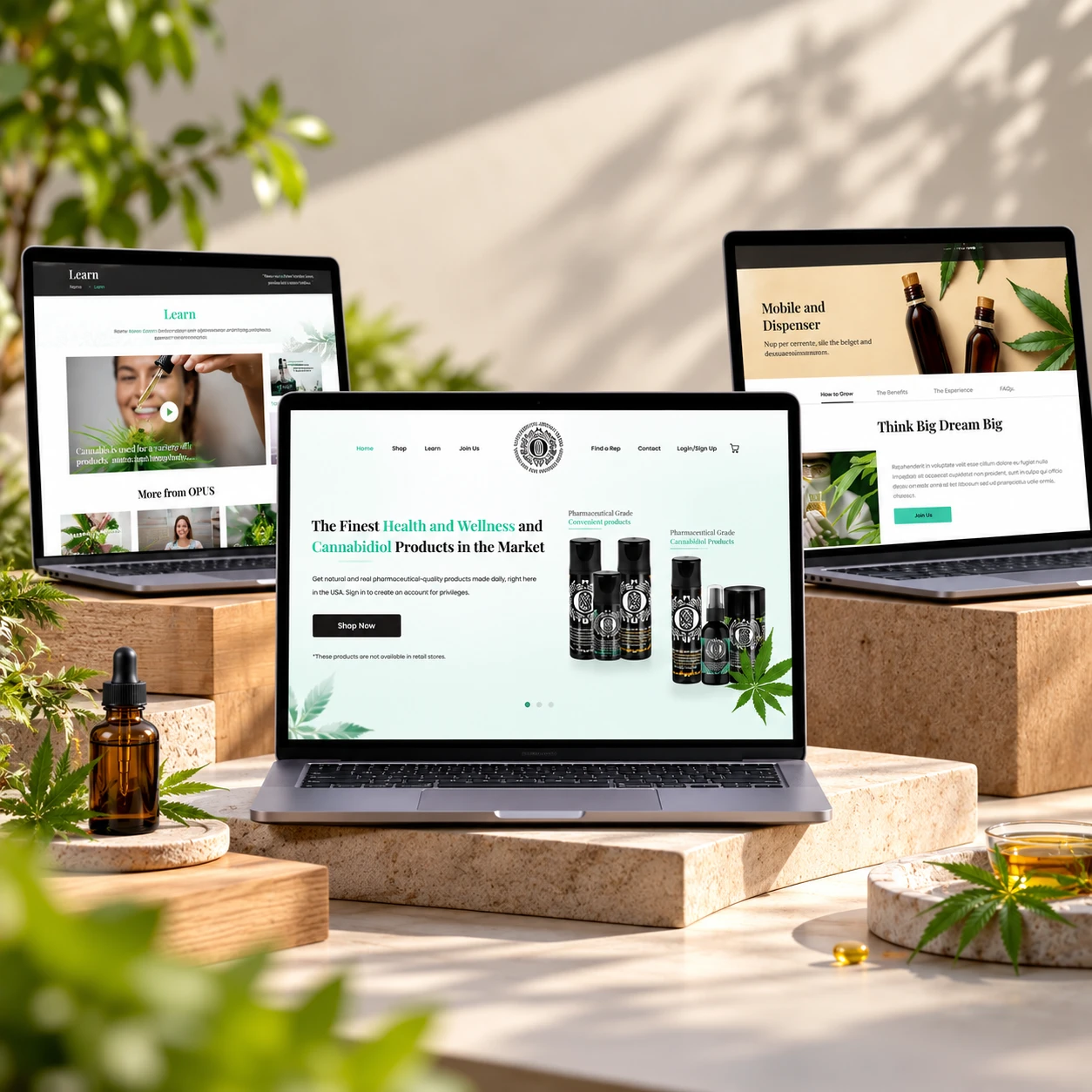
Most online shops sell one way: a customer arrives, browses and buys. OPUS Health and Wellness needed three routes to the same catalogue. Customers buy directly, one off or on a recurring subscription. Registered partners refer customers and are paid a commission that has to be tracked and settled accurately. And a network of field representatives sells both online and in person, each with their own microsite and their own earnings. NewAgeSysIT built all three onto one platform, with a single product catalogue, one order pipeline and one commission engine behind them.
Commission Engine
Attribution through to payout
Sales Channels
Direct, partner, representative
3
Routes to purchase: direct, partner referral, field representative
6
Product categories in the storefront
1
Platform carrying the shop, the partner portals and the learning content
Every order carries its origin through to payout, without anyone reconciling a spreadsheet at month end.
OPUS Health and Wellness is a US retailer founded by Danielle and Patrick Gawrysiak, both licensed healthcare professionals, selling CBD based wellness products including tinctures, pain relief oils and creams, salves, cosmeceuticals and supplements.
The business does not sell through one channel. Customers buy directly from the shop, one off or on a recurring monthly subscription. Registered partners refer customers and earn commission on what those customers spend. And a network of field representatives sells both online and in person, each running their own microsite.
Three commercial relationships, one catalogue, one set of stock and one fulfilment operation. That structure is what made this a harder build than a conventional storefront.
OPUS was delivered through NewAgeSysIT's eCommerce platform development practice, where the difficult part is usually not the shop but everything that has to agree with it afterwards.
A standard online shop has one relationship to manage, the one with the customer. OPUS has three. A direct customer buys at list price. A registered partner refers someone and earns a share of what that person spends. A field representative sells on their own account, in person or through their own microsite, and earns differently again. All three draw on the same catalogue, the same stock and the same fulfilment, so the platform needed one product and order backbone with three different commercial layers sitting on top of it rather than three systems pretending to be one.
Referral and commission tracking is the kind of feature that looks straightforward and is not, because the people being paid check the numbers. Every order has to be attributed to the right partner, calculated against the right rate, and shown in a dashboard the partner can see in real time, with instant commissions on direct sales settling separately from monthly payouts. A partner who finds a missing order once stops trusting the whole system, so accuracy here is a retention problem rather than an accounting one.
This is a category where a substantial share of buyers arrive uncertain: unsure what the products do, how to use them, or what applies where they live. A shop that only lists products loses those people at the point of hesitation. The platform therefore carries a dedicated learning section covering usage guidance and the legal position, written for customers and for partners, so the answer to a question is on the site rather than somewhere else.
Selling a regulated product across state lines means the catalogue cannot be the same everywhere. The platform includes geographic pricing and product restriction logic, so what a customer can buy, and what they pay, depends on where they are ordering from. Building that into the commerce layer rather than handling it manually at fulfilment is what lets a small team sell nationally without checking every order by hand.

Three sales channels do not need three systems. One catalogue, one order pipeline and one commission engine, with three commercial layers above them, is what lets a small team run direct, referral and representative sales without tripling its operations.
Commission accuracy is a trust problem, not an accounting one. The people being paid check the numbers, so attribution has to carry from the order through to the payout, and the partner has to be able to see it in real time without asking anyone.
Two earning models can coexist in one platform. Instant commission on a direct sale and a monthly payout through the portal answer different needs for the same person, and both have to reconcile to the same ledger.
When the rules vary by location, put the logic in the commerce layer rather than in fulfilment. Deciding what can be sold and at what price at the point of browsing is what lets a business sell across jurisdictions without reviewing orders by hand.
In a category where customers arrive uncertain, education is part of the storefront. A learning section that answers the question a hesitant buyer has is doing commercial work, not editorial work.
If you sell through partners or a field network as well as directly, NewAgeSysIT has built all three channels onto one platform with commission handled end to end.

Get expert guidance before you invest in AI software development. Work directly with Giovanni and Bibin to validate your technology direction, align AI with business goals, and make confident decisions that reduce risk and accelerate outcomes.
Request a Strategic Consultation
The shop covers browsing, product detail, reviews, wishlists and checkout, with products organised into clear categories so a customer looking for a pain relief cream is not working through tinctures to find it. Payment runs through Stripe with encrypted processing, shipping through an integrated carrier service, and transactional email through SMTP. It is the conventional half of the build and it had to be solid, because the other two channels all end at the same checkout.
Customers can set up a recurring monthly delivery of the products they use rather than reordering each time. For a category where the products are consumed steadily and the buying decision is made once, subscription is the natural model, and it turns an occasional purchase into predictable revenue that the business can plan around.
Registered partners sign up through a dedicated flow, receive a referral mechanism that attributes orders back to them, and access their own dashboard showing referred orders and commission earned in real time. Partner specific pricing is supported alongside the standard catalogue. The partner side is custom web application development rather than storefront work: dashboards, attribution, commission calculation and settlement, all of which have to reconcile to the same orders the shop is processing. The engineering problem is attribution and settlement rather than presentation, because the order has to carry its origin all the way through to payout without anyone reconciling a spreadsheet at month end.
A field sales network sells OPUS products online and in person, with each representative given their own microsite, digital sales materials and a management dashboard. Earnings combine commission on direct sales with monthly payouts through the same portal. A locator tool lets a customer search for a representative by name or area, so somebody who would rather buy through a person than a checkout can find one.
A dedicated Learn area carries content on how the products are used and how the legal position works, aimed at customers and at partners who need to answer questions confidently. Building education into the shop is common across our wellness product platforms, where a customer's first purchase usually depends on understanding something before they commit to it. For a category where hesitation is the main obstacle to a first purchase, putting the explanation on the same site as the shop is a commercial decision rather than an editorial one.
Behind all three channels sits one administration layer covering product and inventory management, order processing, partner and representative accounts, commission configuration, loyalty and promotional campaigns, and reporting. That is closer to custom CRM software development than to a shop admin, because the records it manages are commercial relationships rather than only orders. Centralising it is what lets a small team run three sales channels without three sets of operations, and the automation across order processing, customer communication and promotions is where the manual work went.
The platform runs as a web application over a REST API on Node.js, with PostgreSQL and MongoDB behind it. It sits on AWS cloud infrastructure behind Nginx, with deployment automated through GitHub Actions and Jenkins, Stripe for payments, an integrated shipping service, JWT based authentication, and SMTP for transactional email.
Take the free assessment right here and get an instant 100-point validation score plus a stage-by-stage diagnostic of exactly what to strengthen first.

OPUS runs three channels on one platform, with every order attributed to whoever brought it in and commission settled without anyone reconciling a spreadsheet.
Routes to Purchase
3 channels
Order Pipeline
1 shared

Discover your project budget with our interactive AI-powered app cost calculator.
| Layer | Technology |
|---|---|
| Frontend | ⚠️ CONFIRM FRAMEWORK |
| Backend | ⚠️ CONFIRM FRAMEWORK |
| Web Server | Nginx |
| Databases | PostgreSQL, MongoDB |
| Authentication | JWT |
| Payments | Stripe |
| Shipping | ⚠️ CONFIRM PROVIDER |
| Notifications | SMTP transactional email |
| Location Services | Google Places API |
| Analytics | Google Analytics |
| CI/CD | GitHub Actions, Jenkins |
| Commerce Modules | Loyalty management, referral engine, wishlist, product reviews |
| Cloud | AWS |
The commerce modules are the part worth naming, because the referral engine is what makes three sales channels reconcile to one ledger.
| Phase | Key Output |
|---|---|
| Discovery and Planning | Three sales channels scoped, commission models defined, constraints on selling and shipping established |
| Storefront Design | UI/UX for the shop, the partner portals and the learning section |
| Ecommerce Development | Catalogue and checkout, subscriptions, referral attribution and commission engine, representative microsites, locator, admin layer |
| Website Launch | Production release on AWS |
The decision that shaped the build was establishing the three commercial models during discovery rather than adding channels to a working shop later. A referral that has to be attributed and a representative who has to be paid both change what an order record must carry, so a catalogue designed for direct sales and extended afterwards would have needed rebuilding. UI/UX design then ran across three surfaces rather than one: the shop, the partner portals and the learning section, each serving a different reader.
| Role | Responsibilities |
|---|---|
| N × Project Lead | Client sessions, channel scoping, commercial model definition |
| N × Frontend Engineer | Storefront, partner dashboards, representative microsites |
| N × Backend Engineer | Catalogue and order pipeline, referral attribution, commission engine, subscription billing, Stripe and shipping integration |
| N × UI/UX Designer | Storefront, portals and learning section |
| N × DevOps Engineer | AWS infrastructure, CI/CD through GitHub Actions and Jenkins |
| N × QA Engineer | Checkout and subscription testing, commission accuracy across all three channels |
The hard testing on a build like this is commission accuracy across every path an order can take, because the people being paid will find the one case that was missed. Teams can be extended with that profile through our IT staff augmentation services, which place vetted engineers into an existing product team under the client's own sprint direction.
OPUS sells through three channels on one platform: directly to customers, through registered partner referrals, and through a network of field representatives, all against a single catalogue and order pipeline. Subscriptions turn a repeat purchase into recurring revenue, and the commission engine settles partner and representative earnings without manual reconciliation.
| Area | Before | After | What Changed |
|---|---|---|---|
| Routes to market | Single channel | Direct, partner referral and representative network | Three commercial models over one operational backbone |
| Revenue pattern | One off purchases | One off plus recurring subscriptions | Predictable revenue the business can plan against |
| Partner settlement | Manual tracking | Attribution through to payout, visible in real time dashboards | Partners can check their own numbers without asking |
| Operations | Separate processes per channel | One catalogue, one order pipeline, one admin layer | A small team runs three channels without three sets of operations |
| Area | Before | After | Change |
|---|---|---|---|
| Buying | N/A | Browse, review, wishlist and checkout with card payment | A conventional retail experience in a category that often lacks one |
| Repeat purchase | Manual reorder | Monthly subscription delivery | The decision is made once |
| Understanding the product | Information elsewhere | Dedicated learning section on usage and the legal position | The answer sits on the same site as the shop |
| Buying through a person | N/A | Representative locator by name or area | A route for customers who prefer a person to a checkout |
Storefronts, subscriptions and checkout built around how a business actually sells.
Partner portals, dashboards and the operational systems behind a consumer product.
Related case study, multi seller commerce with catalogue, checkout and fulfilment.
We grow strong with a 100% in-house team, 30+ years of industry expertise, and proven results. From concept to launch, we deliver innovation with precision and reliability.
Your idea is 100% protected by our non-disclosure agreement
Guaranteed expert consultation within 1 hour
Call directly: 1-609-919-9816
Get a free project estimate in under 60 minutes.
