


Guaranteed Expert Consultation Within 1 Hour. Click Here!

Guaranteed Expert Consultation Within 1 Hour. Click Here!

Custom EdTech Software Development Services in New Jersey, USA

Launch secure, high-performance iOS & Android apps built to grow your business — delivered by a proven & dedicated US-based development team.

500+

Apps
Delivered

15+

Years
Experience

NDA Badge
USA-Based

Project Management

Built for Startups. Trusted by Enterprises.
Designed to Scale from Day One.

Get a quick expert response within 1 hour.

Name is required.

Please enter a valid email address.

Phone number is required.

Please describe your project idea.

Your idea is fully secured under our NDA & Confidentiality policy.

Trusted by startups and enterprises across multiple industries.

5 Star on Clutch
30+
Years Experience
100+
Projects Delivered
#1
App Developer NJ, FL, NY
Overview

Custom EdTech Software Development Services

01
What & Who

Custom EdTech software development is the process of building tailored learning platforms, training systems, and educational tools. It targets K-12 school districts, higher education institutions, corporate L&D teams, EdTech startups, and government training organizations. The solutions span Learning Management Systems (LMS), Learning Experience Platforms (LXP), virtual classroom software, and content authoring tools. They also cover evaluation platforms and AI-driven adaptive learning engines. They are engineered to align with the learner engagement, scalability, and integration requirements of the US education and training market.

02
Five Categories We Deliver

NewAgeSysIT delivers five categories of custom EdTech software. (1) LMS and LXP platforms, (2) virtual classroom and synchronous learning tools, (3) content authoring and course creation systems, (4) assessment and certification platforms, and (5) corporate training and workforce development systems. Each platform is built around specific measurable business outcomes. They include higher learner completion rates, minimized instructor overhead, automated compliance training tracking, scalable content delivery, and demonstrable learning ROI.

03
Audiences & Positioning

We serve five buyer audiences. They include K-12 school districts, higher education institutions, corporate L&D departments, EdTech startups, government, and military training organizations. Canvas, Blackboard, Coursera, Moodle, and Teachable impose structural and pedagogical constraints. NewAgeSysIT develops purpose-built learning infrastructure that is custom-architected, fully compliant, and entirely client-owned.

Got Problems? Let Us Help You With the Right Solution

Definition

What is Custom EdTech Software Development?

The Practice

Custom EdTech software development involves engineering purpose-built learning platforms and educational tools designed around a particular organization's instructional model. It also focuses on the learner population and operational workflow. This is the opposite of configuring off-the-shelf LMS platforms such as Canvas, Moodle, or Blackboard. These previously required organizations to adapt their pedagogy and processes to the platform's architecture.

The Scope

Custom EdTech software encompasses LMS and LXP platforms, virtual classroom tools, content authoring systems, and assessment engines. It also includes adaptive learning platforms, mobile learning apps, and learning analytics dashboards, rather than website-based course portals.

The Lead-In

Custom software resolves four major problems that off-the-shelf platforms can't address without compounding cost and compromise:

Four Problems Solved
  • 01Instructional Model Specificity: The platform is built around the organization's actual pedagogy. It is not constrained by a generic course-module-quiz structure dictated by a vendor's default architecture.
  • 02Integration Depth: Deep HRIS, SIS, CRM, and SSO integrations are built natively. There are no API-surface constraints imposed by Canvas, Moodle, or Cornerstone OnDemand vendor agreements.
  • 03Learner Data Ownership: The organization retains complete control over learning data, analytics, and reporting. There is no vendor lock-in, licensing terms that limit data export, or third-party platform dependency.
  • 04White-Label & Brand Control: A fully branded learner experience is delivered. This is executed without the recognizable Canvas or Moodle UI, which undermines the commercial positioning of EdTech products.
The Outcome

The outcome is a learning platform that drives measurable learner engagement, lower per-learner cost at scale, and greater completion rates. It also results in a software asset that serves as a product differentiator rather than a recurring licensing liability.

Office

Estimate Your App Development
Cost in Seconds

Discover your project budget with our interactive AI-powered app cost calculator.

Comparison

Custom EdTech Software vs Off-the-Shelf Learning Platforms

Off-the-shelf LMS platforms such as Canvas, Blackboard, and Cornerstone OnDemand address the typical learning-delivery challenges faced by most educational organizations. Custom EdTech software addresses specific instructional, operational, and integration challenges in certain contexts. It becomes the right choice when learner populations, content models, or business requirements exceed what SaaS platforms can handle. At this point, off-the-shelf solutions compound licensing costs and force pedagogical compromise.

This is a strategic decision for L&D and education leaders, rather than a technology preference. The right choice depends on the instructional model's complexity, integration depth, learner scale, and long-term platform cost trajectory.

Criteria Off-the-Shelf LMS Custom EdTech Platform
Instructional ModelFixed course-module-quiz structureBuilt around your actual pedagogy
Integration DepthDefined vendor API surfaces onlyDeep HRIS, SIS, CRM integration
Learner Data OwnershipVendor retains data controlFull client ownership and portability
White-Label BrandingRecognizable vendor UI persistsFully branded learner experience
Cost at ScaleCompounding per-learner license feesFixed infrastructure cost; no per-seat
Compliance ArchitectureGeneric; workarounds requiredArchitected to your specific obligations
Limitations

Limitations of Off-the-Shelf LMS and EdTech Platforms

Where SaaS fails to scale

There are four limitations that define where off-the-shelf platforms fail:

01

Per-Learner Licensing Costs: Canvas and Blackboard enterprise contracts grow by enrolled learner volume. Large school districts and corporate training programs pay compounding license fees. These fees can exceed the total cost of the custom platform within 3-5 years.

02

Pedagogical Constraints: Off-the-shelf LMS platforms take a course-module-quiz structure. They can't adopt mastery-based learning, competency frameworks, branching learning pathways, or adaptive content sequences.

03

Integration Limits: Canvas and Moodle have specified API surfaces. Deep integration with Workday HRIS and PowerSchool SIS requires vendor workarounds. It can introduce data integrity risks and maintenance overhead.

04

White-Label Ceiling: Even with custom themes, Canvas and Blackboard UIs remain recognizable. It keeps a hard limit for EdTech companies that sell the platform as a branded commercial product.

Decision Framework

When Should Organizations Choose Custom EdTech Development?

4 scenarios

Four scenarios help you determine if custom development is the right business decision:

01
Startup Moat

EdTech startups build learning platforms as commercial products. When the LMS is the business, the platform architecture becomes a strategic asset. It defines the company's competitive moat, scalability ceiling, and investor-facing differentiation.

02
Enterprise Scale

Corporate L&D teams managing 10,000 or more learners. This applies when the per-seat costs of Cornerstone OnDemand or SAP SuccessFactors exceed the investment in purpose-built internal infrastructure.

03
Higher Education Depth

Higher education institutions require in-depth SIS integration, custom financial aid workflows, and academic program structures. This is where no usual LMS platform could model perfectly.

04
Gov & Military Compliance

Government and military training organizations with classified content requirements and Section 508 accessibility mandates, and strict procurement compliance. Most commercial SaaS platforms are not designed to support these specialized compliance and security requirements.

Speak With Our AI Software Consultant Partners

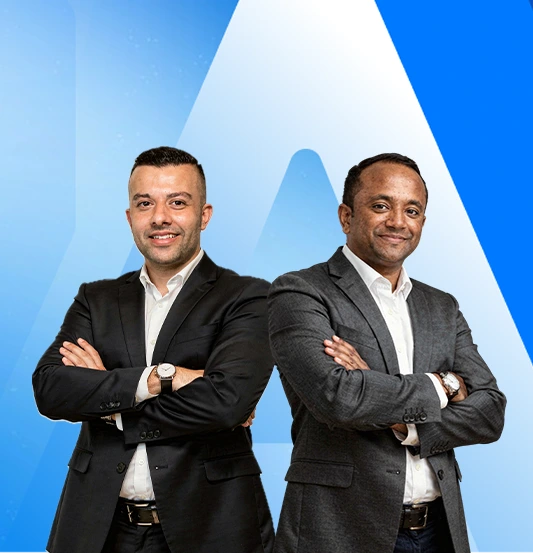
Get expert guidance before you invest in AI software development. Work directly with Giovanni and Bibin to validate your technology direction, align AI with business goals, and make confident decisions that reduce risk and accelerate outcomes.

Request a Strategic Consultation
Consultant Partners

Recognized For Excellence

Buyer Audiences

Built for the five audiences that outgrow off-the-shelf LMS

Custom EdTech software development serves five unique US buyer profiles. Each includes a learning platform requirement. Most off-the-shelf LMS and training systems fail to support their instructional scale, learner complexity, and content delivery requirements.

NewAgeSysIT delivers custom EdTech platforms for all five buyer profiles shown below. Every engagement starts with a platform-specific discovery process that maps a set of requirements before writing a line of code. These are instructional requirements, compliance obligations, and integration architecture.

Profile · 01

K-12 School Districts and Education Authorities

US school districts need custom student information systems, learning management platforms, parent communication tools, and assessment systems. These systems should integrate natively with PowerSchool, Clever, and state-mandated reporting requirements. FERPA administers all student data, with mandatory architecture for any K-12 platform that handles student PII. COPPA applies to the platforms that serve students below the age of 13. These platforms are built for district CIOs, superintendents, and state technology directors who need compliant, district-owned infrastructure rather than a vendor-owned SaaS subscription.

Universities and community colleges demand custom LMS platforms, student engagement tools, academic analytics systems, and alumni management platforms. They also need research collaboration environments that Canvas or Blackboard can't accommodate at the required integration depth. The compliance requirements include FERPA for all student data, Section 508 of the ADA for accessibility. The requirements also cover WCAG 2.1 AA for all web interfaces. Built for university CIOs, provosts, and VP of Academic Technology roles who manage institutional technology transformation.

Profile · 02

Higher Education Institutions

Profile · 03

Corporate L&D Teams & Enterprise Training Organizations

Enterprises need custom LXP platforms, compliance training systems, skill gap assessment tools, and onboarding automation. These platforms should integrate directly with Workday and SAP SuccessFactors HRIS and performance management systems. The focus is on measurable learning ROI. This ranges from completion rates to skills acquisition tracking to compliance certification management, which are reportable to executive leadership. Built for Chief Learning Officers, VP of L&D, and HR Technology directors who manage large workforce learning programmes.

EdTech startups building learning platforms, online course marketplaces, tutoring platforms, and skills assessment tools as commercial products are applicable here. This is where the software architecture is the product and the competitive differentiator. Multi-tenancy, white-label capability, API-first design, and scalable content delivery infrastructure are non-negotiable requirements from day one. Built for EdTech founders and CTOs who build venture-backed learning platforms. These platforms fall within the scope of GSV Ventures, Reach Capital, or Learn Capital investors who scrutinize technical architecture.

Profile · 04

EdTech Startups & Learning Platform Companies

Profile · 05

Government, Military, & Public Sector Training Organizations

Federal agencies, military branches, and state government departments need SCORM/xAPI-compliant training platforms and Section 508 accessible interfaces. They also need FedRAMP-compliant cloud infrastructure and secure, access-controlled delivery for sensitive or classified content. Compliance requirements include Section 508 accessibility, FedRAMP cloud authorization, and FISMA information security. Deployed on AWS GovCloud. Built for government IT directors, federal agency CIOs, and military learning programme managers operating under strict procurement and security standards.

Six Service Tracks

Custom EdTech Software Development Services We Provide

NewAgeSysIT delivers custom EdTech software development across six service tracks. The tracks include LMS and LXP platform development, virtual classroom and synchronous learning tools, and content authoring systems. They also cover assessment and certification platforms, corporate training and compliance systems, and AI-driven adaptive learning engines. It encompasses the full instructional technology stack for US education and training organizations.

These are enterprise-grade software systems, rather than mobile apps or consumer-facing course portals. They cover the learning infrastructure used by school districts, universities, corporations, and government agencies. All platforms are built according to SCORM and xAPI compliance, WCAG 2.1 AA accessibility, and LTI integration capability. These are standard architecture requirements, rather than add-on features.

01
Track 01 · Flagship

Learning Management System (LMS) Development

Full-stack custom LMS platforms are designed around the organization's specific instructional model and learner population. It covers course creation, learner enrollment, progress monitoring, assessment delivery, completion certification, and compliance reporting. The compliance standards incorporated include SCORM 1.2 and SCORM 2004 for content interoperability. The other standards are xAPI (Tin Can) for granular activity tracking and LTI 1.3 for embedding third-party tools. The integrations include SSO via SAML 2.0 and OAuth 2.0; SIS integration with PowerSchool and Ellucian Banner. HRIS integration is implemented with Workday and SAP SuccessFactors. Synchronous session scheduling is executed using Zoom SDK. These systems are built with K-12 districts, higher education institutions, and EdTech companies that build white-label LMS products in mind.

02
Track 02 · Learner-Driven

Learning Experience Platform (LXP) Development

Learner-centric platforms are built to deliver personalized learning pathways, curated content recommendations, social learning features, and skills-based development journeys. The platforms are architecturally distinct from traditional LMS course-module delivery. The core differentiators are that the LXP is pull-based and learner-driven, while the LMS is push-based and administrator-assigned. This demands a different recommendation engine architecture, content taxonomy design, and integration with the skills framework. The LinkedIn Learning, Coursera, and Udemy APIs are used to integrate curated third-party content. ESCO and O*NET skills frameworks are used for competency mapping. Built for enterprise L&D teams that build self-directed learning cultures and EdTech platforms targeting professional development markets.

03
Track 03 · Synchronous

Virtual Classroom and Synchronous Learning Software

Custom synchronous learning environments are developed that cover live video instruction, interactive whiteboards, and breakout rooms. The software also features real-time polling, hand-raise workflows, attendance tracking, and session recording with automatic transcript generation. Video infrastructure involves Zoom SDK, Agora, or Daily.co embedded within the learning platform, not linked externally. LMS data sync for session enrollment, attendance posting, and grade passback is used for integrations. LTI 1.3 is used to embed into existing platforms. Focused on K-12 districts, universities, tutoring platforms, and corporate training teams. This replaces standalone Zoom-based instruction with purpose-built synchronous learning environments.

04
Track 04 · Course Builder

Content Authoring and Course Creation Tool Development

Custom content authoring tools are developed to enable instructors and instructional designers to build interactive courses. The courses range from video lectures, SCORM packages, H5P interactive content, branching scenarios, and gamified learning modules without writing code. The export standards, such as SCORM 1.2, SCORM 2004, xAPI, and AICC, ensure interoperability across all LMS platforms. The infrastructure ranges from AWS S3 for media storage and CloudFront for global content delivery. AWS MediaConvert is used for adaptive bitrate video transcoding. Built for university faculty, corporate instructional designers, and EdTech companies that build white-label content creation tools as a standalone product.

05
Track 05 · Credentials

Assessment, Quiz, and Certification Platform Development

Custom assessment platforms are built to cover formative and summative assessments, adaptive question delivery, and online proctoring integration. Digital credential issuance and certification lifecycle management are also implemented throughout the full recertification cycle. Assessment types such as multiple-choice, short-answer, essay, coding challenges, performance-based tasks, and competency assessments, scored against instructor-defined rubrics, are incorporated. Proctoring leverages the Honorlock and ProctorU APIs for identity verification, browser lockdown, and AI-powered behavior monitoring. Digital credentials from Badgr and Credly are integrated for open badge issuance directly to LinkedIn profiles. The Compliance measures include FERPA for K-12 and higher education assessment data, and Section 508 for government and military assessments.

06
Track 06 · Compliance

Corporate Training and Compliance Learning System Development

Enterprise learning systems are developed for corporate onboarding and mandatory compliance training (OSHA, harassment prevention, data privacy regulations). The systems also include a skills development programme and product knowledge training, with automated certification tracking and manager-level completion reporting. The compliance architecture features automated annual recertification reminders and completion audit trails for regulatory inspections.

The other feature is to incorporate manager dashboards that show compliance status by team, department, and role. Workday and SAP SuccessFactors integrations help with HRIS sync, while Salesforce ensures sales training CRM integration. Cornerstone OnDemand enables data migration, and Slack supports automated training nudge notifications. Ideally developed for Chief Learning Officers, HR Technology teams, and compliance officers managing 1,000 or more US employees.

Six Platform Categories

EdTech Platforms We Build for US Education and Training Markets

NewAgeSysIT builds six categories of custom EdTech platforms for the US market. Each system is engineered around distinct learner populations, instructional models, and business architectures. This is different from the off-the-shelf LMS platforms and generic SaaS tools that can't accommodate the expected depth and scale.

Every platform is built upon a scalable cloud infrastructure, AWS or Google Cloud. They adopt SCORM/xAPI compliance, WCAG 2.1 AA accessibility, and SSO integrations as standard. Infrastructure is provisioned to support auto-scaling during peak events such as semester starts, exam periods, and mandatory training windows.

Platform · 01
Udemy-Style

Online Learning Marketplace Development (Udemy-Style Platforms)

Multi-instructor course platforms cover instructor onboarding workflows, course submission, and editorial review. These platforms also help with learner discovery and enrollment, payment processing, and revenue-sharing automation. These are fully white-label alternatives to Udemy or Teachable. The revenue architecture followed includes Stripe Connect for automated instructor payout splitting with configurable platform commission rates. It also supports subscription and à la carte pricing models. The search discovery is powered by Algolia, with faceted filtering by topic, level, language, and instructor rating. Built for EdTech startups that build subject-specific or professional development course marketplaces as a core commercial product.

Platform · 02

K-12 Learning Platform Development

Student-centered learning platforms for US school districts cover digital curriculum delivery and individual student progress dashboards. The platform also covers parent and guardian engagement portals. The platforms also feature teacher tools and district-level reporting for administrators. Common Core State Standards (CCSS) and state-specific curriculum frameworks are tagged in content metadata for reporting from the standards alignment. The integrations adopted include PowerSchool and Infinite Campus SIS for student roster sync, Clever for SSO, and application management. Google Classroom and Microsoft Teams for Education help carry out existing workflow integration. FERPA, COPPA for students under 13, and applicable state student data privacy laws are compliance measures adopted.

Platform · 03

Higher Education LMS and Student Success Platform Development

Custom LMS and student success platforms are built for universities and community colleges. They cover course delivery, academic advising workflows, early alert systems for at-risk students, retention analytics, and degree audit tools. The integrations include Ellucian Banner and Colleague SIS for student data sync, and Salesforce Education Cloud for student CRM. Canvas and Blackboard data migration are also used for institutions re-platforming. These platforms address FERPA for student data. They also follow Section 508 of the ADA for accessibility and WCAG 2.1 AA for all web interfaces. Built for university registrars, provost offices, and VP of Academic Technology.

Platform · 04

Corporate LXP and Talent Development Platform Development

Enterprise LXP platforms deliver AI-powered personalized learning pathways, content recommendations, and skills gap analysis. They incorporate social learning features and career development planning tools for large US workforces. The integrations, such as Workday and SAP SuccessFactors, are used for skills data sync and role-based learning assignments. LinkedIn Learning and Coursera content APIs are used to provide curated external content. Slack and Microsoft Teams are used for automated learning-nudge notifications. Built for Chief Learning Officers and VP of Talent Development at Fortune 500 companies. The platforms also focus on helping mid-market enterprises with complex skills development requirements.

Platform · 05

Professional Certification and Credentialing Platform Development

Platforms are built for professional certification bodies, trade associations, and enterprise certification programmes. These platforms cover exam registration, online proctored assessment, digital certificate issuance, credential verification portals, and full recertification lifecycle management. The digital credentials used include Badgr and Credly integration for open badge issuance with direct LinkedIn sharing. Blockchain-verified credential options are available for tamper-proof certification records. Standards compliance, such as NCCA standards, is implemented for professional certification programme design. Built for professional associations, healthcare credentialing bodies, and enterprise HR teams managing high-volume certification programmes.

Platform · 06

Government and Military Training System Development

Section 508
FedRAMP
FISMA

Section 508-compliant training platforms are developed for federal agencies, military branches, and state government departments. They cover SCORM/xAPI-compliant course delivery and mandatory training tracking by role and clearance level. Security clearance-aware access controls and FedRAMP-compliant cloud infrastructure are also implemented in the platforms. Security and compliance standards such as Section 508 accessibility and FedRAMP cloud authorization are addressed. Other standards adopted include FISMA information security compliance and NIST SP 800-53 controls. All government platforms are deployed on AWS GovCloud, with support for authority to operate (ATO) documentation. Built for federal CIOs, military training directors, and state government learning programme managers.

Core Features · Four Domains

Core Features of High-Performance EdTech Software Platforms

High-performance custom EdTech platforms combine intelligent content delivery, learner engagement tools, and instructor productivity systems. These platforms also embed learning analytics infrastructure alongside the aforementioned features into a unified architecture. They are engineered to the organization's specific instructional model and learner population, not constrained by an LMS vendor's default course structure.

Feature architecture varies by platform type. The four categories below represent core feature requirements across LMS, corporate training, assessment, and analytics systems. Each platform is scoped in discovery to include only the features relevant to the particular learner population and instructional model.

Domain · 01

Content Delivery and Learner Engagement Features

  • ▸Course player: SCORM and xAPI-compliant course rendering with progress save-state, bookmarking, and cross-device resume capability.
  • ▸Video learning: Adaptive bitrate streaming via AWS CloudFront, chapter markers, transcript search, auto-generated closed captions, and variable playback speed controls.
  • ▸Interactive content: H5P interactive videos, branching scenario modules, drag-and-drop learning activities, and simulation-based training environments.
  • ▸Gamification: XP points, learning streaks, achievement badges, cohort leaderboards, and automated completion certificates with QR code verification.
  • ▸Mobile learning: Offline content download for field and remote learners, push notification reminders, and fully responsive design across all screen sizes.
  • ▸Social learning: Threaded discussion forums, peer review assignment workflows, instructor-moderated study groups, and live Q&A sessions.
Domain · 02

Assessment and Certification Features

  • •Assessment engine: Multiple choice, short answer, essay, code submission, and performance-based tasks scored against custom instructor-defined rubrics.
  • •Adaptive testing: Item Response Theory (IRT)-based question delivery that adjusts difficulty in real time based on demonstrated learner performance.
  • •Online proctoring: Honorlock and ProctorU integration for remote identity verification, browser lockdown enforcement, and AI-powered behavior monitoring.
  • •Certificate generation: Automated PDF certificates issued on course completion. Fully customizable templates are accessible with QR verification codes.
  • •Digital badges: Badgr and Credly open badge issuance with one-click sharing to learner LinkedIn profiles and credential wallets.
  • •Certification lifecycle management: Recertification reminder workflows, expiry date tracking, and audit-ready completion record archives.
Domain · 03

Instructor and Administrator Tools

  • •Instructor dashboard: Class roster management, assignment grading queue, individual learner progress monitoring, and direct in-platform messaging.
  • •Course builder: Drag-and-drop course creation with video upload, quiz builder, assignment configuration, and SCORM package import support.
  • •Enrollment management: Automated HRIS-driven enrollment, self-enrollment with manager approval workflows, waitlist management, and cohort-based learning groups.
  • •Compliance tracking: Automated completion reports by team, department, or organization. The reports are exportable in formats required for regulatory audit submissions.
  • •Multi-tenancy admin: Platform operator controls for white-label tenant configuration, usage analytics, onboarding workflows, and billing management.
  • •Notification engine: Automated email and in-app notifications for assignment due dates, new content releases, instructor feedback, and certification expiry.
Domain · 04

Learning Analytics and Reporting Features

  • •Learner progress dashboards: Individual completion rates, assessment scores, time-on-task metrics, and learning pathway progression visualizations.
  • •Cohort analytics: Class and team performance comparisons, at-risk learner identification flags, and automated intervention trigger workflows.
  • •Skills analytics: Competency attainment tracking mapped directly to job role requirements and the organization's defined skills frameworks.
  • •Content effectiveness reporting: Course completion rates, assessment pass rates, content drop-off point analysis, and learner satisfaction survey scores.
  • •Compliance reporting: Automated regulatory reports with completion status by employee, department, certification type, and required recertification date.
  • •BI integration: Live data sync with Tableau, Microsoft Power BI, and Google Looker Studio for executive-level learning analytics dashboards.

Real Results

How We Helped Top US Brands in Build Winning Mobile Apps

AI Lab · 5 Capabilities

AI and Adaptive Learning in Custom EdTech Platforms

AI integration in custom EdTech platforms manages learner behavior data, assessment results, and engagement signals. These are then transformed into personalized learning pathways, predictive intervention triggers, and automated content curation. The integration enables adaptive learning experiences that off-the-shelf LMS platforms cannot deliver without third-party AI add-ons. It helps the platforms eliminate data privacy risks and per-learner licensing costs.

01

Adaptive Learning Pathways

ML models dynamically adjust the sequence, difficulty, and pacing of course content. This is done based on individual learner performance and real-time assessments of knowledge state. Built with Python scikit-learn, AWS SageMaker, and Item Response Theory (IRT) models. The models are calibrated to the organization's content library and learner population.

02

AI Content Recommendation Engine

Collaborative filtering models recommend the next courses, learning resources, and skills-development content. The recommendations are made based on job role, completed learning history, and declared career goals. The method applies Netflix-style recommendation architecture to learning content discovery at enterprise scale.

03

Intelligent Tutoring Systems

OpenAI API-powered conversational tutors answer learner questions and explain concepts in multiple framings. They also provide detailed feedback on written assignments and guide problem-solving sequences. These are embedded directly in the course player interface, so learners do not need to leave the platform.

04

At-Risk Learner Prediction

ML models identify learners at statistically elevated risk of non-completion. Identification is based on login frequency patterns, assessment performance trajectories, and content engagement signals. This triggers automated instructor alerts or delivers personalized intervention content before the learner disengages.

05

Automated Content Tagging and Taxonomy

NLP models automatically tag uploaded learning content with skills labels, competency identifiers, difficulty levels, and curriculum standards. It reduces instructional designer metadata effort by up to 80% and improves content discoverability across large content libraries.

All AI features are built natively into the platform. They are not configured with a third-party plugin that introduces a separate data-sharing agreement or a per-learner cost.

Integrations & APIs

EdTech Software Integrations and API Development

Custom EdTech platforms integrate every system in the education and training organization's operational stack. These systems include SIS and HRIS, video conferencing tools, payment processors, content libraries, and analytics platforms. The integrations are implemented via standards-compliant APIs, eliminating data silos. They also enable the seamless flow of learner data across the organization's entire technology ecosystem.

SIS and HRIS Integrations

PowerSchool and Infinite Campus sync K-12 student roster and progress data. Ellucian Banner and Colleague help manage higher-education student records. Workday and SAP SuccessFactors are enterprise HRIS solutions. They cover automated learner enrollment, employee profile sync, role-based learning assignment, and completion data write-back to the HR performance record.

SSO and Identity Integrations

Microsoft Azure Active Directory and Google Workspace execute Enterprise single sign-on for SAML 2.0 and OAuth 2.0. Okta and OneLogin provide additional enterprise SSO options. Clever manages K-12 district SSO and application management. It ensures learners access the platform through existing institutional identity systems without a separate login.

Video and Synchronous Learning Integrations

Zoom SDK and Agora enable embedded live class delivery directly within the learning platform. AWS MediaConvert transcodes video server-side at upload. AWS CloudFront ensures adaptive bitrate video streaming to global learner populations at low latency.

Content and Standards Integrations

SCORM 1.2 and 2004 facilitate content interoperability. xAPI tracks granular activity to a Learning Record Store. LTI 1.3 ensures embedding third-party tools such as Turnitin, Labster, and PhET simulations. The LinkedIn Learning and Coursera APIs surface curated external content on the platform.

Payment and Analytics Integrations

Stripe handles subscription billing and course payment processing with automated receipting. Google Analytics 4 and Mixpanel track platform usage behavior analytics. Tableau and Microsoft Power BI power enterprise learning analytics delivered to executive dashboards.

All integrations follow open education standards, such as SCORM, xAPI, LTI, and IMS Global specifications. These ensure that the platform remains interoperable as the organization's technology stack evolves.

$ stack --list

Technology Stack for Custom EdTech Software Development

NewAgeSysIT builds custom EdTech platforms on modern, cloud-native technology stacks. These are selected for video streaming performance, concurrent scalability, and SCORM/xAPI compliance. They meet accessibility and security requirements across K-12, higher ed, corporate, and government environments.

~/edtech-platform/stack.json
Layer Technologies
Frontend (Web)React · Angular · Vue.js · Next.js · TypeScript
Frontend (Mobile)Swift / SwiftUI (iOS) · Kotlin (Android) · React Native · Flutter
BackendNode.js · Python (Django, FastAPI) · Java (Spring Boot) · .NET Core · Ruby on Rails
Learning StandardsSCORM 1.2 / 2004 · xAPI (Tin Can) · LTI 1.3 · AICC · IMS Global CC
DatabasePostgreSQL · MongoDB · MySQL · Redis (session and progress caching)
Video InfrastructureAWS MediaConvert · AWS CloudFront · Agora · Zoom SDK · WebRTC · AWS Chime SDK
Cloud InfrastructureAWS (S3, EC2, RDS, Lambda, CloudFront) · Google Cloud Platform · AWS GovCloud
AI / MLPython scikit-learn · TensorFlow · OpenAI API · AWS SageMaker · AWS Comprehend · Google Cloud NLP
SearchAlgolia · Elasticsearch
DevOpsDocker · Kubernetes · Terraform · GitHub Actions · CI/CD pipelines
IntegrationsStripe · Workday API · PowerSchool · Clever · Okta · Zoom SDK · Badgr · Credly

Platforms are deployed on AWS or Google Cloud with auto-scaling. It is configured to handle synchronous virtual classroom events of 1,000 or more concurrent learners without performance degradation. CloudFront CDN delivers fast global video streaming, and S3 provides scalable learning content storage at any content library size.

Stack selection is guided by the client's existing infrastructure environment, learner population size, content volume, and compliance requirements. This is not done by a fixed preferred vendor.

Got Problems? Let Us Help You With the Right Solution

Compliance Trust Stack

Compliance and Accessibility Standards in EdTech Software Development

EdTech software compliance is not optional. US education and training organizations are legally obligated to protect learner data under FERPA. They should also ensure platform accessibility under ADA Section 508, and comply with children's data privacy laws under COPPA. These requirements must be addressed at the architecture level from the first line of code, not retrofitted after launch.

Education buyers, HR technology directors, and government procurement officers evaluate the compliance architecture before any discussion of features or pricing. Compliance is a pre-qualification requirement, and the primary trust signal for institutional and government EdTech procurement decisions.

Pillar 01

FERPA, COPPA, and Student Data Privacy

  • ▸FERPA (Family Educational Rights and Privacy Act): Governs all student education records at K-12 and higher education institutions. Platforms must implement role-based access controls, audit logging, and consent management for every system that stores or transmits student PII.
  • ▸COPPA (Children's Online Privacy Protection Act): Applies to platforms collecting data from students under 13. Requires verified parental consent, data minimization, and defined retention and deletion policies.
  • ▸State student data privacy laws: California SOPIPA, New York Education Law 2-d, and similar state laws impose binding data use agreements on EdTech vendors.
  • ▸Data encryption: AES-256 at rest and TLS 1.3 in transit for all student PII. This is the baseline requirement for any US education platform.
Pillar 02

ADA Section 508 and WCAG Accessibility

  • ▸Section 508 of the Rehabilitation Act: All federal government EdTech systems must meet Section 508 standards. It is effectively mandatory for any government or military training platform.
  • ▸WCAG 2.1 AA: The de facto accessibility standard for K-12, higher education, and enterprise EdTech. It covers keyboard navigation, screen reader compatibility, color contrast, and video captions.
  • ▸ADA Title II and Title III: Public universities and private businesses providing educational services must ensure digital learning tools are accessible to learners with disabilities.
  • ▸All NewAgeSysIT EdTech platforms are built to WCAG 2.1 AA from the design stage. The independent accessibility audits are completed before any platform goes live.
Pillar 03

SCORM, xAPI Standards, and Government Compliance

  • ▸SCORM (Sharable Content Object Reference Model): The foundational e-learning content standard. All platforms support SCORM 1.2 and SCORM 2004 for content package import, activity tracking, and completion reporting.
  • ▸xAPI (Experience API / Tin Can): These track any learning activity, including Mobile, video, simulation, and informal learning. It sends structured statements to a Learning Record Store (LRS), enabling full analytics coverage.
  • ▸FedRAMP: The US government cloud authorization program. EdTech platforms for federal agencies use AWS GovCloud or Azure Government with FedRAMP-authorized services throughout the stack.
  • ▸FISMA and NIST SP 800-53: Federal information security standards applicable to government and military training systems. These are addressed in architectural design and documented for agency compliance review.
Process · 7 Stages

Our EdTech Software Development Process: From Discovery to Launch

NewAgeSysIT follows an Agile, standards-first development process for EdTech platforms. The process is structured to deliver SCORM-compliant, WCAG-accessible, and FERPA or FedRAMP-compliant learning systems on agreed timelines. It adopts a documented instructional design review and client sign-off at each phase gate.

01
Foundation Stage 01

Stage 1: Discovery and Learning Requirements Analysis

The phase involves defining platform type (LMS, LXP, virtual classroom, assessment), learner population, instructional model, and compliance obligations (FERPA, COPPA, Section 508, FedRAMP). Integration requirements (SIS, HRIS, SSO) and content standards (SCORM, xAPI) are adopted. The key deliverables are the BRD, learning architecture document, compliance checklist, integration map, and project roadmap.

02
Foundation Stage 02

Stage 2: Learning Architecture and System Design

The complete platform data model is designed with learner, course, enrollment, activity, assessment, and analytics entities. SCORM/xAPI content engine architecture, LTI integration layer, RBAC permission structure, and cloud infrastructure blueprint are incorporated. This is followed by the definition of WCAG 2.1 AA requirements and the compliance architecture. The core deliverables are a signed-off technical architecture and a learning data model, reviewed with the client's IT team.

03
Foundation Stage 03

Stage 3: UX and Instructional Design

Wireframes are created, interactive prototypes are developed, and UI design is implemented for all platform interfaces. The interfaces include the learner dashboard, course player, virtual classroom, assessment screens, instructor tools, and admin panels. Instructional design principles are applied to every learner-facing interface. Accessibility gets validated at the design stage in Figma before development begins. The key deliverables are the approved design system and component library.

04
Build Stage 04

Stage 4: Agile Sprint-Based Development

Development is executed in two-week sprints, with weekly stakeholder demos that include instructional designers and learning administrators. The core learner flows, such as enrollment, course player, assessment engine, and progress tracking, are prioritized in early sprints. This is done so that representative learners can test the platform before the full feature set is complete.

05
Build Stage 05

Stage 5: Standards Compliance and Integration Testing

The phase covers validation of SCORM 1.2 and 2004 content rendering, xAPI statement generation. It also processes LRS delivery and LTI 1.3 tool launch. The testing processes, such as Test SSO integration (SAML 2.0, Okta, Clever) and SIS data sync accuracy, are implemented. Also, video streaming is tested under concurrent learner load. API testing is implemented in Postman, with documented test coverage reports.

06
Launch Stage 06

Stage 6: Accessibility Audit, QA, and Launch Readiness

WCAG 2.1 AA accessibility audit is conducted using WAVE and Axe tools. Additionally, the team performs load testing for the virtual classroom under peak concurrent learner scenarios. Security testing is run via OWASP ZAP. The phase also ensures that UAT is completed with representative groups of learners, instructors, and administrators. This follows a deployment via a CI/CD pipeline, with monitoring and alerting configured before go-live.

07
Launch Stage 07

Stage 7: Post-Launch Support, Optimization, and Feature Iteration

SLA-backed post-launch support covers platform monitoring, SCORM content update management, and accessibility patch management. It also involves managing integration, maintenance, and feature iteration. Platform auto-scales as learner volume grows. Quarterly reviews assess performance against agreed learner engagement and completion KPIs.

Why NewAgeSysIT

Why Choose NewAgeSysIT for Custom EdTech Software Development?

NewAgeSysIT builds custom EdTech platforms for US education and training organizations outgrowing Canvas, Blackboard, Cornerstone OnDemand, and Moodle. Custom development is beneficial when the learner population, instructional model, or compliance requirements exceed the capabilities of off-the-shelf LMSs. Platforms delivered are SCORM/xAPI compliant and WCAG 2.1 AA accessible, with full client IP ownership at completion.

Reason 01

EdTech Domain Expertise

NewAgeSysIT designs and builds learning platforms for K-12, higher education, corporate L&D, and government markets. This is implemented instead of having generic software repositioned as an LMS. Every engagement is led by engineers and consultants with direct experience with EdTech platforms.

Reason 02

Full Learning Standards Compliance

SCORM 1.2, SCORM 2004, xAPI, LTI 1.3, and IMS Global specifications are built into every platform. These act as foundational architecture requirements. These are not configured as bolt-ons that create interoperability and fragility post-launch.

Reason 03

Accessibility-First Development

WCAG 2.1 AA accessibility is engineered from the UX design stage and validated before code is written. They are not retrofitted post-launch through a reactive accessibility audit requiring expensive rework.

Reason 04

Multi-Market Compliance Coverage

FERPA, COPPA, ADA Section 508, FedRAMP, and state student data privacy laws are all addressed at the architecture level. This is applied for the relevant buyer audience, designed in, not documented after.

Highlight
Reason 05 · You own it all

Full Client IP Ownership

Source code, learning data schema, content models, and all platform assets transfer fully to the client at project completion. No per-learner fees, vendor dependency, or platform lock-in.

Engagement Models · 3 Options

Flexible Engagement Models for EdTech Software Development

NewAgeSysIT offers three engagement models for custom EdTech software development. The models are designed for the operational realities of various EdTech firms. These include EdTech startups, corporate L&D teams, and enterprise education institutions with existing technology teams, all working at different stages.

All three models include learning standards compliance architecture (SCORM, xAPI, LTI) and WCAG 2.1 AA accessibility engineering. Full client IP ownership is transferred at project completion, regardless of the engagement model selected.

01
Managed Project

End-to-End EdTech Platform Development (Managed Project)

NewAgeSysIT provides a complete cross-functional delivery team. The team comprises a Product Manager, an Instructional Design Consultant, a UX Designer, Frontend Engineers, and Backend Engineers. It also encompasses an LMS Integration Specialist, a QA Engineer, and a DevOps Engineer. The client owns the product roadmap and all strategic decisions. NewAgeSysIT owns the delivery process, compliance architecture, and every technical decision made during the engagement. Ideal for EdTech startups, school districts, universities, and corporate L&D teams without in-house engineering capability. It applies when the edtech firms need a compliant, production-ready learning platform delivered on a fixed timeline and confirmed budget.

Most Popular
02
Staff Augmentation

Dedicated EdTech Development Team (Staff Augmentation)

NewAgeSysIT engineers integrate directly into the client's existing development team and work under the client's technical leadership. NewAgeSysIT manages all employment overhead. They range from international recruitment, HR administration, benefits, and payroll processing. The client directs the developer's daily work priorities and sprint goals. The model is ideal for EdTech companies and enterprise L&D technology teams with an existing CTO or engineering lead. The model is also great when they need SCORM integration specialists and React frontend developers. It also applies when companies demand video-streaming engineers or AI and ML developers with experience in adaptive-learning features.

03
Strategy Consulting

CTO-as-a-Service and EdTech Technology Consulting

A strategy-focused engagement for organizations at platform selection, LMS migration, or major architecture decision stages. NewAgeSysIT provides a senior EdTech technology consultant or fractional CTO to define build-versus-buy decision frameworks. They also guide you with an LMS migration strategy, a data portability plan, and an SCORM and xAPI integration architecture. Other supporting measures include a WCAG accessibility compliance roadmap and applicable regulatory requirements. A comprehensive EdTech technology strategy document and architecture blueprint are the core deliverables. Every consulting engagement can transition directly into a full platform development contract.

Pricing Dashboard

Custom EdTech Software Development Cost in the United States

Custom EdTech software development cost in the United States is determined by platform complexity, learner scale, and compliance requirements. AI feature scope and integration depth contribute to the overall cost. The cost can be $50,000 for a focused corporate LMS or assessment tool. It costs $600,000 or more for a full-scale adaptive learning platform or enterprise LXP with AI personalization.

US education administrators, L&D directors, and EdTech investors expect cost transparency. This is required at the consideration stage of any procurement or build decision. SCORM compliance, WCAG accessibility, and FERPA or Section 508 compliance are non-optional cost components. They are architectural requirements that must be carried in the initial scope. These should not be deferred to a later phase to minimize upfront cost.

Investment Range
$50kto$600k+
Corporate LMS → AI-driven adaptive platform
MVP Timeline
12-20 wks
Core learning loop, learner-validated
IP Ownership
100%
Source, schema, content — yours at close

Factors Affecting EdTech Software Development Cost

8 key variables shape the estimate

01

Platform type

LMS, LXP, virtual classroom, assessment platform, and course marketplace. Each has a different architectural complexity and feature-engineering cost profile.

02

Learner scale

Infrastructure sized for 500 concurrent learners differs significantly from a platform engineered to handle 100,000 simultaneous learners. This applies especially during peak exam or compliance training windows.

03

Video infrastructure

Synchronous virtual classroom capability and on-demand video streaming add a dedicated media engineering effort. It can also cause ongoing AWS infrastructure costs at scale.

04

Compliance scope

FERPA, COPPA, Section 508, FedRAMP, and state data privacy laws add documented architecture overhead. They also add to the legal review cycles and QA testing requirements.

05

AI and adaptive learning

Recommendation engines, intelligent tutoring systems, and at-risk prediction models add machine learning development. They also contribute to model validation cycles within the project timeline.

06

Integration complexity

SIS, HRIS, SSO, payment processing, and content library integrations each add dedicated development and QA effort. This applies especially for legacy enterprise systems.

07

Standards compliance

SCORM, xAPI, and LTI 1.3 implementation and standards validation testing add engineering and QA overhead. This must be budgeted from project initiation.

08

Multi-tenancy architecture

Required for any EdTech SaaS platform serving multiple client organizations. It adds significant infrastructure and access control engineering effort.

Estimated Cost by EdTech Platform Type

Platform Type Key Features Estimated Cost Range
Corporate Compliance LMSCourse delivery, SCORM, completion tracking, HRIS integration$50,000 - $120,000
Assessment and Certification PlatformExam engine, proctoring, digital badges, certification lifecycle$70,000 - $160,000
K-12 Learning PlatformCurriculum delivery, SIS integration, parent portal, FERPA compliance$100,000 - $250,000
Virtual Classroom PlatformLive video, interactive whiteboard, recording, LMS integration$80,000 - $200,000
Enterprise LXPAI recommendations, skills tracking, content marketplace, HRIS sync$200,000 - $500,000
Adaptive Learning Platform with AIIRT engine, personalized pathways, intelligent tutoring system$250,000 - $600,000

All cost ranges are indicative for US market development engagements. Final project costs are confirmed following a structured discovery phase.

MVP Sprint · Startups & L&D Teams

MVP EdTech Development for Startups and L&D Teams

NewAgeSysIT adopts a validated approach. By launching the core learning loop first, the team focuses on enrollment, content delivery, the assessment engine, and completion tracking. The learner behavior is validated, and product-market fit is assessed with real users. This is evaluated before investing in AI features, gamification layers, and advanced analytics.

SCORM compliance and WCAG 2.1 AA accessibility must be included in the MVP scope from day one. They are non-negotiable requirements for any US education buyer evaluating a platform. This prevents them from creating re-architecture costs that exceed the initial savings.

A typical US EdTech MVP ranges from $50,000 to $130,000 and is delivered in 12 to 20 weeks. NewAgeSysIT partners with EdTech startups backed by Reach Capital, GSV Ventures, and Learn Capital. These are the investors who scrutinize the MVP's technical architecture and compliance with standards before the first institutional sales conversation.

Start Building

Start Building Your Custom EdTech Platform Today

Request a Free EdTech Software Consultation with NewAgeSysIT

US education organizations and corporate L&D teams adapt their instructional models to Canvas configurations, Blackboard constraints, or Cornerstone per-seat fees. They incur compounding costs in licensing, implementation overhead, and a compromised learner experience. Purpose-built custom software eliminates these compounding costs entirely.

In a free 30-minute consultation, you speak directly with a senior EdTech platform architect with LMS and LXP development expertise. The architect has deep knowledge of SCORM/xAPI compliance and WCAG accessibility engineering. The expertise also extends to learning platform delivery for K-12, higher education, corporate, and US government markets.

Client Testimonials that Reflect Our Expertise & Dedication

Iman Khawaja

“From every single moment, from the beginning till the end, they were there for me. They were very systematic and methodical in every single step and …”

IMAN KHAWAJA

Owner - ISRA

65%

Increase in Monthly Bookings within 6 Months

42%

Reduction in Appointment No-Shows

David Chabukashvili

“They delivered everything on time and it was of great quality. They go above and beyond to meet yourrequirements and deliver the product you are looking for….”

David Chabukashvili

Founder - L-Card App

120%

Increase in User Sign-Ups in First Quarter

55%

Boost in Networking Conversions

Larry Siebel

“They are very knowledgeable in the sense that they have built so many of these types of applications that they..”

Larry Siebel

Founder -CAR-UP App

70%

Increase in Online Service Bookings

50%

Reduction in Service Scheduling Conflicts

Roger J Clappe

“From every single moment, from the beginning till the end, they were there for me. They were very systematic and methodical in every single step and …”

Roger J Clappe

CEO – WhipFlip

3X

Faster Vehicle Listing to Offer Time

48%

Increase in Lead-to-Sale Conversion Rate

Lazaro Reyes

“The NewAgeSysIT team has been instrumental from day one. They didn’t just build the app — they helped shape the vision, solve critical challenges, and turn our idea into a platform that’s already making a real impact.”

Lazaro Reyes

Founder — Town Connect Network

70%

Increase in Community Member Engagement

55%

Faster Feature Implementation Cycles

Chris O’Rourke

“They were flexible, responsive, and delivered everything on time. The milestone process gave me complete confidence, and getting approved on both app stores on the first submission was incredible.”

Chris O’Rourke

Founder — Guaranty Tip Sheet

10K+

App Downloads Across iOS & Android

4.8★

Average User Rating on App Stores

Frequently Asked Questions

NewAgeSysIT delivers custom EdTech software development across five categories — LMS and LXP platforms, virtual classroom tools, content authoring systems, assessment and certification platforms, and corporate training systems — for K-12 districts, universities, corporate L&D teams, EdTech startups, and government training organizations.

NewAgeSysIT builds custom LMS and LXP platforms designed around your specific instructional model and learner population. Each platform covers course creation, enrollment, progress monitoring, assessment delivery, and compliance reporting with native SCORM 1.2/2004, xAPI, and LTI 1.3 support.

NewAgeSysIT delivers SCORM 1.2, SCORM 2004, xAPI (Tin Can), LTI 1.3, and IMS Global-compliant platforms. These standards are foundational architecture requirements built into every engagement — not bolt-on features added post-launch.

NewAgeSysIT handles FERPA, COPPA, and state student data privacy laws at the architecture level — role-based access controls, audit logging, consent management, AES-256 encryption at rest, and TLS 1.3 in transit — built in from day one rather than retrofitted after launch.

NewAgeSysIT offers cost-effective EdTech development with a corporate compliance LMS starting at $50,000 and end-to-end engagements ranging up to $600,000+ for full-scale adaptive learning platforms — balancing competitive pricing with measurable learning outcomes and full client IP ownership.

NewAgeSysIT delivers EdTech projects on time through a 7-stage Agile process with documented client sign-offs at every phase gate, two-week sprints, and MVP timelines of 12 to 20 weeks for learner-validated launches.

NewAgeSysIT provides end-to-end EdTech development covering discovery and learning requirements analysis, learning architecture, UX and instructional design, sprint development, standards and integration testing, accessibility audit, launch, and post-launch support with quarterly KPI reviews.

Learning platforms built by NewAgeSysIT are user-friendly because every UI is validated through accessibility checks (WAVE, Axe), real-learner UAT, and instructional-design principles applied at every learner-facing interface — ensuring intuitive navigation across learner, instructor, and admin tools.

NewAgeSysIT builds WCAG 2.1 AA accessible EdTech platforms by validating colour contrast, keyboard navigation, screen reader compatibility, and video captions at the design stage in Figma using Axe, Lighthouse, and WAVE — before any code is written. Section 508 compliance is delivered for federal and enterprise clients.

NewAgeSysIT builds custom virtual classroom and synchronous learning environments with live video instruction, interactive whiteboards, breakout rooms, real-time polling, attendance tracking, and session recording — integrating Zoom SDK, Agora, or Daily.co directly within the learning platform.

NewAgeSysIT supports both mobile and web learning platforms, covering iOS (Swift/SwiftUI), Android (Kotlin), React Native, and Flutter for mobile, alongside React, Angular, Vue.js, and Next.js for web — built on AWS or Google Cloud with auto-scaling for 1,000+ concurrent learners.

NewAgeSysIT ensures strong communication through weekly stakeholder demos that include instructional designers and learning administrators, documented sign-offs at every phase gate, and shared Notion, Linear, and Slack workflows that keep clients informed throughout the engagement.

EdTech startups rely on NewAgeSysIT for MVP development because the company launches the core learning loop first — enrollment, content delivery, assessment engine, completion tracking — in 12 to 20 weeks at $50,000 to $130,000, with SCORM and WCAG compliance from day one.

NewAgeSysIT helps refine and validate EdTech product ideas through CTO-as-a-Service consulting that defines build-versus-buy frameworks, LMS migration strategies, SCORM/xAPI architecture, and WCAG compliance roadmaps — converting strategy into a documented technology blueprint.

NewAgeSysIT's EdTech engagement models are flexible across three options — end-to-end managed project, dedicated development team (staff augmentation), and CTO-as-a-Service consulting — allowing organizations to scale engineering capacity to their stage and roadmap.

NewAgeSysIT offers SLA-backed post-launch support covering platform monitoring, SCORM content update management, accessibility patch management, integration maintenance, and feature iteration. Platforms auto-scale with learner volume growth, and quarterly reviews measure KPIs.

NewAgeSysIT builds platforms for K-12 (PowerSchool, Clever, Google Classroom), higher education (Ellucian Banner, Salesforce Education Cloud, Canvas migration), corporate L&D (Workday, SAP SuccessFactors), EdTech startups, and government / military training (AWS GovCloud, FedRAMP, NIST SP 800-53).

NewAgeSysIT integrates natively with PowerSchool, Infinite Campus, Ellucian Banner, Colleague SIS, Workday HRIS, SAP SuccessFactors, Salesforce, Microsoft Azure AD, Okta, Clever, Zoom SDK, Stripe, Badgr, and Credly — using standards-compliant APIs that eliminate data silos.

NewAgeSysIT builds AI and adaptive learning features natively — adaptive learning pathways using IRT models, content recommendation engines, OpenAI-powered intelligent tutors, at-risk learner prediction, and automated content tagging — without third-party plugins or per-learner cost.

NewAgeSysIT focuses on client requirements and customization by aligning every EdTech engagement with your specific instructional model, learner population, compliance obligations, and integration architecture — mapped during a platform-specific discovery process before code is written.

NewAgeSysIT's EdTech deliverables are reliable because every platform is validated against SCORM Cloud testing, xAPI LRS delivery, LTI 1.3 tool launch, SSO integration, load testing for concurrent learners, OWASP ZAP security testing, and WCAG 2.1 AA accessibility audit before launch.

U.S. businesses choose NewAgeSysIT for EdTech software development because the company offers EdTech-specific domain expertise, full learning-standards compliance, accessibility-first development, multi-market regulatory coverage (FERPA, COPPA, Section 508, FedRAMP), and full client IP ownership — backed by a U.S. presence in New Jersey.