
Welcome to Blogs
Discover actionable insights, in-depth research, and expert perspectives, all in one place.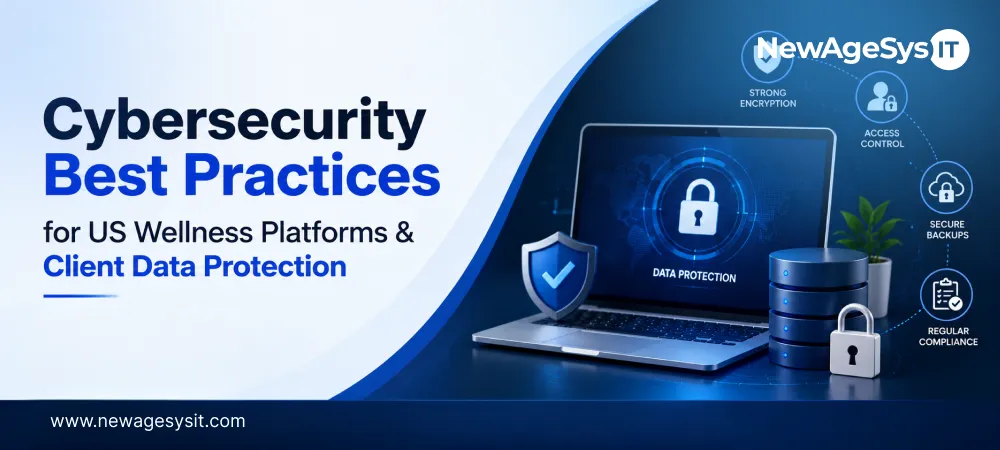
Wellness 6 min read
Cybersecurity Best Practices for US Wellness Platforms & Client Data Protection

Wellness platforms now manage highly sensitive client information every day. This includes intake forms, treatment history, payment details, wearable wellness data, and protected health information. That is why cybersecurity for US wellness platforms has become a growing priority across the wellness industry.
Cybercriminals often target wellness businesses because they store financial and health-related data together. A single breach can damage client trust, disrupt operations, and create serious compliance challenges. Many US states also require breach notifications within 30 to 90 days after discovery.
Cybersecurity is now both a compliance requirement and a client trust factor for these businesses. The FTC also expects strong consumer health data protection standards, even outside HIPAA-regulated environments. Meeting these expectations often requires both secure platform architecture and ongoing compliance-focused development practices.
Businesses investing in wellness mobile and web app development services and wellness software and CRM development services can improve long-term security and operational stability. This article examines the cybersecurity practices, compliance controls, and client data protection measures supporting secure US wellness platforms.
Client Data Protection Architecture for Wellness Platforms
Digital wellness systems require a strong data protection architecture to secure sensitive client and wearable wellness information. Platforms regularly store intake forms, payment records, treatment history, wearable metrics, and protected health information. Every security layer should support encrypted storage, secure communications, and controlled staff access.
1. Encryption Standards
Wellness platforms should use AES-256 encryption for stored client and wellness information. TLS 1.3 should secure API traffic across custom Android wellness apps and custom iOS wellness applications. Field-level encryption protects intake responses, protected health information, clinical wellness notes, and payment tokenization records.
2. Access Control
Role-based access control limits unnecessary exposure to sensitive client records across wellness systems. Practitioners should access assigned clients, while front desk teams access scheduling and intake information. Least-privilege policies reduce risks from compromised accounts or stolen employee credentials.
3. Wearable Health Data Security
Wearable wellness data deserves the same protection as clinical intake information. HRV trends, sleep quality patterns, readiness scores, Apple HealthKit data, Oura Ring data, and Whoop metrics reveal sensitive health insights. Wellness platforms should apply encryption, access controls, and CCPA-compliant data handling practices.
These protections also support broader regulatory obligations for wellness businesses operating across multiple US jurisdictions.
Digital Waiver Security and Enforceability for Wellness Services
Beyond standard intake workflows, wellness businesses must also secure digitally signed consent and liability documentation. Digital wellness waivers require strong security controls and legally enforceable consent records. Platforms developed through custom mobile app development should securely capture, store, and retrieve signed waiver documentation for every wellness service.
- ESIGN and UETA Compliance: Consent records should capture identity verification, timestamps, IP addresses, device fingerprints, signed waiver versions, and covered services.
- Waiver Version Management: Platforms should track which waiver version each client signed without overwriting historical consent records.
- Immutable Audit Trails: Signed waiver records should remain in append-only audit logs that prevent edits or unauthorized deletions.
- Fast Record Retrieval: Wellness platforms should retrieve indexed waiver records within seconds during legal disputes or compliance reviews.
- Minor Consent Documentation: Platforms should maintain stronger identity verification and parental consent records for minor wellness clients.
Authentication and Session Security for Wellness Platforms
Strong authentication controls help wellness platforms protect sensitive client and payment information. Wellness businesses should secure both staff access and client-facing wellness applications with layered authentication measures.
- Multi-Factor Authentication: Staff accounts accessing client health information should always require MFA. SMS OTP provides minimal protection, while TOTP offers stronger security for wellness management systems.
- Client Authentication: Wellness mobile apps should support Face ID and Touch ID for secure account access. Device-level biometric authentication improves convenience without exposing biometric wellness service data.
- Session Security: Wellness platforms should enforce session timeouts, refresh token rotation, and force logout for suspicious sessions.
- Password Protection: Platforms should require strong passwords, breach database monitoring, and forced resets for compromised accounts.
- Privileged Access Management: Production systems should use just-in-time database access, session recording, and dual approval for bulk data operations.
Incident Response and Data Breach Management for Wellness
Wellness businesses handling client health, wearable, or payment information need formal incident response procedures to reduce operational, legal, and reputational risks. A documented response framework helps wellness businesses identify, contain, investigate, and remediate security incidents.
The framework also supports regulatory notification obligations and business continuity requirements. The following operational controls help wellness organizations structure effective breach response procedures.
1. Wellness Incident Response Planning
Incident response plans should address key threat scenarios. This includes client health data breaches, payment card compromise, wearable wellness data exposure, and consent record integrity incidents.
2. State Breach Notification Requirements
Most US states require affected consumers to be notified within 30–90 days after breach discovery. Multi-state wellness businesses should maintain state-specific notification timeline tracking and escalation workflows.
3. FTC Health Breach Notification Rule
Wellness apps maintaining personal health records may need to notify the FTC after certain breaches. These requirements can apply even when the platform is not regulated under HIPAA.
4. Annual Penetration Testing
Annual external penetration testing should assess web applications, APIs, mobile apps, payment systems, and wellness-specific health data exfiltration scenarios.
5. Cyber Insurance for Wellness Platforms
Cyber insurance is increasingly relevant for wellness platforms storing sensitive client health and wearable wellness records.
App Store Health Data Compliance and Security Certification
Enterprise wellness applications increasingly require formal security certifications and compliance documentation. These standards support enterprise procurement, App Store reviews, and customer trust expectations. These requirements increasingly overlap across enterprise procurement reviews, mobile platform approvals, and ongoing vendor risk assessments.
- SOC 2 Type II: Commonly required by corporate wellness program operators and large wellness chains as a vendor security standard. Wellness businesses pursuing enterprise contracts should begin the SOC 2 observation period early in the sales process.
- HIPAA Compliance Documentation: Where HIPAA applies, organizations should maintain documented risk analyses, security policies, workforce training records, and Business Associate Agreement (BAA) templates.
- App Store Health Data Compliance: Mobile wellness apps should maintain HealthKit data handling documentation and privacy policy completeness reviews. Mental health content safety documentation should also be reviewed before major App Store submissions.
- Annual Security Assessments: Annual penetration testing, remediation tracking, and updated security control documentation help support enterprise wellness operator RFPs and vendor security reviews.
Final Thoughts
Effective US wellness platform cybersecurity depends on strong client data protection and authenticated access controls. ESIGN-compliant consent management and documented incident response procedures also support long-term compliance readiness. Wellness service providers with encryption-first architectures can better protect client data and operational continuity.
If your organization is building or securing a US wellness platform, embedding client health data encryption strengthens long-term platform security. ESIGN-compliant consent audit trails also improve governance and compliance accountability.
Documented incident response procedures help protect both clients and the wellness software systems’ operational standing. Many organizations prefer working with a US wellness platform security partner to support encryption architecture, ESIGN-compliant consent systems, and incident response planning before the first client record is created
Core Development
Keep exploring the custom services.

AI Software Development
Custom AI Software Development
Build intelligent, production-ready software from machine-learning models to AI-driven automation designed around your business goals.
Learn more
Mobile App Development
Custom Mobile Application Development
Native and cross-platform mobile apps that are fast, secure, and built to scale across iOS and Android.
Learn more
Web App Development
Custom Web Application Development
Scalable, secure web applications, from customer portals to complex dashboards, tailored to how your business actually works.
Learn more



