
Welcome to Blogs
Discover actionable insights, in-depth research, and expert perspectives, all in one place.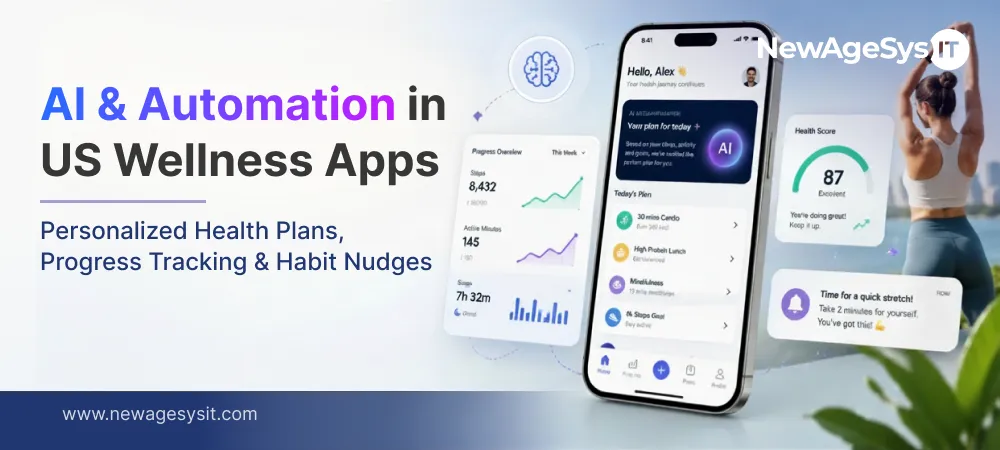
Wellness 7 min read
AI & Automation in US Wellness Apps: Personalized Health Plans, Progress Tracking & Habit Nudges

AI personalization in wellness apps has moved from an early-adopter feature to a consumer baseline. Platforms such as Noom AI, Wysa, and Apple Fitness+ Personalized have made adaptive recommendations, personalized meditation plans, and intelligent habit nudges a standard expectation across the US wellness market. This shift is shaping what users now expect from an AI wellness app in the USA, where personalization is increasingly tied to engagement and retention.
Through specialized wellness mobile app development services, wellness brands can build AI features such as personalized onboarding assessments, practice recommendations, and habit-prompt automation tailored to individual goals. These capabilities also depend on robust wellness software and CRM development solutions to support user data management, personalization engines, and privacy-aware automation workflows.
What makes AI in wellness distinct is the need to balance personalization with evidence-informed constraints. AI-generated wellness plans should reflect behavior change science, adjusting routines based on adherence patterns, mood inputs, or wearable signals rather than pushing generic recommendations. Habit nudge logic must optimize timing and reduce friction without becoming intrusive.
Wellness AI that handles mood data, HealthKit inputs, or stress indicators must account for CCPA obligations, Apple health data governance, and mental health safety guardrails. The strongest implementations use AI to improve daily practice consistency and engagement while remaining clearly positioned as wellness support, not medical advice.
AI Personalized Wellness Plans Across The United States
An effective AI health plan app begins with structured intake analysis that maps user goals such as stress regulation, sleep improvement, energy support, or mindfulness consistency into a personalized starting protocol. Instead of assigning fixed programs, AI models can weigh lifestyle constraints, existing habits, and intake responses to recommend practice duration, frequency, and content sequencing matched to user readiness.
The broader role of AI and automation as an intelligence layer within consumer and practitioner apps is explored in Wellness Mobile Apps in the USA: Building Smarter Health & Self-Care Experiences.
Personalization deepens when algorithms modify program intensity and content sequencing based on completion behavior, mood logs, and shifts in self-reported energy. For example, if a user repeatedly abandons 20-minute breathwork sessions, the system can reduce session length, adjust modality, or change scheduling logic to improve adherence.
In advanced implementations, often supported through custom mobile app development and iOS health integrations, wearable inputs such as HRV, recovery trends, and sleep quality can influence daily recommendations, shifting toward restorative practices on high-stress days and more active protocols during higher readiness periods.
Effective AI planning also requires balancing sleep, nutrition, movement, and mindfulness recommendations as interconnected variables rather than optimizing a single wellness metric. These personalization models build on the wellness tracking foundations covered in Must-Have Features in Modern US Wellness Mobile Apps, where behavioral and health signals enable adaptive recommendations.
Accuracy remains critical, because behavior change models that escalate too quickly often increase abandonment, making realistic progression logic essential to long-term adherence.
AI Progress Tracking and US Wellness Analytics
Personalized wellness AI becomes more valuable when it moves beyond recommendations into pattern recognition that helps users understand why progress changes over time.
By analyzing mood logs, sleep consistency, energy ratings, and practice completion data, AI models can surface specific correlations, such as lower focus scores after disrupted sleep or reduced meditation adherence during elevated stress periods. This is where machine learning for wellness supports insight generation rather than simple activity tracking.
Predictive analytics can identify which wellness habits are likely to be skipped based on time-of-day behavior, missed-session patterns, and historical engagement signals, allowing apps to trigger preemptive nudges before routines break.
More advanced models can project likely wellness trajectories from adherence trends, showing how consistent practice may influence stress resilience, recovery patterns, or sleep stability over time. In Android wellness environments, contextual signals such as activity levels, device usage behavior, and wearable sensor inputs can strengthen these prediction models with real-time behavioral data.
Stress and burnout detection adds another layer of value when systems monitor leading indicators such as sleep quality decline, mood downtrends, and repeated practice avoidance to flag emerging risk patterns early.
Weekly AI-generated reflections can convert this data into actionable insights, such as identifying the practices most associated with improved mood scores. Similar predictive models also support practitioner apps covered in Wellness Coach & Practitioner Apps: CRM & Client Management on Mobile, where progress risk signals can help practitioners adjust protocols before client adherence declines.
AI Habit Nudges and Behavioral Science Features
Habit nudge AI for wellness is most effective when nudges respond to user behavior rather than rely on fixed reminder schedules. Machine learning models can identify when users are most likely to complete a meditation session, hydration check-in, or evening reflection, then trigger prompts during those response windows instead of using generic notification timing. This shifts nudges from reminders into adaptive engagement interventions.
Behavioral science becomes more powerful when AI supports implementation intention prompts that ask users to commit to a specific action context, such as when and where they will complete a practice. These prompts can be personalized based on previous completion behavior, increasing follow-through compared with static reminders.
Friction reduction models add another layer by identifying whether skipped practices stem from excessive session length, poorly timed prompts, or mismatched content types, then adjusting recommendations to remove those barriers. These kinds of adaptive decision models often depend on custom software development services to support personalization logic, behavioral modeling, and real-time nudge orchestration.
Loss aversion mechanisms can further strengthen consistency through streak protection alerts, near-miss recovery prompts, and progress visuals that reinforce continuity. AI can also personalize milestone acknowledgment, recognizing practice streaks, recovery improvements, or consistency gains with messages tied to user behavior rather than generic congratulations.
When behavioral nudges combine timing optimization, friction reduction, and reinforcement design, they function less as notifications and more as adherence infrastructure that supports long-term wellness habit formation.
AI Content Recommendations for USA Wellness Apps
Wellness AI recommendations become more effective when content selection responds to user state rather than relying on static libraries or generic popularity rankings. Mood-responsive recommendation models can surface grounding breathwork during anxious check-ins, restorative audio during fatigue patterns, or energizing movement when users report low motivation.
This type of contextual matching is a core capability in an adaptive wellness app, where recommendations shift with user behavior, mood signals, and engagement patterns rather than remaining fixed.
Practice length adaptation adds another personalization layer by analyzing abandonment patterns and completion history. If a user repeatedly exits longer meditation sessions early, the system can surface shorter 3-minute alternatives or lower-friction practices better aligned with current engagement capacity.
Sequential recommendation models can also guide users through related practices in a structured progression, moving from introductory breathwork to deeper mindfulness programs based on prior completions instead of leaving discovery entirely user-driven.
Time-of-day optimization strengthens relevance further by adjusting content to behavioral context. Morning recommendations may prioritize focus-building practices, midday prompts may surface stress-reset exercises, and evening recommendations may shift toward sleep preparation or recovery content.
When recommendation engines combine mood signals, practice behavior, and time-based relevance, they improve content adherence while making personalization feel supportive rather than overly automated.
Mental Health AI Guardrails and US Privacy Compliance
An AI wellbeing app USA platform handling mental health or emotional wellness interactions needs clear limits on what AI can and cannot do. Wellness AI can support reflection, habit guidance, or stress management, but it should not generate diagnoses, recommend treatments, offer medication guidance, or function as a crisis response tool.
For prompts involving depression, self-harm, or trauma, guardrails should redirect users to appropriate clinical or crisis resources rather than allow unrestricted AI responses.
Sensitive data handling is equally important because mood logs, stress indicators, and mental health check-ins may qualify as highly sensitive personal information. If this data informs personalization models, consent management, access controls, and data minimization become essential. These requirements often overlap with wellness software and CRM architecture, where compliance controls, user permissions, and health data governance support safer AI deployment.
CCPA considerations also apply when wellness data is used as input for personalization models, particularly if users are not clearly informed how their data supports AI recommendations. HealthKit introduces additional restrictions, since Apple prohibits health data use for advertising and requires disclosed, policy-aligned usage.
For AI models using sleep, activity, or stress signals from HealthKit, those governance controls must be built into product architecture. In practice, mental health AI is only as reliable as the guardrails governing responses, the consent controls governing data use, and the privacy rules governing health signals.
Final Thoughts
A competitive AI wellness app in the USA stands out through personalized plans, progress analytics, habit nudges, and adaptive content recommendations. These features create value when built on behavior change science, supported by privacy safeguards, and designed with mental health guardrails.
Wellness apps that implement AI with behavior change science grounding and compliant health data handling are consistently associated with stronger daily engagement, more sustainable habit formation, and better subscription retention than apps built around static content delivery. For organizations planning AI features, working with an experienced AI app development company can help align compliance, personalization, and product architecture before development begins.
Core Development
Keep exploring the custom services.

AI Software Development
Custom AI Software Development
Build intelligent, production-ready software from machine-learning models to AI-driven automation designed around your business goals.
Learn more
Mobile App Development
Custom Mobile Application Development
Native and cross-platform mobile apps that are fast, secure, and built to scale across iOS and Android.
Learn more
Web App Development
Custom Web Application Development
Scalable, secure web applications, from customer portals to complex dashboards, tailored to how your business actually works.
Learn more



