
Welcome to Blogs
Discover actionable insights, in-depth research, and expert perspectives, all in one place.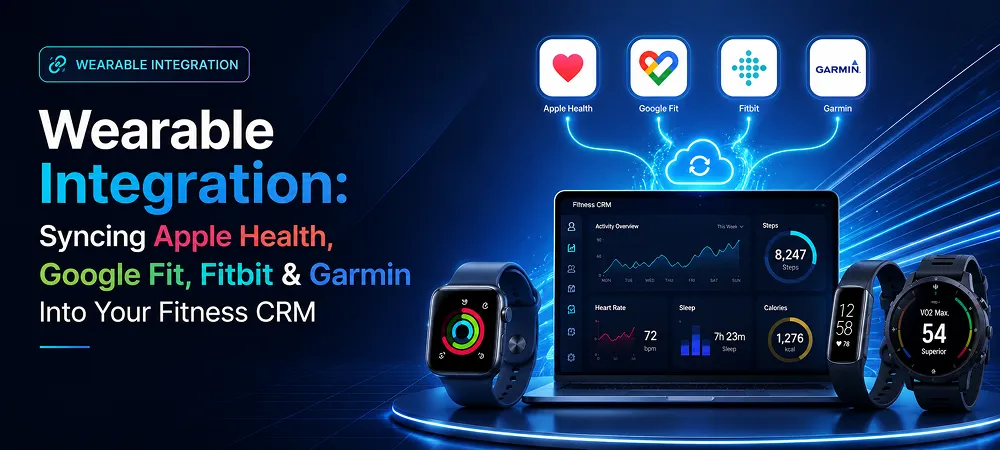
Fitness 7 min read
Wearable Integration: Syncing Apple Health, Google Fit, Fitbit & Garmin Into Your Fitness CRM

Why Wearable Data Transforms Fitness CRM Engagement
Wearable integration marks a clear transition point for a fitness CRM. At this stage, a booking and billing system becomes a genuine coaching platform.
A fitness CRM with wearable integration sees attendance alongside heart rate during each session and recovery quality between sessions. It also records the sleep patterns, resting physiological metrics, and activity data generated entirely outside the gym. That is a fundamentally different dataset for both coaches and automated systems to work with.
Teams building a custom fitness mobile and web app development architecture surface this data in member profiles and coaching dashboards. The result is personalized coaching recommendations grounded in actual physiological data and churn risk signals. These churn signals appear in recovery and engagement trends before they surface as attendance decline. Purpose-built custom fitness CRM development integrates these data streams at the member profile level from the first session.
This article covers the four major wearable integration platforms: Apple Health (HealthKit), Google Health Connect, Fitbit, and Garmin. It also covers their technical integration approach, data governance requirements, and fitness CRM implementation considerations for US operators.
Wearable integration is also the data enrichment layer of the full fitness CRM lifecycle management guide.
Apple Health (HealthKit): The iOS Fitness Data Platform
HealthKit Data Access
Apple HealthKit is the iOS health data aggregation platform. Fitness CRM apps that integrate with HealthKit can read workout activity records. These span type, duration, active energy, and heart rate during the workout session. They also cover daily activity metrics including step count, active energy, and stand hours.
Health metrics available include resting heart rate, heart rate variability, VO2max estimate, and sleep stage data. Body measurements like weight, height, and body fat percentage, if recorded, are also accessible where the member has granted permission.
Write-back capability extends the integration in both directions. Fitness CRM apps can write coach-logged sessions and class attendance records back to HealthKit, making studio activity visible in the member’s Apple Health app alongside their other health data.
Members who see their gym sessions reflected in their broader health picture report higher perceived value from their membership. A dedicated custom iOS app built around HealthKit integration delivers this experience natively on iPhone and Apple Watch.
HealthKit Data Governance Requirements
HealthKit data governance requirements are strict, non-negotiable, and enforced at App Store review. HealthKit data cannot be used for advertising targeting or shared with advertising platforms under any circumstances.
HealthKit data cannot be sold or transferred to third parties without explicit user consent for each specific stated purpose. The fitness app’s privacy policy must accurately describe all HealthKit data uses in plain language. Violations result in App Store removal, not a policy warning.
Data minimization is both a governance principle and a practical conversion tactic. Fitness CRM apps should request only the HealthKit data types they actively use in member-facing features. Requesting all available data types triggers heightened App Store review scrutiny and reduces member permission grant rates during onboarding. Request what the feature requires; explain why at the point of request.
Permission Request Design
HealthKit permissions must be requested contextually at the point in the app flow where the specific data type becomes relevant. This replaces presenting them as a bulk permission request during initial onboarding. Members grant permissions at significantly higher rates when they understand each permission’s coaching or tracking benefit. Rates fall when members see a list of data requests without context.
Wearable integration scope is a meaningful cost driver in fitness CRM development. It is covered in CRM Budget Planning for Fitness Businesses: What Custom Development Actually Costs.
Google Health Connect: Android Health Data Integration
Google Health Connect is the current Android health data platform. Google Fit is deprecated as of 2024 and should not be used for new fitness CRM integrations.
Health Connect aggregates health and fitness data across Android wearables and compatible fitness apps. This includes Samsung Health, Garmin Connect, Polar Flow, Whoop, and other Android-ecosystem sources. They are integrated into a single permissioned data layer that fitness CRM apps can access with user authorisation.
Health Connect data types relevant to fitness CRM integration include steps, active calories, and heart rate during and between workout sessions. They also include sleep stages and duration, workout activity records with GPS data where available, and body composition metrics.
The governance framework mirrors HealthKit in intent. Health Connect data cannot be used for advertising targeting. All health data uses must be disclosed transparently in the app’s privacy policy.
The technical normalization requirement between HealthKit and Health Connect is a meaningful engineering consideration. The two platforms represent health data using different schemas, units, and data models. A fitness CRM integrating both must normalize workout and health data into a consistent internal schema for unified member profile display.
The normalization layer converts platform-specific data structures into a single CRM-native health record. This layer is an engineering task that scope estimates must explicitly account for. A custom Android app built around Health Connect delivers the equivalent Android-native integration experience to what HealthKit provides on iOS.
Fitbit Integration: Web API Architecture
Fitbit integration for fitness CRM platforms uses the Fitbit Web API, accessed via OAuth 2.0 authentication. Each member connects their Fitbit account to the fitness CRM through a standard OAuth authorization flow. It grants the platform access to their Fitbit data without sharing credentials. The integration then retrieves activity, sleep, and health data on the member’s behalf.
Fitbit data types available to fitness CRM platforms include daily activity summaries covering steps, calories burned, floors climbed, and active minutes. It also spans sleep logs with duration, stage breakdown, and sleep score. The other features are resting heart rate and intraday heart rate data, where the user’s Fitbit account tier permits.
The exercise logs are generated by Fitbit-tracked workouts. This data enriches the member profile with activity and recovery context that extends well beyond class attendance.
Fitbit API rate limits apply per user and per application. Fitness CRM sync architecture should implement webhook-based data delivery for near-real-time updates rather than scheduled polling. Polling is less efficient and introduces data latency. It is more likely to encounter rate limit thresholds during high-activity periods when data freshness matters most for coaching applications.
Garmin Integration: Health API and Connect IQ
Garmin provides two integration surfaces relevant to fitness CRM platforms. The Garmin Connect IQ SDK supports on-device app development for Garmin wearables. For fitness CRM integration, the Garmin Health API is the appropriate access point. It provides cloud-to-cloud data access for Garmin device users who have authorised the connection through an OAuth 2.0 flow.
Garmin devices are used heavily by serious athletes, endurance sports participants, and outdoor fitness enthusiasts. This includes a member demographic with high training volume and strong data engagement.
Garmin Health API data types include GPS-tracked activity records for running, cycling, hiking, and multi-sport sessions. They also span training load and training status metrics; VO2max estimates calibrated to Garmin’s activity tracking model. The other features are heart rate variability and sleep quality data.
The other striking feature is Garmin’s Body Battery metric, which tracks the member’s estimated recovery energy level on a 0-to-100 scale.
For fitness CRM platforms serving member bases with significant Garmin usage, Garmin integration adds important coaching value. This is especially relevant for triathlete training programs, running clubs, and outdoor fitness studios. It surfaces recovery and training load data that HealthKit and Health Connect may not capture from the same members.
Wearable data enriches the member profile data described in Member Profiles, Progress Tracking & Goal Management in Custom US Fitness CRM. It adds physiological depth to the longitudinal fitness record.
Wearable Integration as Coaching Infrastructure
Wearable integration elevates a fitness CRM from a booking and billing system to a coaching platform. HealthKit, Google Health Connect, Fitbit, and Garmin each serve distinct device ecosystems and member demographics. A complete wearable integration strategy covers all four. The data governance and compliance design of each integration determines whether the feature builds member trust or creates regulatory exposure.
US fitness operators should build wearable integrations with compliant data governance, contextual permission requests, and a normalized internal data schema. They consistently achieve higher member app engagement than operators whose wearable features feel like data collection rather than coaching enhancement.
Your fitness CRM’s member profiles may contain only attendance data. But your members’ wearables hold a rich physiological context that coaches and automated systems cannot access. Building compliant HealthKit and Google Health Connect integrations deepens the coaching relationship that the CRM is designed to support. Learn more about digital transformation solutions from one of the leading AI software companies in the United States.
FAQ
What wearable platforms can integrate with a fitness CRM?
A custom fitness CRM can integrate with Apple HealthKit, Android Health Connect, Fitbit, and Garmin, depending on the member devices and data required. These platforms can provide activity, workout, heart-rate, sleep, body-measurement, and recovery information. The integration architecture differs by platform, so a CRM normally needs a normalization layer that converts wearable-specific records into one consistent member-data model.
How does Apple Health integration work with a fitness CRM?
Apple Health integration uses HealthKit on iPhone and Apple Watch. With member permission, a fitness app can read supported data such as workouts, steps, active energy, heart rate, sleep, and body measurements. HealthKit uses granular permissions for individual data types. Fitness CRM applications should request only the information required for specific user-facing features and clearly explain why each permission is needed.
Is Google Fit still recommended for new fitness CRM integrations?
No. New fitness applications should plan around Google’s current Android Health APIs rather than beginning a new Google Fit integration. Google Fit APIs remain supported only through the end of 2026, and new developers have been unable to sign up for them since May 1, 2024. Google recommends Health Connect for mobile-centric health sharing and other Android Health APIs for appropriate use cases.
What is Health Connect, and how does it work with fitness CRM software?
Health Connect provides a standardized Android layer through which compatible apps can share permitted health and fitness information. A fitness CRM mobile app can request specific data types such as steps, heart rate, workouts, sleep, or body measurements. Permissions are granular and should directly support user-facing functionality. Health Connect helps reduce the need to build separate device-level integrations for every compatible Android fitness application.
How does Fitbit integration work with a custom fitness CRM?
Fitbit cloud access is moving to a new platform. Google is decommissioning the legacy Fitbit Web API in September 2026 and replacing it with the Google Health API, so new fitness CRM integrations should be built against the Google Health API rather than the older Fitbit endpoints. Members authorize access through Google OAuth, and the available data still covers areas such as activity, workouts, sleep, and heart rate. Existing Fitbit Web API tokens do not carry over to the new platform, so any prior integration requires explicit member re-consent rather than a silent migration. Teams needing only on-device Android access may find Health Connect already covers their requirements.
How does Garmin integrate with fitness CRM software?
Garmin provides cloud-to-cloud APIs through the Garmin Connect Developer Program. The Health API can provide metrics such as steps, sleep, heart rate, stress, Body Battery, respiration, and body composition, while the Activity API provides detailed workout information. Members must authorize data sharing. Commercial implementations also need to consider Garmin program approval, licensing terms, and which specific APIs the product requires.
What wearable data is most useful in a fitness CRM?
Useful data depends on the fitness program, but common examples include workouts, steps, active minutes, heart rate, sleep, resting metrics, body measurements, and recovery indicators. A CRM should avoid collecting every available metric simply because the API exposes it. The best integrations select data that supports a clear member feature, such as progress tracking, coaching, recovery monitoring, goal management, or personalized engagement.
Why does wearable data need to be normalized before entering a fitness CRM?
Apple, Google, Fitbit, and Garmin do not represent every health metric in exactly the same format. Units, timestamps, activity categories, source metadata, and measurement structures can differ. A normalization layer converts those platform-specific records into a consistent internal schema. This allows trainers and members to see unified progress information without needing to understand which wearable produced each underlying measurement.
Core Development
Keep exploring the custom services.

AI Software Development
Custom AI Software Development
Build intelligent, production-ready software from machine-learning models to AI-driven automation designed around your business goals.
Learn more
Mobile App Development
Custom Mobile Application Development
Native and cross-platform mobile apps that are fast, secure, and built to scale across iOS and Android.
Learn more
Web App Development
Custom Web Application Development
Scalable, secure web applications, from customer portals to complex dashboards, tailored to how your business actually works.
Learn more



